

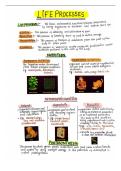
Learn through it, and write life process notes.
The term "life processes" in biology refers to the essential functions that living organisms perform to maintain life. These processes are fundamental to the growth, reproduction, and survival of organisms. Here are the key life processes: 1. Nutrition: This involves the intake of nutrients necessary for energy, growth, and cellular repair. Organisms can be autotrophic (producing their own food, like plants through photosynthesis) or heterotrophic (obtaining food from other sources, like animals). 2. Respiration: This is the process of converting food into energy. It can be aerobic (requiring oxygen) or anaerobic (not requiring oxygen). Respiration is crucial for the production of ATP, the energy currency of cells. 3. Transportation: This refers to the movement of substances within an organism. In animals, this is often facilitated by the circulatory system, which transports oxygen, nutrients, and waste products. In plants, transportation occurs through xylem and phloem. 4. Excretion: This is the removal of waste products generated from metabolic processes. Excretion is vital for maintaining homeostasis and preventing the buildup of harmful substances in the body. 5. Growth: This process involves the increase in size and mass of an organism. Growth can occur through cell division and differentiation, leading to the development of tissues and organs. 6. Reproduction: This is the biological process by which new individuals are produced. Reproduction can be sexual (involving the fusion of gametes) or asexual (involving a single organism producing offspring without gamete fusion). 7. Response to Stimuli: Living organisms can respond to environmental changes or stimuli. This ability to react is crucial for survival and can involve movement, behavioral changes, or physiological adjustments. 8. Homeostasis: This is the process of maintaining a stable internal environment despite external changes. Homeostasis involves various regulatory mechanisms to keep conditions like temperature, pH, and hydration levels within optimal ranges. These life processes are interconnected and work together to sustain life, allowing organisms to adapt, grow, and thrive in their environments.
Document information
- School year
- 4
- Uploaded on
- July 3, 2026
- Number of pages
- 12
- Written in
- 2025/2026
- Type
- Book review


