Remember by Christina Rossetti- Poetry Notes (A Level / AP Class / IB)
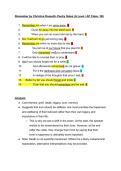
1. Remember me when I am gone away, A
2. Gone far away into the silent land; B
3. When you can no more hold me by the hand, B
4. Nor I half turn to go yet turning stay. A
5. Remember me when no more day by day A
6. You tell me of our future that you plann'd: B
7. Only remember me; you understand B
8. It will be late to counsel then or pray. A
9. Yet if you should forget me for a while C
10. And afterwards remember, do not grieve: D
11. For if the darkness and corruption leave D
12. A vestige of the thoughts that once I had, B
13. Better by far you should forget and smile C
14. Than that you should remember and be sad. B
Analysis
● Core themes: grief, death, legacy, love, memory
● Suggests that love should be selfless- one must prioritise the happiness
and wellbeing of their beloved rather than their own legacy and
importance in their life.
○ This is why we see a shift in the poem. At the start, the speaker
wishes to be remembered by their lover. However, at the end
(after the volta), they change their mind by saying that their
lover’s happiness is ultimately more important.
● Note: Death is not explicitly mentioned. Whilst it is a likely metaphorical
explanation, alternative interpretations may be provided.
, Key Context
● Published in 1862
● Religion
○ Rossetti was a devout Anglo-Catholic (a branch of the Church of
England)
■ Eg. Rossetti rejected three marriage proposals because the
men didn’t share her beliefs, and her religion formed a
fundamental part of her poems.
● This shows Rossetti’s strong emotional self-control,
which comes across in the speaker’s willingness to
let go.
■ Anglo-Catholicism had a strong emphasis on tradition and
spirituality (this spirituality may be seen in Rossetti’s
poems)
○ Christian themes
■ Self-sacrifice / selflessness
■ Embracing the afterlife rather than preserving earthly
relationships
■ Spiritual peace (which Rossetti suggests is ultimately more
important than memory or being remembered)
● Gender
○ Analyse the poem in the context of Victorian gender roles
○ Expectations of passive femininity: to what extent does the poem
agree/counter these ideas?
○ Image of the devout, pious, self-sacrificing woman.
Key Analysis of Form and Structure
● Petrarchan sonnet
○ Italian style- analyse key features (ie. octave, sestet, volta)
● Octave
○ Focuses on the desire to be remembered
1. Remember me when I am gone away, A
2. Gone far away into the silent land; B
3. When you can no more hold me by the hand, B
4. Nor I half turn to go yet turning stay. A
5. Remember me when no more day by day A
6. You tell me of our future that you plann'd: B
7. Only remember me; you understand B
8. It will be late to counsel then or pray. A
9. Yet if you should forget me for a while C
10. And afterwards remember, do not grieve: D
11. For if the darkness and corruption leave D
12. A vestige of the thoughts that once I had, B
13. Better by far you should forget and smile C
14. Than that you should remember and be sad. B
Analysis
● Core themes: grief, death, legacy, love, memory
● Suggests that love should be selfless- one must prioritise the happiness
and wellbeing of their beloved rather than their own legacy and
importance in their life.
○ This is why we see a shift in the poem. At the start, the speaker
wishes to be remembered by their lover. However, at the end
(after the volta), they change their mind by saying that their
lover’s happiness is ultimately more important.
● Note: Death is not explicitly mentioned. Whilst it is a likely metaphorical
explanation, alternative interpretations may be provided.
, Key Context
● Published in 1862
● Religion
○ Rossetti was a devout Anglo-Catholic (a branch of the Church of
England)
■ Eg. Rossetti rejected three marriage proposals because the
men didn’t share her beliefs, and her religion formed a
fundamental part of her poems.
● This shows Rossetti’s strong emotional self-control,
which comes across in the speaker’s willingness to
let go.
■ Anglo-Catholicism had a strong emphasis on tradition and
spirituality (this spirituality may be seen in Rossetti’s
poems)
○ Christian themes
■ Self-sacrifice / selflessness
■ Embracing the afterlife rather than preserving earthly
relationships
■ Spiritual peace (which Rossetti suggests is ultimately more
important than memory or being remembered)
● Gender
○ Analyse the poem in the context of Victorian gender roles
○ Expectations of passive femininity: to what extent does the poem
agree/counter these ideas?
○ Image of the devout, pious, self-sacrificing woman.
Key Analysis of Form and Structure
● Petrarchan sonnet
○ Italian style- analyse key features (ie. octave, sestet, volta)
● Octave
○ Focuses on the desire to be remembered