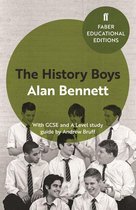
The History Boys present education as three main purposes: being quantifiably successful, inspiring personal growth
and wisdom and for individual’s dignity. This is evidenced by the three teachers and the Headmaster.
In the extract, the Headmaster commences a speech held in the school hall previously after Hector’s tragic
death. ‘If I speak of Hector,’ implies a hypothetical situation that was typical for a Headmaster to say in order to
bid farewell to a member of staff. This shows the Headmaster giving ‘false’ empathy to Hector which
juxtaposes his ‘true’ opinion on Hector’s teaching: ‘selfish’. Hector teaches based on life lessons and not the
curriculum. “All knowledge is precious, whether or not it serves the slightest human use.” This contradicts the
Headmaster’s view on education solely for “League tables” and structured by the “curriculum”.
Mrs Lintott, the only female character presented with much prominence or integrity to the plot, uses the
technique of listing in presenting the success of the boys: ‘One a headmaster...another a tax lawyer...one is a
builder.’ Here, she is almost in a motherly role congratulating the boys. This increases her mean length of
utterance and connects back to the presentation of women throughout the play in a male dominated
patriarchal society. She additionally uses profanity to grab attention and uses male language to shock them
and try to fit in in a male society as an equal. She tries to claim back swearing,such as ‘Cunt-struck’ in the
scene where Irwin and Hector (male teachers) were present, showing she is a feminist. It is ironic to use this
word as it is typically used against women by men, however she reverses it and uses it to insult men. This
shows that Mrs Lintott views education as the misconception of gender roles, where women are not
appreciated.
As well as the lack of appreciation for women, ‘It’s the pizza that stands out,’ also illustrates Mrs Lintott’s sense
of being down to earth and lack of appraisal for education. It is said with sarcasm, as she did not remember
the education, which is the primary focus of university, but the food. This sides with Hector’s life lessons,
showing they both have the same Aristotelian views: ‘Educating the mind without educating the heart is no
education at all.’ They believe in the boys individually and are concerned about where they will be happy. Mrs
Lintott values education to be a joyful experience and wants them to have the same jubilant memories she
had.
Similarly, Hector is a free spirited teacher who ,with ‘enthusiasm shared’ and ‘passion conveyed’, represents
the ‘old guard’ of typical British education. During his lessons, he teaches the boys to memorise literature texts
by heart and continuously reminds the boys that Oxbridge may not be their happiest time. In the extract, all the
boys ,except Posner, were announced with their qualifications. Posner, who fully adopted Hector’s stance the
most, ends up lonely and results with less materials than the other boys. This demonstrates Hector’s purpose
of education as being impractical which juxtaposes to the fact that life lessons should make us more ‘rounded
human beings’.
A juxtaposing character to Hector is Irwin, seen from the opening as a disingenuous character ‘mists up the
window’. Irwin’s strategy to get the boys’ Oxbridge scholarships is to cheat: ‘what has the truth got to do with
anything?’ This shows his deception around the purpose of education. But in fact, he also wants the boys to be
joyful in their studies as he advised them to ‘Go to Newcastle and be happy.’ The comparative ‘go’ and ‘be’
suggests Irwin’s role as a teacher, advising the boys to choose the happiest route.
Overall, the purpose of education is presented as ‘League Tables’, misconception of gender roles, wider
general wisdom and being clandestine. The different styles of education has led to uneven outcomes of the
boys, some merrier than others.
and wisdom and for individual’s dignity. This is evidenced by the three teachers and the Headmaster.
In the extract, the Headmaster commences a speech held in the school hall previously after Hector’s tragic
death. ‘If I speak of Hector,’ implies a hypothetical situation that was typical for a Headmaster to say in order to
bid farewell to a member of staff. This shows the Headmaster giving ‘false’ empathy to Hector which
juxtaposes his ‘true’ opinion on Hector’s teaching: ‘selfish’. Hector teaches based on life lessons and not the
curriculum. “All knowledge is precious, whether or not it serves the slightest human use.” This contradicts the
Headmaster’s view on education solely for “League tables” and structured by the “curriculum”.
Mrs Lintott, the only female character presented with much prominence or integrity to the plot, uses the
technique of listing in presenting the success of the boys: ‘One a headmaster...another a tax lawyer...one is a
builder.’ Here, she is almost in a motherly role congratulating the boys. This increases her mean length of
utterance and connects back to the presentation of women throughout the play in a male dominated
patriarchal society. She additionally uses profanity to grab attention and uses male language to shock them
and try to fit in in a male society as an equal. She tries to claim back swearing,such as ‘Cunt-struck’ in the
scene where Irwin and Hector (male teachers) were present, showing she is a feminist. It is ironic to use this
word as it is typically used against women by men, however she reverses it and uses it to insult men. This
shows that Mrs Lintott views education as the misconception of gender roles, where women are not
appreciated.
As well as the lack of appreciation for women, ‘It’s the pizza that stands out,’ also illustrates Mrs Lintott’s sense
of being down to earth and lack of appraisal for education. It is said with sarcasm, as she did not remember
the education, which is the primary focus of university, but the food. This sides with Hector’s life lessons,
showing they both have the same Aristotelian views: ‘Educating the mind without educating the heart is no
education at all.’ They believe in the boys individually and are concerned about where they will be happy. Mrs
Lintott values education to be a joyful experience and wants them to have the same jubilant memories she
had.
Similarly, Hector is a free spirited teacher who ,with ‘enthusiasm shared’ and ‘passion conveyed’, represents
the ‘old guard’ of typical British education. During his lessons, he teaches the boys to memorise literature texts
by heart and continuously reminds the boys that Oxbridge may not be their happiest time. In the extract, all the
boys ,except Posner, were announced with their qualifications. Posner, who fully adopted Hector’s stance the
most, ends up lonely and results with less materials than the other boys. This demonstrates Hector’s purpose
of education as being impractical which juxtaposes to the fact that life lessons should make us more ‘rounded
human beings’.
A juxtaposing character to Hector is Irwin, seen from the opening as a disingenuous character ‘mists up the
window’. Irwin’s strategy to get the boys’ Oxbridge scholarships is to cheat: ‘what has the truth got to do with
anything?’ This shows his deception around the purpose of education. But in fact, he also wants the boys to be
joyful in their studies as he advised them to ‘Go to Newcastle and be happy.’ The comparative ‘go’ and ‘be’
suggests Irwin’s role as a teacher, advising the boys to choose the happiest route.
Overall, the purpose of education is presented as ‘League Tables’, misconception of gender roles, wider
general wisdom and being clandestine. The different styles of education has led to uneven outcomes of the
boys, some merrier than others.