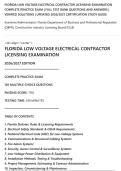
FLORIDA LOW VOLTAGE ELECTRICAL CONTRACTOR LICENSING EXAMINATION
COMPLETE PRACTICE EXAM | FULL TEST BANK QUESTIONS AND ANSWERS |
VERIFIED SOLUTIONS | UPDATED 2026/2027 CERTIFICATION STUDY GUIDE
Examiner/Administrator: Florida Department of Business and Professional Regulation
(DBPR), Construction Industry Licensing Board (CILB)
<div align="center">
FLORIDA LOW VOLTAGE ELECTRICAL CONTRACTOR
LICENSING EXAMINATION
2026/2027 EDITION
━━━━━━━━━━━━━━━━━━━━━━━━━━━━━━━━━━━━
COMPLETE PRACTICE EXAM
120 MULTIPLE-CHOICE QUESTIONS
PASSING SCORE: 70%
TESTING TIME: 240 MINUTES
━━━━━━━━━━━━━━━━━━━━━━━━━━━━━━━━━━━━
TABLE OF CONTENTS
1. Florida Statutes, Rules & Licensing Requirements
2. Electrical Safety Standards & OSHA Requirements
3. National Electrical Code (NEC) for Low-Voltage Systems
4. Communications & Structured Cabling Systems
5. Fire Alarm Systems
6. Security, Access Control & Surveillance Systems
7. Low-Voltage Power Distribution & Equipment
8. Installation Methods, Testing & Troubleshooting
9. Project Management, Estimating & Contract Administration
10. Inspection, Commissioning & Maintenance
,FLORIDA DEPARTMENT OF BUSINESS AND PROFESSIONAL REGULATION (DBPR) ||
CONSTRUCTION INDUSTRY LICENSING BOARD (CILB) || ALIGNED WITH CURRENT
LICENSING BLUEPRINTS || NATIONAL ELECTRICAL CODE (NEC) PRINCIPLES ||
PROFESSIONAL STUDY GUIDE || 100% VERIFIED | GRADED A+ || COMPREHENSIVE
EXAM PREPARATION || PREPARED FOR LICENSING & CERTIFICATION ||
PROFESSIONAL EXAMINATION USE
</div>
Questions 1–6: Florida Statutes, Rules & Licensing Requirements
QUESTION 1. A licensed low-voltage electrical contractor intends to expand
operations by performing work outside the scope authorized by the contractor's
current license. Before accepting the project, what is the most appropriate
professional course of action?
A. Perform the work if supervised by a master electrician.
B. Accept the project and subcontract any portions exceeding the license scope
without disclosure.
C. Obtain the appropriate licensure or legally subcontract the work to a properly
licensed contractor within the authorized scope.
D. Proceed if the customer provides written approval.
Correct Answer: 🔴 C. Obtain the appropriate licensure or legally subcontract the
work to a properly licensed contractor within the authorized scope.
Explanation: Licensing laws define the scope of work a contractor may legally perform.
Working beyond that scope may result in disciplinary action, fines, and liability.
Obtaining the proper license or engaging an appropriately licensed subcontractor
maintains legal compliance. Supervisor oversight, customer consent, or informal
arrangements do not expand statutory authority.
QUESTION 2. During a state inspection, a contractor cannot produce documentation
demonstrating required permits for several completed low-voltage installations.
,What is the greatest professional concern?
A. Reduced material warranty coverage only.
B. Potential licensing violations, project delays, and enforcement action.
C. Increased equipment depreciation.
D. Lower signal transmission speed.
Correct Answer: 🔴 B. Potential licensing violations, project delays, and
enforcement action.
Explanation: Permit documentation demonstrates regulatory compliance. Failure to
obtain or maintain proper permitting records may expose the contractor to
enforcement actions, failed inspections, penalties, and delays. The other choices
concern secondary issues unrelated to regulatory compliance.
QUESTION 3. Which practice best demonstrates professional compliance when
maintaining project records?
A. Discard all records after project completion.
B. Maintain organized documentation in accordance with applicable legal and
contractual requirements.
C. Retain only invoices.
D. Keep records only when disputes arise.
Correct Answer: 🔴 B. Maintain organized documentation in accordance with
applicable legal and contractual requirements.
Explanation: Complete project documentation—including contracts, permits,
inspections, change orders, and testing records—supports regulatory compliance,
future maintenance, dispute resolution, and quality assurance. The remaining options
fail to preserve sufficient documentation.
QUESTION 4. Which contract provision most effectively reduces misunderstandings
between a contractor and client?
, A. Oral modifications only.
B. Detailed written scope, responsibilities, schedule, and change-order procedures.
C. Excluding technical specifications.
D. Allowing unlimited verbal changes.
Correct Answer: 🔴 B. Detailed written scope, responsibilities, schedule, and
change-order procedures.
Explanation: Clearly defined contractual obligations reduce disputes and establish
expectations regarding work scope, payment, scheduling, and modifications. Informal
agreements create uncertainty and increase project risk.
QUESTION 5. A contractor discovers that previously installed equipment does not
comply with current approved project specifications. What should be done first?
A. Conceal the issue until final inspection.
B. Continue installation to maintain schedule.
C. Notify the responsible parties and resolve the discrepancy before proceeding.
D. Remove project documentation.
Correct Answer: 🔴 C. Notify the responsible parties and resolve the discrepancy
before proceeding.
Explanation: Prompt communication and documented resolution protect project
quality, contractual compliance, and safety. Concealing deficiencies may lead to
inspection failures and contractual disputes.
QUESTION 6. Which action best demonstrates ethical professional conduct?
A. Using substitute materials without approval.
B. Accurately representing qualifications, costs, and project capabilities.
C. Concealing known deficiencies.
D. Ignoring manufacturer installation requirements.
COMPLETE PRACTICE EXAM | FULL TEST BANK QUESTIONS AND ANSWERS |
VERIFIED SOLUTIONS | UPDATED 2026/2027 CERTIFICATION STUDY GUIDE
Examiner/Administrator: Florida Department of Business and Professional Regulation
(DBPR), Construction Industry Licensing Board (CILB)
<div align="center">
FLORIDA LOW VOLTAGE ELECTRICAL CONTRACTOR
LICENSING EXAMINATION
2026/2027 EDITION
━━━━━━━━━━━━━━━━━━━━━━━━━━━━━━━━━━━━
COMPLETE PRACTICE EXAM
120 MULTIPLE-CHOICE QUESTIONS
PASSING SCORE: 70%
TESTING TIME: 240 MINUTES
━━━━━━━━━━━━━━━━━━━━━━━━━━━━━━━━━━━━
TABLE OF CONTENTS
1. Florida Statutes, Rules & Licensing Requirements
2. Electrical Safety Standards & OSHA Requirements
3. National Electrical Code (NEC) for Low-Voltage Systems
4. Communications & Structured Cabling Systems
5. Fire Alarm Systems
6. Security, Access Control & Surveillance Systems
7. Low-Voltage Power Distribution & Equipment
8. Installation Methods, Testing & Troubleshooting
9. Project Management, Estimating & Contract Administration
10. Inspection, Commissioning & Maintenance
,FLORIDA DEPARTMENT OF BUSINESS AND PROFESSIONAL REGULATION (DBPR) ||
CONSTRUCTION INDUSTRY LICENSING BOARD (CILB) || ALIGNED WITH CURRENT
LICENSING BLUEPRINTS || NATIONAL ELECTRICAL CODE (NEC) PRINCIPLES ||
PROFESSIONAL STUDY GUIDE || 100% VERIFIED | GRADED A+ || COMPREHENSIVE
EXAM PREPARATION || PREPARED FOR LICENSING & CERTIFICATION ||
PROFESSIONAL EXAMINATION USE
</div>
Questions 1–6: Florida Statutes, Rules & Licensing Requirements
QUESTION 1. A licensed low-voltage electrical contractor intends to expand
operations by performing work outside the scope authorized by the contractor's
current license. Before accepting the project, what is the most appropriate
professional course of action?
A. Perform the work if supervised by a master electrician.
B. Accept the project and subcontract any portions exceeding the license scope
without disclosure.
C. Obtain the appropriate licensure or legally subcontract the work to a properly
licensed contractor within the authorized scope.
D. Proceed if the customer provides written approval.
Correct Answer: 🔴 C. Obtain the appropriate licensure or legally subcontract the
work to a properly licensed contractor within the authorized scope.
Explanation: Licensing laws define the scope of work a contractor may legally perform.
Working beyond that scope may result in disciplinary action, fines, and liability.
Obtaining the proper license or engaging an appropriately licensed subcontractor
maintains legal compliance. Supervisor oversight, customer consent, or informal
arrangements do not expand statutory authority.
QUESTION 2. During a state inspection, a contractor cannot produce documentation
demonstrating required permits for several completed low-voltage installations.
,What is the greatest professional concern?
A. Reduced material warranty coverage only.
B. Potential licensing violations, project delays, and enforcement action.
C. Increased equipment depreciation.
D. Lower signal transmission speed.
Correct Answer: 🔴 B. Potential licensing violations, project delays, and
enforcement action.
Explanation: Permit documentation demonstrates regulatory compliance. Failure to
obtain or maintain proper permitting records may expose the contractor to
enforcement actions, failed inspections, penalties, and delays. The other choices
concern secondary issues unrelated to regulatory compliance.
QUESTION 3. Which practice best demonstrates professional compliance when
maintaining project records?
A. Discard all records after project completion.
B. Maintain organized documentation in accordance with applicable legal and
contractual requirements.
C. Retain only invoices.
D. Keep records only when disputes arise.
Correct Answer: 🔴 B. Maintain organized documentation in accordance with
applicable legal and contractual requirements.
Explanation: Complete project documentation—including contracts, permits,
inspections, change orders, and testing records—supports regulatory compliance,
future maintenance, dispute resolution, and quality assurance. The remaining options
fail to preserve sufficient documentation.
QUESTION 4. Which contract provision most effectively reduces misunderstandings
between a contractor and client?
, A. Oral modifications only.
B. Detailed written scope, responsibilities, schedule, and change-order procedures.
C. Excluding technical specifications.
D. Allowing unlimited verbal changes.
Correct Answer: 🔴 B. Detailed written scope, responsibilities, schedule, and
change-order procedures.
Explanation: Clearly defined contractual obligations reduce disputes and establish
expectations regarding work scope, payment, scheduling, and modifications. Informal
agreements create uncertainty and increase project risk.
QUESTION 5. A contractor discovers that previously installed equipment does not
comply with current approved project specifications. What should be done first?
A. Conceal the issue until final inspection.
B. Continue installation to maintain schedule.
C. Notify the responsible parties and resolve the discrepancy before proceeding.
D. Remove project documentation.
Correct Answer: 🔴 C. Notify the responsible parties and resolve the discrepancy
before proceeding.
Explanation: Prompt communication and documented resolution protect project
quality, contractual compliance, and safety. Concealing deficiencies may lead to
inspection failures and contractual disputes.
QUESTION 6. Which action best demonstrates ethical professional conduct?
A. Using substitute materials without approval.
B. Accurately representing qualifications, costs, and project capabilities.
C. Concealing known deficiencies.
D. Ignoring manufacturer installation requirements.