

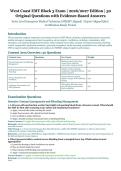
West Coast EMT Block 3 Exam | 2026/2027 Edition | 50
Original Questions with Evidence-Based Answers
Entry Level Emergency Medical Technician (NREMT Aligned) | Expert-Aligned Q&A |
Certification-Ready Format
Introduction
This 50-question original competency assessment focuses on EMT Block 3 domains, emphasizing trauma assessment,
medical emergency management, shock recognition, airway support, ventilation, cardiology, resuscitation, AED
operations, and rapid prehospital interventions. Items integrate scene safety, primary Assessment priorities, bleeding
control, oxygenation, medication assistance, poisoning recognition, stroke screening, anaphylaxis care, and high-quality
CPR to support patient stabilization and readiness for NREMT-aligned cognitive performance.
Content Area Overview: 50 Questions
Content Area Questions Key Topics Weight
Bleeding control, shock, chest
Trauma Emergencies and Bleeding
13 trauma, burns, splinting, 25%
Management
evisceration, transport priority
Diabetes, stroke, poisoning,
Medical Emergencies and
12 anaphylaxis, respiratory distress, 25%
Toxicology
seizures, infection
Airway maneuvers, suction,
Airway, Respiration, and
13 adjuncts, oxygen, BVM ventilation, 25%
Ventilation
choking
CPR quality, AED safety, chest
Cardiology, Resuscitation, and
12 pain, nitroglycerin precautions, 25%
AED Operations
shock recognition
Examination Questions
Domain: Trauma Emergencies and Bleeding Management
1. A 28-year-old construction worker has bright red spurting blood from a forearm wound. What should
the EMT do first after ensuring scene safety and standard precautions?
A. Apply a cervical collar before touching the wound
B. Apply direct pressure with a gloved hand and dressing
C. Give oral fluids to replace blood loss
D. Begin a detailed secondary Assessment before controlling bleeding
Correct Answer: B. Apply direct pressure with a gloved hand and dressing
Rationale: Life-threatening external bleeding requires immediate control; direct pressure is the first rapid intervention for most
accessible wounds.
Why Wrong: A, C, D are incorrect because they delay life threats, conflict with NREMT standards, or select an intervention
unrelated to the patient’s immediate problem.
Reference: 2026 West Coast EMT Block 3-aligned Module 1; NREMT trauma domain; AAOS Emergency Care and Transportation of
the Sick and Injured, trauma chapters.
2. Direct pressure fails to control severe bleeding from a mangled lower leg. Which action is most
appropriate?
A. Loosen the dressing to check circulation every minute
B. Place ice directly inside the wound
C. Delay transport until bleeding stops spontaneously
D. Apply a commercial tourniquet proximal to the wound
Correct Answer: D. Apply a commercial tourniquet proximal to the wound
Rationale: Uncontrolled severe extremity bleeding requires a tourniquet placed above the injury and tightened until bleeding
stops.
, Why Wrong: A, B, C are incorrect because they delay life threats, conflict with NREMT standards, or select an intervention
unrelated to the patient’s immediate problem.
Reference: 2026 West Coast EMT Block 3-aligned Module 1; NREMT trauma domain; AAOS Emergency Care and Transportation of
the Sick and Injured, trauma chapters.
3. A patient has pale cool skin, rapid weak pulse, and anxiety after a motor vehicle crash. Which
condition should the EMT suspect?
A. Mild seasonal allergy
B. Hemorrhagic shock
C. Stable isolated ankle sprain
D. Uncomplicated fever without trauma
Correct Answer: B. Hemorrhagic shock
Rationale: Tachycardia, cool pale skin, and altered behavior after trauma suggest poor perfusion from blood loss.
Why Wrong: A, C, D are incorrect because they delay life threats, conflict with NREMT standards, or select an intervention
unrelated to the patient’s immediate problem.
Reference: 2026 West Coast EMT Block 3-aligned Module 1; NREMT trauma domain; AAOS Emergency Care and Transportation of
the Sick and Injured, trauma chapters.
4. A crash victim is unresponsive with shallow respirations and major facial bleeding. What is the
priority?
A. Splint a closed wrist deformity first
B. Obtain a full medication list before airway care
C. Place the patient upright and leave the airway unattended
D. Open and maintain the airway while suctioning blood as needed
Correct Answer: D. Open and maintain the airway while suctioning blood as needed
Rationale: Airway and ventilation threats take priority, especially when blood or facial trauma obstructs breathing.
Why Wrong: A, B, C are incorrect because they delay life threats, conflict with NREMT standards, or select an intervention
unrelated to the patient’s immediate problem.
Reference: 2026 West Coast EMT Block 3-aligned Module 1; NREMT trauma domain; AAOS Emergency Care and Transportation of
the Sick and Injured, trauma chapters.
5. A patient was stabbed in the chest and has worsening respiratory distress, absent breath sounds on
one side, and hypotension. Which condition is most concerning?
A. Simple nosebleed
B. Tension pneumothorax
C. Isolated rib bruise only
D. Gastroenteritis
Correct Answer: B. Tension pneumothorax
Rationale: Penetrating chest trauma with unilateral absent breath sounds and shock signs suggests tension pneumothorax.
Why Wrong: A, C, D are incorrect because they delay life threats, conflict with NREMT standards, or select an intervention
unrelated to the patient’s immediate problem.
Reference: 2026 West Coast EMT Block 3-aligned Module 1; NREMT trauma domain; AAOS Emergency Care and Transportation of
the Sick and Injured, trauma chapters.
6. An open chest wound makes a sucking sound during breathing. What dressing is most appropriate?
A. Dry gauze only with no seal
B. Elastic wrap around the neck
C. Loose paper towel covering only
D. A vented occlusive dressing or sealed dressing managed for worsening distress
Correct Answer: D. A vented occlusive dressing or sealed dressing managed for worsening distress
Rationale: Open pneumothorax requires an occlusive approach that limits air entry and allows monitoring for tension
development.
Why Wrong: A, B, C are incorrect because they delay life threats, conflict with NREMT standards, or select an intervention
unrelated to the patient’s immediate problem.
Reference: 2026 West Coast EMT Block 3-aligned Module 1; NREMT trauma domain; AAOS Emergency Care and Transportation of
the Sick and Injured, trauma chapters.
7. A patient fell from a roof and has pelvic instability and signs of shock. Which intervention is
appropriate?
A. Rock the pelvis repeatedly to confirm movement
B. Stabilize the pelvis with a pelvic binder if available and expedite transport
C. Allow the patient to walk to the ambulance
D. Apply traction splint to both arms
Original Questions with Evidence-Based Answers
Entry Level Emergency Medical Technician (NREMT Aligned) | Expert-Aligned Q&A |
Certification-Ready Format
Introduction
This 50-question original competency assessment focuses on EMT Block 3 domains, emphasizing trauma assessment,
medical emergency management, shock recognition, airway support, ventilation, cardiology, resuscitation, AED
operations, and rapid prehospital interventions. Items integrate scene safety, primary Assessment priorities, bleeding
control, oxygenation, medication assistance, poisoning recognition, stroke screening, anaphylaxis care, and high-quality
CPR to support patient stabilization and readiness for NREMT-aligned cognitive performance.
Content Area Overview: 50 Questions
Content Area Questions Key Topics Weight
Bleeding control, shock, chest
Trauma Emergencies and Bleeding
13 trauma, burns, splinting, 25%
Management
evisceration, transport priority
Diabetes, stroke, poisoning,
Medical Emergencies and
12 anaphylaxis, respiratory distress, 25%
Toxicology
seizures, infection
Airway maneuvers, suction,
Airway, Respiration, and
13 adjuncts, oxygen, BVM ventilation, 25%
Ventilation
choking
CPR quality, AED safety, chest
Cardiology, Resuscitation, and
12 pain, nitroglycerin precautions, 25%
AED Operations
shock recognition
Examination Questions
Domain: Trauma Emergencies and Bleeding Management
1. A 28-year-old construction worker has bright red spurting blood from a forearm wound. What should
the EMT do first after ensuring scene safety and standard precautions?
A. Apply a cervical collar before touching the wound
B. Apply direct pressure with a gloved hand and dressing
C. Give oral fluids to replace blood loss
D. Begin a detailed secondary Assessment before controlling bleeding
Correct Answer: B. Apply direct pressure with a gloved hand and dressing
Rationale: Life-threatening external bleeding requires immediate control; direct pressure is the first rapid intervention for most
accessible wounds.
Why Wrong: A, C, D are incorrect because they delay life threats, conflict with NREMT standards, or select an intervention
unrelated to the patient’s immediate problem.
Reference: 2026 West Coast EMT Block 3-aligned Module 1; NREMT trauma domain; AAOS Emergency Care and Transportation of
the Sick and Injured, trauma chapters.
2. Direct pressure fails to control severe bleeding from a mangled lower leg. Which action is most
appropriate?
A. Loosen the dressing to check circulation every minute
B. Place ice directly inside the wound
C. Delay transport until bleeding stops spontaneously
D. Apply a commercial tourniquet proximal to the wound
Correct Answer: D. Apply a commercial tourniquet proximal to the wound
Rationale: Uncontrolled severe extremity bleeding requires a tourniquet placed above the injury and tightened until bleeding
stops.
, Why Wrong: A, B, C are incorrect because they delay life threats, conflict with NREMT standards, or select an intervention
unrelated to the patient’s immediate problem.
Reference: 2026 West Coast EMT Block 3-aligned Module 1; NREMT trauma domain; AAOS Emergency Care and Transportation of
the Sick and Injured, trauma chapters.
3. A patient has pale cool skin, rapid weak pulse, and anxiety after a motor vehicle crash. Which
condition should the EMT suspect?
A. Mild seasonal allergy
B. Hemorrhagic shock
C. Stable isolated ankle sprain
D. Uncomplicated fever without trauma
Correct Answer: B. Hemorrhagic shock
Rationale: Tachycardia, cool pale skin, and altered behavior after trauma suggest poor perfusion from blood loss.
Why Wrong: A, C, D are incorrect because they delay life threats, conflict with NREMT standards, or select an intervention
unrelated to the patient’s immediate problem.
Reference: 2026 West Coast EMT Block 3-aligned Module 1; NREMT trauma domain; AAOS Emergency Care and Transportation of
the Sick and Injured, trauma chapters.
4. A crash victim is unresponsive with shallow respirations and major facial bleeding. What is the
priority?
A. Splint a closed wrist deformity first
B. Obtain a full medication list before airway care
C. Place the patient upright and leave the airway unattended
D. Open and maintain the airway while suctioning blood as needed
Correct Answer: D. Open and maintain the airway while suctioning blood as needed
Rationale: Airway and ventilation threats take priority, especially when blood or facial trauma obstructs breathing.
Why Wrong: A, B, C are incorrect because they delay life threats, conflict with NREMT standards, or select an intervention
unrelated to the patient’s immediate problem.
Reference: 2026 West Coast EMT Block 3-aligned Module 1; NREMT trauma domain; AAOS Emergency Care and Transportation of
the Sick and Injured, trauma chapters.
5. A patient was stabbed in the chest and has worsening respiratory distress, absent breath sounds on
one side, and hypotension. Which condition is most concerning?
A. Simple nosebleed
B. Tension pneumothorax
C. Isolated rib bruise only
D. Gastroenteritis
Correct Answer: B. Tension pneumothorax
Rationale: Penetrating chest trauma with unilateral absent breath sounds and shock signs suggests tension pneumothorax.
Why Wrong: A, C, D are incorrect because they delay life threats, conflict with NREMT standards, or select an intervention
unrelated to the patient’s immediate problem.
Reference: 2026 West Coast EMT Block 3-aligned Module 1; NREMT trauma domain; AAOS Emergency Care and Transportation of
the Sick and Injured, trauma chapters.
6. An open chest wound makes a sucking sound during breathing. What dressing is most appropriate?
A. Dry gauze only with no seal
B. Elastic wrap around the neck
C. Loose paper towel covering only
D. A vented occlusive dressing or sealed dressing managed for worsening distress
Correct Answer: D. A vented occlusive dressing or sealed dressing managed for worsening distress
Rationale: Open pneumothorax requires an occlusive approach that limits air entry and allows monitoring for tension
development.
Why Wrong: A, B, C are incorrect because they delay life threats, conflict with NREMT standards, or select an intervention
unrelated to the patient’s immediate problem.
Reference: 2026 West Coast EMT Block 3-aligned Module 1; NREMT trauma domain; AAOS Emergency Care and Transportation of
the Sick and Injured, trauma chapters.
7. A patient fell from a roof and has pelvic instability and signs of shock. Which intervention is
appropriate?
A. Rock the pelvis repeatedly to confirm movement
B. Stabilize the pelvis with a pelvic binder if available and expedite transport
C. Allow the patient to walk to the ambulance
D. Apply traction splint to both arms


