

911 Public Safety Telecommunicators State Exam – NASNA and
APCO Certification – 2026/2027 Edition – Verified Questions and
Answers
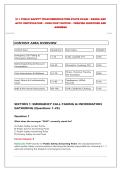
CONTENT AREA OVERVIEW
Content Area Questions Key Topics Weight
Emergency Call-Taking &
1-25 6 Ws, ALI/ANI, TTY 25%
Information Gathering
Radio Dispatching & Resource
26-50 Phonetics, Trunking, FCC 25%
Coordination
Stress, Vicarious Trauma,
Crisis Intervention & Wellness 51-70 20%
De-escalation
Legal, Ethical & Confidentiality Negligence, HIPAA,
71-85 15%
Issues Records
EMD & Pre-Arrival Instructions 86-100 CPR, Childbirth, Choking 15%
SECTION 1: EMERGENCY CALL-TAKING & INFORMATION
GATHERING (Questions 1–25)
Question 1
What does the acronym "PSAP" correctly stand for?
A) Public Safety Access Portal
B) Public Service Answering Point
C) Public Safety Answering Point
D) Primary Safety Access Point
Correct Answer: C
Rationale: PSAP stands for Public Safety Answering Point, the standardized term
within public safety communications denoting the facility responsible for receiving 9-1-1
calls and initiating the dispatch of emergency services.
,Question 2
Which of the following is the most important piece of information to gather from
a 911 caller?
A) Caller's name
B) Location of the emergency
C) Caller's phone number
D) Caller's age
Correct Answer: B
Rationale: The caller's location is the most critical piece of information because
responders must know where to go. Without a location, emergency services cannot be
dispatched effectively.
Question 3
Automatic Number Identification (ANI) is:
A) A feature that shows the caller's address on the display screen
B) A feature that shows the caller's telephone number on the display screen
C) A feature that routes calls to the correct PSAP
D) A feature that identifies the cell site of a wireless call
Correct Answer: B
Rationale: ANI is an enhanced 911 service feature that shows the caller's telephone
number on the display screen.
Question 4
Automatic Location Identification (ALI) is:
A) A feature that shows the caller's telephone number on the display screen
B) A feature that displays the caller's address and dispatch information
C) A feature that routes calls to the correct PSAP
D) A feature that identifies the cell site of a wireless call
Correct Answer: B
Rationale: ALI is an enhanced 911 service feature that displays the caller's address
and dispatch information.
Question 5
What is the "6 Ws" method in emergency call-taking?
,A) A method for identifying the caller's emotional state
B) A systematic approach to gathering essential information: Who, What, Where, When,
Why, and Weapons
C) A method for triaging multiple calls
D) A method for documenting call outcomes
Correct Answer: B
Rationale: The 6 Ws is a systematic questioning method that ensures
telecommunicators gather all essential information: Who is
involved, What happened, Where is it occurring, When did it happen, Why did it
happen (if known), and Weapons involved (if applicable).
Question 6
Abandoned 911 calls from landlines require:
A) No action
B) Dispatch to check on the location
C) Only documentation
D) A callback to the number
Correct Answer: B
Rationale: Abandoned 911 calls from landlines require dispatch to check on the
location because they may indicate a genuine emergency where the caller was unable
to speak.
Question 7
P-ANI (Pseudo ANI) is a number used by wireless carriers to:
A) Identify the caller's name
B) Route the call to the correct PSAP and identify the cell site
C) Provide the caller's billing information
D) Identify the caller's vehicle
Correct Answer: B
Rationale: P-ANI is used by wireless telephone carriers to route the call to the correct
PSAP and identify the cell site (and sector, if sectored) from which a wireless call
originates.
Question 8
VoIP (Voice over Internet Protocol) 911 calls present a challenge because:
, A) The caller cannot speak
B) The call may not route to the correct PSAP or provide accurate location information
C) The call cannot be recorded
D) The call cannot be transferred
Correct Answer: B
Rationale: VoIP calls to 911 present unique challenges because they may not route to
the correct PSAP or provide accurate location information. Callers must often
provide their location verbally.
Question 9
What is the primary purpose of a Master Street Address Guide (MSAG)?
A) To list all emergency responders
B) To route 911 calls to the correct PSAP and identify which agencies respond to an
address
C) To provide driving directions for responders
D) To track call statistics
Correct Answer: B
Rationale: The MSAG is a "routing table" that identifies all street names, a range of
house numbers, and which unique set of law enforcement, fire, and EMS providers are
responsible for that address.
Question 10
When a caller reports a bomb threat, the telecommunicator should FIRST:
A) Evacuate the building immediately
B) Gather as much information as possible about the threat
C) Hang up and call the FBI
D) Ignore the call if it seems like a prank
Correct Answer: B
Rationale: The first priority in a bomb threat is to gather as much information as
possible about the threat, including the location, time, and nature of the threat, while
keeping the caller on the line.
Question 11
Which of the following is an appropriate technique for calming a hysterical caller?
APCO Certification – 2026/2027 Edition – Verified Questions and
Answers
CONTENT AREA OVERVIEW
Content Area Questions Key Topics Weight
Emergency Call-Taking &
1-25 6 Ws, ALI/ANI, TTY 25%
Information Gathering
Radio Dispatching & Resource
26-50 Phonetics, Trunking, FCC 25%
Coordination
Stress, Vicarious Trauma,
Crisis Intervention & Wellness 51-70 20%
De-escalation
Legal, Ethical & Confidentiality Negligence, HIPAA,
71-85 15%
Issues Records
EMD & Pre-Arrival Instructions 86-100 CPR, Childbirth, Choking 15%
SECTION 1: EMERGENCY CALL-TAKING & INFORMATION
GATHERING (Questions 1–25)
Question 1
What does the acronym "PSAP" correctly stand for?
A) Public Safety Access Portal
B) Public Service Answering Point
C) Public Safety Answering Point
D) Primary Safety Access Point
Correct Answer: C
Rationale: PSAP stands for Public Safety Answering Point, the standardized term
within public safety communications denoting the facility responsible for receiving 9-1-1
calls and initiating the dispatch of emergency services.
,Question 2
Which of the following is the most important piece of information to gather from
a 911 caller?
A) Caller's name
B) Location of the emergency
C) Caller's phone number
D) Caller's age
Correct Answer: B
Rationale: The caller's location is the most critical piece of information because
responders must know where to go. Without a location, emergency services cannot be
dispatched effectively.
Question 3
Automatic Number Identification (ANI) is:
A) A feature that shows the caller's address on the display screen
B) A feature that shows the caller's telephone number on the display screen
C) A feature that routes calls to the correct PSAP
D) A feature that identifies the cell site of a wireless call
Correct Answer: B
Rationale: ANI is an enhanced 911 service feature that shows the caller's telephone
number on the display screen.
Question 4
Automatic Location Identification (ALI) is:
A) A feature that shows the caller's telephone number on the display screen
B) A feature that displays the caller's address and dispatch information
C) A feature that routes calls to the correct PSAP
D) A feature that identifies the cell site of a wireless call
Correct Answer: B
Rationale: ALI is an enhanced 911 service feature that displays the caller's address
and dispatch information.
Question 5
What is the "6 Ws" method in emergency call-taking?
,A) A method for identifying the caller's emotional state
B) A systematic approach to gathering essential information: Who, What, Where, When,
Why, and Weapons
C) A method for triaging multiple calls
D) A method for documenting call outcomes
Correct Answer: B
Rationale: The 6 Ws is a systematic questioning method that ensures
telecommunicators gather all essential information: Who is
involved, What happened, Where is it occurring, When did it happen, Why did it
happen (if known), and Weapons involved (if applicable).
Question 6
Abandoned 911 calls from landlines require:
A) No action
B) Dispatch to check on the location
C) Only documentation
D) A callback to the number
Correct Answer: B
Rationale: Abandoned 911 calls from landlines require dispatch to check on the
location because they may indicate a genuine emergency where the caller was unable
to speak.
Question 7
P-ANI (Pseudo ANI) is a number used by wireless carriers to:
A) Identify the caller's name
B) Route the call to the correct PSAP and identify the cell site
C) Provide the caller's billing information
D) Identify the caller's vehicle
Correct Answer: B
Rationale: P-ANI is used by wireless telephone carriers to route the call to the correct
PSAP and identify the cell site (and sector, if sectored) from which a wireless call
originates.
Question 8
VoIP (Voice over Internet Protocol) 911 calls present a challenge because:
, A) The caller cannot speak
B) The call may not route to the correct PSAP or provide accurate location information
C) The call cannot be recorded
D) The call cannot be transferred
Correct Answer: B
Rationale: VoIP calls to 911 present unique challenges because they may not route to
the correct PSAP or provide accurate location information. Callers must often
provide their location verbally.
Question 9
What is the primary purpose of a Master Street Address Guide (MSAG)?
A) To list all emergency responders
B) To route 911 calls to the correct PSAP and identify which agencies respond to an
address
C) To provide driving directions for responders
D) To track call statistics
Correct Answer: B
Rationale: The MSAG is a "routing table" that identifies all street names, a range of
house numbers, and which unique set of law enforcement, fire, and EMS providers are
responsible for that address.
Question 10
When a caller reports a bomb threat, the telecommunicator should FIRST:
A) Evacuate the building immediately
B) Gather as much information as possible about the threat
C) Hang up and call the FBI
D) Ignore the call if it seems like a prank
Correct Answer: B
Rationale: The first priority in a bomb threat is to gather as much information as
possible about the threat, including the location, time, and nature of the threat, while
keeping the caller on the line.
Question 11
Which of the following is an appropriate technique for calming a hysterical caller?


