
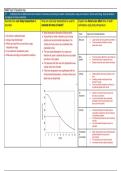
SNAB Topic 6 Question tree
6.1 Understand how to determine the time of death of a mammal by examining the extent of decomposition, stage of succession, forensic entomology, body temperature
and degree of muscle contraction.
Describe how core body temperature is How can core body temperature be used to Explain how factors can affect time of death
recorded estimate the time of death? estimations using body temperature
● Body temperature decreases following death Factor Impact on time of death estimation
● Via rectum or abdominal stab ● Accounting for certain variables (such as body
● Using a long thermometer position and environmental temperature), the Body size ● Larger bodies will have greater heat retention
● Time since death estimations would be
● Which can reach the core and has a large cooling of a body occurs at a predictable rate longer than normal
temperature range (sigmoidal curve)
● Or an electronic temperature probe ● The core body temperature of a corpse can
● While also recording environmental conditions therefore be used to estimate the time since death
Body ● The body position affects the rate of heat loss
(as shown in the graph) position ● Positions that result in greater heat loss
● This assumes that the core body temperature was ● Require shorter time since death estimations
normal at the time of death
● If the body temperature has equilibrated with the
environmental temperature, a minimum time since clothing ● Clothing affects the thermal insulation of the
body
death may be determined ● Insulating clothes would keep the body
warmer for longer
● Time since death estimations would have to
be extended greater than normal
Air ● Greater air movement would cause more
movement heat loss by convection
● In such environments, time since death
estimations need to be shortened as the
body cools more quickly
humidity ● Increased atmospheric humidity reduces
evaporation of sweat from the skin (reduced
concentration gradient)
● This effectively reduces the rate of cooling of
the body
● Time since death estimations have to be
extended
Temperature ● Higher temperatures reduce the temperature
of gradient between the body and its
surroundings surroundings
● This would reduce the rate of heat loss
● And extend time since death estimations
, 6.1 Understand how to determine the time of death of a mammal by examining the extent of decomposition, stage of succession, forensic entomology, body temperature
and degree of muscle contraction.
How can the extent of rigor mortis be used to Describe the stages of decomposition of a How is forensic entomology used to estimate
estimate time of death? body time of death?
● Rigor mortis is a temporary stiffening of the ● Autolysis: enzymes in the cell’s lysosomes
body's muscles 6-9 hours after death. break down the cell contents
● As breathing stops, aerobic respiration cannot ● Autolysis: enzymes from digestive tract start
continue digesting tissues
● Anaerobic respiration occurs but lactic acid ● Loss of oxygen (no lung or heart function)
build-up (see topic 7) causes this to eventually means anaerobic bacteria proliferate
stop too. ● Sulfhaemoglobin forms giving bodies a
● The lack of ATP results in myosin heads not greenish discolouration
being able to detach from actin filaments ● Discolouration proceeds to reddish-green and
(see topic 7) purple-black
● This causes stiffening of limbs ● Bacterial action causes production of hydrogen
● As decomposition occurs, and muscle proteins sulphide, methane, carbon dioxide, ammonia • Insects can colonise a dead body
get broken down, the rigor mortis passes off. and hydrogen, which causes the body to smell • Insect samples can be collected (embryo, larva,
pupa) and measured (mass, length)
and bloat.
• Knowledge if insect life cycles/stages of
● As tissues decompose, the gas can escape, development are used to estimate a time when
body deflates. the eggs were laid
● As fluid drains away, the rate of decomposition • Life-cycles vary across fly species (so the
slows. species has to be identified – identify observable
characteristics, or use a classification key)
• Lifecycles are also dependent on temperature
• Knowing when the eggs were laid gives a
minimum time for how long the person has been
dead.
Identify the factors that may affect the rate at Explain how temperature affects rate of How can stage of succession be used to
which rigor mortis occurs. decomposition estimate time of death?
● Higher temperature increases the rate of these • Autolysis and bacterial decomposition is • Some insect species get their food and shelter
changes and the onset of rigor mortis would be caused by enzymes in a corpse (their niche)
quicker, and pass off more quickly too. • Lower temperatures reduce the frequency • As the corpse decomposes, it can be colonised
● In such a case, the time since death estimation of successful collisions between by insects
would be reduced. substrates and digestive enzymes. • Different stages of decomposition attract
different insect species
● Other factors that affect the body temperature Lowering the rate of decomposition
• Therefore, the community of insects on a corpse
therefore would also affect progression of rigor • Higher temperatures increase frequency changes as decomposition occurs
mortis of successful collisions and increase the
• The greater the number of different species, the
● Rigor mortis sets in and passes off more quickly rate of decomposition longer the body has been decomposing
for smaller muscles than larger ones. • Very high temperatures could denature • (internal) bacteria, Flies, beetles, fungi
digestive enzymes, and so lower the rate
of decomposition.
6.1 Understand how to determine the time of death of a mammal by examining the extent of decomposition, stage of succession, forensic entomology, body temperature
and degree of muscle contraction.
Describe how core body temperature is How can core body temperature be used to Explain how factors can affect time of death
recorded estimate the time of death? estimations using body temperature
● Body temperature decreases following death Factor Impact on time of death estimation
● Via rectum or abdominal stab ● Accounting for certain variables (such as body
● Using a long thermometer position and environmental temperature), the Body size ● Larger bodies will have greater heat retention
● Time since death estimations would be
● Which can reach the core and has a large cooling of a body occurs at a predictable rate longer than normal
temperature range (sigmoidal curve)
● Or an electronic temperature probe ● The core body temperature of a corpse can
● While also recording environmental conditions therefore be used to estimate the time since death
Body ● The body position affects the rate of heat loss
(as shown in the graph) position ● Positions that result in greater heat loss
● This assumes that the core body temperature was ● Require shorter time since death estimations
normal at the time of death
● If the body temperature has equilibrated with the
environmental temperature, a minimum time since clothing ● Clothing affects the thermal insulation of the
body
death may be determined ● Insulating clothes would keep the body
warmer for longer
● Time since death estimations would have to
be extended greater than normal
Air ● Greater air movement would cause more
movement heat loss by convection
● In such environments, time since death
estimations need to be shortened as the
body cools more quickly
humidity ● Increased atmospheric humidity reduces
evaporation of sweat from the skin (reduced
concentration gradient)
● This effectively reduces the rate of cooling of
the body
● Time since death estimations have to be
extended
Temperature ● Higher temperatures reduce the temperature
of gradient between the body and its
surroundings surroundings
● This would reduce the rate of heat loss
● And extend time since death estimations
, 6.1 Understand how to determine the time of death of a mammal by examining the extent of decomposition, stage of succession, forensic entomology, body temperature
and degree of muscle contraction.
How can the extent of rigor mortis be used to Describe the stages of decomposition of a How is forensic entomology used to estimate
estimate time of death? body time of death?
● Rigor mortis is a temporary stiffening of the ● Autolysis: enzymes in the cell’s lysosomes
body's muscles 6-9 hours after death. break down the cell contents
● As breathing stops, aerobic respiration cannot ● Autolysis: enzymes from digestive tract start
continue digesting tissues
● Anaerobic respiration occurs but lactic acid ● Loss of oxygen (no lung or heart function)
build-up (see topic 7) causes this to eventually means anaerobic bacteria proliferate
stop too. ● Sulfhaemoglobin forms giving bodies a
● The lack of ATP results in myosin heads not greenish discolouration
being able to detach from actin filaments ● Discolouration proceeds to reddish-green and
(see topic 7) purple-black
● This causes stiffening of limbs ● Bacterial action causes production of hydrogen
● As decomposition occurs, and muscle proteins sulphide, methane, carbon dioxide, ammonia • Insects can colonise a dead body
get broken down, the rigor mortis passes off. and hydrogen, which causes the body to smell • Insect samples can be collected (embryo, larva,
pupa) and measured (mass, length)
and bloat.
• Knowledge if insect life cycles/stages of
● As tissues decompose, the gas can escape, development are used to estimate a time when
body deflates. the eggs were laid
● As fluid drains away, the rate of decomposition • Life-cycles vary across fly species (so the
slows. species has to be identified – identify observable
characteristics, or use a classification key)
• Lifecycles are also dependent on temperature
• Knowing when the eggs were laid gives a
minimum time for how long the person has been
dead.
Identify the factors that may affect the rate at Explain how temperature affects rate of How can stage of succession be used to
which rigor mortis occurs. decomposition estimate time of death?
● Higher temperature increases the rate of these • Autolysis and bacterial decomposition is • Some insect species get their food and shelter
changes and the onset of rigor mortis would be caused by enzymes in a corpse (their niche)
quicker, and pass off more quickly too. • Lower temperatures reduce the frequency • As the corpse decomposes, it can be colonised
● In such a case, the time since death estimation of successful collisions between by insects
would be reduced. substrates and digestive enzymes. • Different stages of decomposition attract
different insect species
● Other factors that affect the body temperature Lowering the rate of decomposition
• Therefore, the community of insects on a corpse
therefore would also affect progression of rigor • Higher temperatures increase frequency changes as decomposition occurs
mortis of successful collisions and increase the
• The greater the number of different species, the
● Rigor mortis sets in and passes off more quickly rate of decomposition longer the body has been decomposing
for smaller muscles than larger ones. • Very high temperatures could denature • (internal) bacteria, Flies, beetles, fungi
digestive enzymes, and so lower the rate
of decomposition.


