
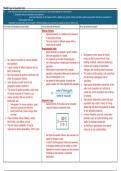
SNAB Topic 4 Question tree
4.1 Know that over time the variety of life has become extensive but is now being threatened by human activity.
2. i) Understand the terms biodiversity and endemism.
ii. Know how biodiversity can be measured within a habitat using species richness and within a species using genetic diversity by calculating the
heterozygosity index (H)
Understand how biodiversity can be compared in different habitats using a formula to calculate an index of diversity (D)
How is variety of life threatened by human activity? How can biodiversity be measured? Why is high biodiversity important?
Species richness
o Species biodiversity in a habitat can be measured
by the species richness
o This is the number of different species within a
known area of a habitat
Heterozygosity index
o genetic diversity is a measure of genetic variation
within one population in a habitat • Ecosystems are the source of natural
• As a result of evolution by natural selection o It is measured by the index of heterozygosity resources that humans rely on (food,
▪ this is the proportion of heterozygous individuals in a building materials, medicinal substances)
and speciation
population • Humans are causing environmental
• A great number of different species exist on
▪ DNA samples must be taken from a sample changes, and overusing natural resources
Earth (biodiversity)
population, and genetic profiles used to determine if • This means certain species, and ecosystems
• Each has evolved to perform a particular role
they are heterozygous or not. are becoming endangered (risk of
within its ecosystem (Niche)
▪ the greater the heterozygosity, the greater the extinction)
• Some species are only found in one
genetic variation, the more adaptable the population. • High species biodiversity means that all the
geographic location (endemic)
roles in an ecosystem can continue to
• The variety of species provides a wide range
carried out, so the ecosystem can continue
of natural resources for human to use.
to function.
• Human activities that are harmful to
Simpson’s index • High genetic biodiversity means that each
biodiversity are:
1. Deforestation (for human habitation, roads) o species diversity in two areas can be compared population has a better chance of having
2. Agriculture (growing food demands) using the Simpson’s biodiversity index alleles that will allow the population to adapt
3. Burning fossil fuels (climate change, global to new selection pressures
warming) • Humans therefore carry out conservation
• These activities reduce habitats, reduce activities (such as captive breeding, seed
biodiversity, and reduce survival banks) to maintain biodiversity
• This will reduce availability of natural • So that future generations have natural
resources for future generations. (That’s you!) resources to use (sustainability)
o
o the higher the species richness, and evenness, the
higher the Simpson’s index
o In order to find the species richness and evenness,
an ecological sampling has be carried out, which
estimates the number of species and the number of
individuals in each species in a particular
area/habitat.
, 4.3 Understand the concept of niche and be able to discuss examples of adaptation of organisms to their environment (behavioural, physiological and anatomical).
4.4 Understand how natural selection can lead to adaptation and evolution.
How do we differentiate between the terms
How are adaptations linked to niche? How are adaptations evolved??
evolution, natural selection and speciation?
• Please practice this in context,e.g. bacteria and
antibiotics, different coloured mice and fox
• Evolution occurs by natural selection
• due to meiosis (crossing over, independent
assortment), fertilisation and mutation, there is
genetic variation in a population – say what that is
in this example.
• Niche, is the role of a species in an ecosystem • abiotic or biotic factors in the environment cause a
• It refers to how an organism feeds, mates, its selection pressure, those with the advantageous
predators, where it gets shelter. trait have a better chance of survival than others –
• Organisms have evolved adaptations by natural say what that is in this example.
selection to allow them to occupy their niche • those that survive and reproduce, pass on their
• Adaptations are specialised physiological, alleles for adaptation.- alleles for what in this
behavioural and anatomical features of an organism example? • Evolution is the gradual change in (the allele
that make it suited to its environment. frequencies) a population
• alleles for adaptations become more common in
o Physiological: chemical role, metabolic, • It results in the development of adaptations that make
the population (frequency of alleles for adaptations
inside the organism, can’t see by eye organisms more suited to their niche
o Behavioural: something an organism does increases) – again, alleles for what become more
common in this example? • The process by which species evolve is called natural
o Anatomical: structural, can usually see by
• the population is said to be evolving, as it selection
eye, on the outside of an organism, physical
role becomes better adapted to the selection pressure • When some individuals of a population get isolated
• Different species in a habitat have different niches – say how the entire population is now different they evolve separately to the original population
• If their niches overlap, they will be competing for the • This may result in the isolated population becoming
same resources (interspecific competition) reproductively incompatible with the original
• One will be outcompeted and have to migrate or population which is called speciation
become extinct
4.1 Know that over time the variety of life has become extensive but is now being threatened by human activity.
2. i) Understand the terms biodiversity and endemism.
ii. Know how biodiversity can be measured within a habitat using species richness and within a species using genetic diversity by calculating the
heterozygosity index (H)
Understand how biodiversity can be compared in different habitats using a formula to calculate an index of diversity (D)
How is variety of life threatened by human activity? How can biodiversity be measured? Why is high biodiversity important?
Species richness
o Species biodiversity in a habitat can be measured
by the species richness
o This is the number of different species within a
known area of a habitat
Heterozygosity index
o genetic diversity is a measure of genetic variation
within one population in a habitat • Ecosystems are the source of natural
• As a result of evolution by natural selection o It is measured by the index of heterozygosity resources that humans rely on (food,
▪ this is the proportion of heterozygous individuals in a building materials, medicinal substances)
and speciation
population • Humans are causing environmental
• A great number of different species exist on
▪ DNA samples must be taken from a sample changes, and overusing natural resources
Earth (biodiversity)
population, and genetic profiles used to determine if • This means certain species, and ecosystems
• Each has evolved to perform a particular role
they are heterozygous or not. are becoming endangered (risk of
within its ecosystem (Niche)
▪ the greater the heterozygosity, the greater the extinction)
• Some species are only found in one
genetic variation, the more adaptable the population. • High species biodiversity means that all the
geographic location (endemic)
roles in an ecosystem can continue to
• The variety of species provides a wide range
carried out, so the ecosystem can continue
of natural resources for human to use.
to function.
• Human activities that are harmful to
Simpson’s index • High genetic biodiversity means that each
biodiversity are:
1. Deforestation (for human habitation, roads) o species diversity in two areas can be compared population has a better chance of having
2. Agriculture (growing food demands) using the Simpson’s biodiversity index alleles that will allow the population to adapt
3. Burning fossil fuels (climate change, global to new selection pressures
warming) • Humans therefore carry out conservation
• These activities reduce habitats, reduce activities (such as captive breeding, seed
biodiversity, and reduce survival banks) to maintain biodiversity
• This will reduce availability of natural • So that future generations have natural
resources for future generations. (That’s you!) resources to use (sustainability)
o
o the higher the species richness, and evenness, the
higher the Simpson’s index
o In order to find the species richness and evenness,
an ecological sampling has be carried out, which
estimates the number of species and the number of
individuals in each species in a particular
area/habitat.
, 4.3 Understand the concept of niche and be able to discuss examples of adaptation of organisms to their environment (behavioural, physiological and anatomical).
4.4 Understand how natural selection can lead to adaptation and evolution.
How do we differentiate between the terms
How are adaptations linked to niche? How are adaptations evolved??
evolution, natural selection and speciation?
• Please practice this in context,e.g. bacteria and
antibiotics, different coloured mice and fox
• Evolution occurs by natural selection
• due to meiosis (crossing over, independent
assortment), fertilisation and mutation, there is
genetic variation in a population – say what that is
in this example.
• Niche, is the role of a species in an ecosystem • abiotic or biotic factors in the environment cause a
• It refers to how an organism feeds, mates, its selection pressure, those with the advantageous
predators, where it gets shelter. trait have a better chance of survival than others –
• Organisms have evolved adaptations by natural say what that is in this example.
selection to allow them to occupy their niche • those that survive and reproduce, pass on their
• Adaptations are specialised physiological, alleles for adaptation.- alleles for what in this
behavioural and anatomical features of an organism example? • Evolution is the gradual change in (the allele
that make it suited to its environment. frequencies) a population
• alleles for adaptations become more common in
o Physiological: chemical role, metabolic, • It results in the development of adaptations that make
the population (frequency of alleles for adaptations
inside the organism, can’t see by eye organisms more suited to their niche
o Behavioural: something an organism does increases) – again, alleles for what become more
common in this example? • The process by which species evolve is called natural
o Anatomical: structural, can usually see by
• the population is said to be evolving, as it selection
eye, on the outside of an organism, physical
role becomes better adapted to the selection pressure • When some individuals of a population get isolated
• Different species in a habitat have different niches – say how the entire population is now different they evolve separately to the original population
• If their niches overlap, they will be competing for the • This may result in the isolated population becoming
same resources (interspecific competition) reproductively incompatible with the original
• One will be outcompeted and have to migrate or population which is called speciation
become extinct


