

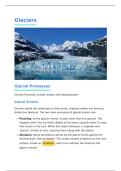
Glaciers
Glacial Processes
Glacial Processes include erosion and transportation
Glacial Erosion
Glaciers erode the landscape as they move, shaping valleys and forming
distinctive features. The two main processes of glacial erosion are:
Plucking: As the glacier moves, it pulls rocks from the ground. This
happens when the ice melts slightly at the base, causing water to seep
into cracks in the rock. When this water refreezes, it expands and
"plucks" chunks of rock, carrying them along with the glacier.
Abrasion: Rocks and debris carried by the glacier grind against the
land beneath, like sandpaper. This action creates scratches on the rock
surface, known as striations , which can indicate the direction the
glacier moved.
, Glacial Transportation
Glaciers also transport material as they move downhill. The material
transported by glaciers is known as moraine and is classified based on
where it is located:
Lateral moraines: These are ridges of debris found along the sides of
a glacier, formed by material that falls from the valley walls or is
plucked from the sides by the glacier.
Medial moraines: When two glaciers meet, the debris from their
lateral moraines combines and forms a ridge down the centre of the
joined glacier.
Ground moraines: Found at the base of the glacier, these are
deposits of material that were plucked from the valley floor as the
glacier moved.
Terminal moraines: These form at the front of a glacier and mark the
furthest point the glacier has advanced. They consist of debris pushed
along by the glacier as it moves.
Features of Glacial Erosion
Glacial erosion creates distinctive landforms, particularly in mountainous
areas where glaciers have carved through valleys and shaped the
landscape.
U-Shaped Valleys: These valleys are formed when a glacier moves
through a V-shaped river valley, widening and deepening it. The
glacier erodes the valley sides and floor, creating steep sides and a flat
bottom, resembling the letter "U". An example is
Glendalough, Co. Wicklow .
Glacial Processes
Glacial Processes include erosion and transportation
Glacial Erosion
Glaciers erode the landscape as they move, shaping valleys and forming
distinctive features. The two main processes of glacial erosion are:
Plucking: As the glacier moves, it pulls rocks from the ground. This
happens when the ice melts slightly at the base, causing water to seep
into cracks in the rock. When this water refreezes, it expands and
"plucks" chunks of rock, carrying them along with the glacier.
Abrasion: Rocks and debris carried by the glacier grind against the
land beneath, like sandpaper. This action creates scratches on the rock
surface, known as striations , which can indicate the direction the
glacier moved.
, Glacial Transportation
Glaciers also transport material as they move downhill. The material
transported by glaciers is known as moraine and is classified based on
where it is located:
Lateral moraines: These are ridges of debris found along the sides of
a glacier, formed by material that falls from the valley walls or is
plucked from the sides by the glacier.
Medial moraines: When two glaciers meet, the debris from their
lateral moraines combines and forms a ridge down the centre of the
joined glacier.
Ground moraines: Found at the base of the glacier, these are
deposits of material that were plucked from the valley floor as the
glacier moved.
Terminal moraines: These form at the front of a glacier and mark the
furthest point the glacier has advanced. They consist of debris pushed
along by the glacier as it moves.
Features of Glacial Erosion
Glacial erosion creates distinctive landforms, particularly in mountainous
areas where glaciers have carved through valleys and shaped the
landscape.
U-Shaped Valleys: These valleys are formed when a glacier moves
through a V-shaped river valley, widening and deepening it. The
glacier erodes the valley sides and floor, creating steep sides and a flat
bottom, resembling the letter "U". An example is
Glendalough, Co. Wicklow .


