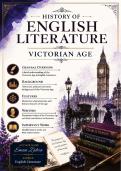
, Victorian Age of English
literature(1837-1901)
Q#. 01 Describe general overview of Victorian age of English literature.
Victorian Age (1837–1901):
The Victorian Age is named after Queen Victoria, who ruled Britain from 1837 to 1901. It was a
time of great change in society, industry, politics, and thought, and literature reflected all of these
transformations.
Historical Background:
Understanding the Victorian Age requires looking at the major developments of the time:
1. Industrial Revolution:
Britain became highly industrialized with factories and machines.
Cities grew rapidly, leading to urbanization.
However, this also created poverty, child labor, and class division.
2. Social Reform Movements:
There were efforts to improve working conditions, education, and women’s rights.
Writers often highlighted social problems to inspire reform.
3. Scientific Progress:
New ideas challenged religion, especially after Charles Darwin published On the Origin of
Species (1859).
This created a conflict between science and faith, which appears in literature.
4. Expansion of the British Empire:
Britain became a global power.
Literature often reflects imperial confidence as well as criticism of colonialism.
5. Rise of the Middle Class:
The middle class gained power and influence.
Literature began to focus on ordinary people rather than just the aristocracy.
Major Features of Victorian Literature:
major features of the victorian literature are:
1. Realism:
Writers focused on real-life situations instead of fantasy.
They described everyday life, especially of the middle and lower classes.
Example: novels of Charles Dickens.
2. Social Criticism:
literature(1837-1901)
Q#. 01 Describe general overview of Victorian age of English literature.
Victorian Age (1837–1901):
The Victorian Age is named after Queen Victoria, who ruled Britain from 1837 to 1901. It was a
time of great change in society, industry, politics, and thought, and literature reflected all of these
transformations.
Historical Background:
Understanding the Victorian Age requires looking at the major developments of the time:
1. Industrial Revolution:
Britain became highly industrialized with factories and machines.
Cities grew rapidly, leading to urbanization.
However, this also created poverty, child labor, and class division.
2. Social Reform Movements:
There were efforts to improve working conditions, education, and women’s rights.
Writers often highlighted social problems to inspire reform.
3. Scientific Progress:
New ideas challenged religion, especially after Charles Darwin published On the Origin of
Species (1859).
This created a conflict between science and faith, which appears in literature.
4. Expansion of the British Empire:
Britain became a global power.
Literature often reflects imperial confidence as well as criticism of colonialism.
5. Rise of the Middle Class:
The middle class gained power and influence.
Literature began to focus on ordinary people rather than just the aristocracy.
Major Features of Victorian Literature:
major features of the victorian literature are:
1. Realism:
Writers focused on real-life situations instead of fantasy.
They described everyday life, especially of the middle and lower classes.
Example: novels of Charles Dickens.
2. Social Criticism: