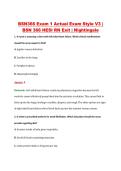
BSN366 Exam 1 Actual Exam Style V3 |
BSN 366 HESI RN Exit | Nightingale
1. A nurse is assessing a client with left-sided heart failure. Which clinical manifestation
should the nurse expect to find?
A. Jugular venous distention
B. Crackles in the lungs
C. Peripheral edema
D. Hepatosplenomegaly
Answer: B
Rationale: Left-sided heart failure results in pulmonary congestion because the left
ventricle cannot effectively pump blood into the systemic circulation. This causes fluid to
back up into the lungs, leading to crackles, dyspnea, and cough. The other options are signs
of right-sided heart failure where blood backs up into the systemic venous system.
2. A client is prescribed warfarin for atrial fibrillation. Which education should the nurse
provide regarding diet?
A. Increase intake of leafy green vegetables
B. Avoid all foods containing potassium
C. Limit protein intake to 40 grams per day
,D. Maintain a consistent intake of vitamin K
Answer: D
Rationale: Warfarin works by inhibiting vitamin K-dependent clotting factors, so sudden
changes in vitamin K intake can alter its effectiveness. Leafy greens are high in vitamin K
and can decrease the drug’s anticoagulant effect if increased suddenly. Consistency is the
key to maintaining a therapeutic International Normalized Ratio (INR) range.
3. Which action is a priority for a nurse caring for a patient immediately following a total hip
arthroplasty?
A. Encouraging the patient to cross their legs
B. Assisting the patient to a sitting position of 120 degrees
C. Placing an abduction pillow between the legs
D. Turning the patient onto the operative side
Answer: C
Rationale: Following a total hip arthroplasty, it is vital to prevent dislocation of the new
prosthesis. An abduction pillow keeps the legs apart and prevents adduction, which is a
major risk factor for dislocation. The nurse should also ensure the patient does not flex the
hip beyond 90 degrees.
4. A client with type 1 diabetes mellitus presents with diaphoresis, tremors, and confusion.
What is the nurse’s first action?
A. Administer 10 units of regular insulin
, B. Check the client’s blood glucose level
C. Give the client 4 ounces of orange juice
D. Call the healthcare provider immediately
Answer: B
Rationale: The client is exhibiting classic symptoms of hypoglycemia, which is a medical
emergency. The nurse must first confirm the blood glucose level to guide the appropriate
treatment. If the level is low, the nurse should follow the 15-15 rule by providing 15 grams
of rapid-acting carbohydrates.
5. A nurse is caring for a patient with COPD who is receiving oxygen at 2L/min via nasal
cannula. The patient’s SpO2 is 89%. What is the most appropriate nursing action?
A. Increase the oxygen flow to 6L/min
B. Prepare for immediate intubation
C. Continue to monitor the patient
D. Switch to a non-rebreather mask
Answer: C
Rationale: For patients with COPD, a target oxygen saturation of 88% to 92% is often
acceptable because their drive to breathe is triggered by low oxygen levels rather than high
CO2. High levels of supplemental oxygen can suppress this respiratory drive in chronic CO2
BSN 366 HESI RN Exit | Nightingale
1. A nurse is assessing a client with left-sided heart failure. Which clinical manifestation
should the nurse expect to find?
A. Jugular venous distention
B. Crackles in the lungs
C. Peripheral edema
D. Hepatosplenomegaly
Answer: B
Rationale: Left-sided heart failure results in pulmonary congestion because the left
ventricle cannot effectively pump blood into the systemic circulation. This causes fluid to
back up into the lungs, leading to crackles, dyspnea, and cough. The other options are signs
of right-sided heart failure where blood backs up into the systemic venous system.
2. A client is prescribed warfarin for atrial fibrillation. Which education should the nurse
provide regarding diet?
A. Increase intake of leafy green vegetables
B. Avoid all foods containing potassium
C. Limit protein intake to 40 grams per day
,D. Maintain a consistent intake of vitamin K
Answer: D
Rationale: Warfarin works by inhibiting vitamin K-dependent clotting factors, so sudden
changes in vitamin K intake can alter its effectiveness. Leafy greens are high in vitamin K
and can decrease the drug’s anticoagulant effect if increased suddenly. Consistency is the
key to maintaining a therapeutic International Normalized Ratio (INR) range.
3. Which action is a priority for a nurse caring for a patient immediately following a total hip
arthroplasty?
A. Encouraging the patient to cross their legs
B. Assisting the patient to a sitting position of 120 degrees
C. Placing an abduction pillow between the legs
D. Turning the patient onto the operative side
Answer: C
Rationale: Following a total hip arthroplasty, it is vital to prevent dislocation of the new
prosthesis. An abduction pillow keeps the legs apart and prevents adduction, which is a
major risk factor for dislocation. The nurse should also ensure the patient does not flex the
hip beyond 90 degrees.
4. A client with type 1 diabetes mellitus presents with diaphoresis, tremors, and confusion.
What is the nurse’s first action?
A. Administer 10 units of regular insulin
, B. Check the client’s blood glucose level
C. Give the client 4 ounces of orange juice
D. Call the healthcare provider immediately
Answer: B
Rationale: The client is exhibiting classic symptoms of hypoglycemia, which is a medical
emergency. The nurse must first confirm the blood glucose level to guide the appropriate
treatment. If the level is low, the nurse should follow the 15-15 rule by providing 15 grams
of rapid-acting carbohydrates.
5. A nurse is caring for a patient with COPD who is receiving oxygen at 2L/min via nasal
cannula. The patient’s SpO2 is 89%. What is the most appropriate nursing action?
A. Increase the oxygen flow to 6L/min
B. Prepare for immediate intubation
C. Continue to monitor the patient
D. Switch to a non-rebreather mask
Answer: C
Rationale: For patients with COPD, a target oxygen saturation of 88% to 92% is often
acceptable because their drive to breathe is triggered by low oxygen levels rather than high
CO2. High levels of supplemental oxygen can suppress this respiratory drive in chronic CO2