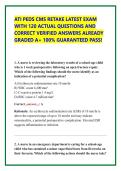
ATI PEDS CMS RETAKE LATEST EXAM
WITH 120 ACTUAL QUESTIONS AND
CORRECT VERIFIED ANSWERS ALREADY
GRADED A+ 100% GUARANTEED PASS!
1. A nurse is reviewing the laboratory results of a school-age child
who is 1 week postoperative following an open fracture repair.
Which of the following findings should the nurse identify as an
indication of a potential complication?
A) Erythrocyte sedimentation rate 10 mm/hr
B) WBC count 6,200/mm³
C) C-reactive protein 1.4 mg/L
D) RBC count 4.7 million/mm³
Correct ,,answer,,,: A
Rationale: An erythrocyte sedimentation rate (ESR) of 10 mm/hr is
above the expected range of up to 10 mm/hr and may indicate
osteomyelitis, a potential postoperative complication. Elevated ESR
suggests inflammation or infection.
2. A nurse in an emergency department is caring for a school-age
child who has sustained a minor superficial burn from fireworks on
their forearm. Which of the following actions should the nurse take?
,A) Apply an antimicrobial ointment to the affected area
B) Apply ice directly to the burn
C) Break any blisters that have formed
D) Cover the burn with a tight dressing
Correct ,,answer,,,: A
Rationale: For a minor superficial burn, the nurse should apply an
antimicrobial ointment to prevent infection and promote healing. Ice
should not be applied directly, blisters should not be broken, and tight
dressings should be avoided.
3. A nurse is preparing to administer ibuprofen 5 mg/kg every 6 hr
PRN for a temperature above 38.0°C (100.5°F) to an infant who
weighs 17.6 lb. Available is ibuprofen oral suspension 100 mg/5 mL.
How many mL should the nurse administer per dose?
A) 1 mL
B) 2 mL
C) 3 mL
D) 4 mL
Correct ,,answer,,,: B
Rationale: First convert pounds to kg: 17.6 lb ÷ 2.2 = 8 kg. Calculate
dose: 5 mg/kg × 8 kg = 40 mg. Using the available concentration (100
mg/5 mL = 20 mg/mL): 40 mg ÷ 20 mg/mL = 2 mL.
,4. A nurse in an emergency department is assessing a toddler who
has Kawasaki disease. Which of the following findings should the
nurse expect? (Select all that apply.)
A) Increased temperature
B) Xerophthalmia
C) Cervical lymphadenopathy
D) Decreased heart rate
E) Pale conjunctiva
Correct ,,answer,,,s: A, B, C
Rationale: Classic findings of Kawasaki disease include fever
(increased temperature), xerophthalmia (dry eyes), and cervical
lymphadenopathy. These are part of the diagnostic criteria for Kawasaki
disease along with conjunctival injection, oral mucosal changes, and
extremity changes.
5. A nurse in an emergency department is auscultating the lungs of
an adolescent who is experiencing dyspnea. The nurse should
identify the sound as which of the following?
A) Crackles
B) Wheezes
C) Rhonchi
D) Stridor
Correct ,,answer,,,: B
, Rationale: Wheezes are high-pitched musical sounds heard during
expiration, often associated with asthma or bronchospasm in an
adolescent experiencing dyspnea.
6. A nurse is planning developmental activities for a newly admitted
10-year-old child who has neutropenia. Which of the following
actions should the nurse plan to take?
A) Provide the child with a book about adventure
B) Arrange for group play activities
C) Take the child to the playroom
D) Provide the child with video games only
Correct ,,answer,,,: A
Rationale: A 10-year-old child with neutropenia is at increased risk for
infection. The nurse should provide quiet, individual activities such as
reading a book to minimize exposure to infection. Adventure books are
age-appropriate for school-age children.
7. A nurse is planning an educational program for school-age
children and their parents about bicycle safety. Which of the
following information should the nurse plan to include?
A) The child should be able to stand on the balls of their feet when
sitting on the bike
B) The child should wear a helmet only when riding on busy roads
WITH 120 ACTUAL QUESTIONS AND
CORRECT VERIFIED ANSWERS ALREADY
GRADED A+ 100% GUARANTEED PASS!
1. A nurse is reviewing the laboratory results of a school-age child
who is 1 week postoperative following an open fracture repair.
Which of the following findings should the nurse identify as an
indication of a potential complication?
A) Erythrocyte sedimentation rate 10 mm/hr
B) WBC count 6,200/mm³
C) C-reactive protein 1.4 mg/L
D) RBC count 4.7 million/mm³
Correct ,,answer,,,: A
Rationale: An erythrocyte sedimentation rate (ESR) of 10 mm/hr is
above the expected range of up to 10 mm/hr and may indicate
osteomyelitis, a potential postoperative complication. Elevated ESR
suggests inflammation or infection.
2. A nurse in an emergency department is caring for a school-age
child who has sustained a minor superficial burn from fireworks on
their forearm. Which of the following actions should the nurse take?
,A) Apply an antimicrobial ointment to the affected area
B) Apply ice directly to the burn
C) Break any blisters that have formed
D) Cover the burn with a tight dressing
Correct ,,answer,,,: A
Rationale: For a minor superficial burn, the nurse should apply an
antimicrobial ointment to prevent infection and promote healing. Ice
should not be applied directly, blisters should not be broken, and tight
dressings should be avoided.
3. A nurse is preparing to administer ibuprofen 5 mg/kg every 6 hr
PRN for a temperature above 38.0°C (100.5°F) to an infant who
weighs 17.6 lb. Available is ibuprofen oral suspension 100 mg/5 mL.
How many mL should the nurse administer per dose?
A) 1 mL
B) 2 mL
C) 3 mL
D) 4 mL
Correct ,,answer,,,: B
Rationale: First convert pounds to kg: 17.6 lb ÷ 2.2 = 8 kg. Calculate
dose: 5 mg/kg × 8 kg = 40 mg. Using the available concentration (100
mg/5 mL = 20 mg/mL): 40 mg ÷ 20 mg/mL = 2 mL.
,4. A nurse in an emergency department is assessing a toddler who
has Kawasaki disease. Which of the following findings should the
nurse expect? (Select all that apply.)
A) Increased temperature
B) Xerophthalmia
C) Cervical lymphadenopathy
D) Decreased heart rate
E) Pale conjunctiva
Correct ,,answer,,,s: A, B, C
Rationale: Classic findings of Kawasaki disease include fever
(increased temperature), xerophthalmia (dry eyes), and cervical
lymphadenopathy. These are part of the diagnostic criteria for Kawasaki
disease along with conjunctival injection, oral mucosal changes, and
extremity changes.
5. A nurse in an emergency department is auscultating the lungs of
an adolescent who is experiencing dyspnea. The nurse should
identify the sound as which of the following?
A) Crackles
B) Wheezes
C) Rhonchi
D) Stridor
Correct ,,answer,,,: B
, Rationale: Wheezes are high-pitched musical sounds heard during
expiration, often associated with asthma or bronchospasm in an
adolescent experiencing dyspnea.
6. A nurse is planning developmental activities for a newly admitted
10-year-old child who has neutropenia. Which of the following
actions should the nurse plan to take?
A) Provide the child with a book about adventure
B) Arrange for group play activities
C) Take the child to the playroom
D) Provide the child with video games only
Correct ,,answer,,,: A
Rationale: A 10-year-old child with neutropenia is at increased risk for
infection. The nurse should provide quiet, individual activities such as
reading a book to minimize exposure to infection. Adventure books are
age-appropriate for school-age children.
7. A nurse is planning an educational program for school-age
children and their parents about bicycle safety. Which of the
following information should the nurse plan to include?
A) The child should be able to stand on the balls of their feet when
sitting on the bike
B) The child should wear a helmet only when riding on busy roads