
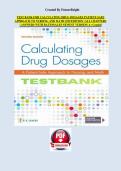
Created By FutureBright
TEST BANK FOR CALCULATING DRUG DOSAGES PATIENT-SAFE
APPROACH TO NURSING AND MATH 2ND EDITION | ALL CHAPTERS
| ANSWERS WITH RATIONALES NEWEST VERSION A+ Graded
, Created By FutureBright
Calculating Drug Dosages: A Patient-Safe Approach to Nursing and Math (2nd Edition)
TABLE OF CONTENTS
I. Safety in Medication Administration
1. Safety in Medication Administration
2. The Drug Label
II. Systems of Measurement
3. The Metric System
4. The Household System
III. Methods of Calculation
5. Linear Ratio and Proportion
6. Fractional Ratio and Proportion
7. Dimensional Analysis
8. Formula Method
IV. Administration of Medications
9. Calculating Oral Medication Doses
10. Syringes and Needles
11. Calculating Parenteral Medication Dosages
12. Preparing Powdered Parenteral Medications
13. Administration of Insulin
V. IV Therapy and Administration of Intravenous Medications
14. Intravenous Infusion and Infusion Rates
15. Calculating Infusion and Completion Time
16. Administering IV Push Medications
VI. Verifying Safe Dose and Critical Care Calculations
17. Verifying Safe Dose
18. Titration of Intravenous Medications
VII. Intake and Output
19. Calculating Intake and Output
20. Calculating Parenteral Intake
VIII. Dosages for Pediatric and Older Adult Populations
21. Considerations for the Pediatric Patient
22. Considerations for the Older Adult
, Created By FutureBright
Chapter 1: Safety in Medication Administration – Test Bank
1. A nurse is preparing to administer a new medication to a patient. Which of
the following is the most important first step to ensure safe medication
administration?
A. Verify the patient’s identity
B. Shake the medication vigorously
C. Document the medication after administration
D. Ask the patient if they want the medication
Answer: A
Rationale: Verifying the patient’s identity using two identifiers (e.g., name and
date of birth) is the most critical first step to prevent medication errors.
2. The “Five Rights” of medication administration include all of the following
EXCEPT:
A. Right patient
B. Right dose
C. Right documentation
D. Right allergy
Answer: D
Rationale: The five rights are right patient, right drug, right dose, right route, and
right time. Checking allergies is essential but is not one of the “five rights.”
3. A patient refuses a prescribed medication. What should the nurse do first?
A. Explain the consequences of not taking the medication
B. Document the refusal and notify the provider
C. Force the patient to take the medication
D. Leave the medication at the bedside
Answer: B
Rationale: Patient autonomy must be respected. The nurse should document the
refusal, notify the provider, and provide education as appropriate.
, Created By FutureBright
4. A new nurse administers a medication at the wrong time. Which safety
principle is most directly involved?
A. Right patient
B. Right route
C. Right time
D. Right documentation
Answer: C
Rationale: Administering medications at the prescribed time is critical to ensure
therapeutic effectiveness and prevent adverse effects.
5. Which of the following is considered a high-alert medication?
A. Acetaminophen
B. Insulin
C. Amoxicillin
D. Ibuprofen
Answer: B
Rationale: High-alert medications, like insulin, have a higher risk of causing
serious harm if used incorrectly. Nurses must take extra precautions when
administering these medications.
6. A nurse is checking a patient’s MAR and notices an unclear order. The best
action is:
A. Administer the medication anyway
B. Clarify the order with the prescriber
C. Ask a colleague to interpret the order
D. Wait until the next shift to clarify
Answer: B
Rationale: Administering medications without a clear order is unsafe. The nurse
must clarify unclear orders with the prescriber before administration.
TEST BANK FOR CALCULATING DRUG DOSAGES PATIENT-SAFE
APPROACH TO NURSING AND MATH 2ND EDITION | ALL CHAPTERS
| ANSWERS WITH RATIONALES NEWEST VERSION A+ Graded
, Created By FutureBright
Calculating Drug Dosages: A Patient-Safe Approach to Nursing and Math (2nd Edition)
TABLE OF CONTENTS
I. Safety in Medication Administration
1. Safety in Medication Administration
2. The Drug Label
II. Systems of Measurement
3. The Metric System
4. The Household System
III. Methods of Calculation
5. Linear Ratio and Proportion
6. Fractional Ratio and Proportion
7. Dimensional Analysis
8. Formula Method
IV. Administration of Medications
9. Calculating Oral Medication Doses
10. Syringes and Needles
11. Calculating Parenteral Medication Dosages
12. Preparing Powdered Parenteral Medications
13. Administration of Insulin
V. IV Therapy and Administration of Intravenous Medications
14. Intravenous Infusion and Infusion Rates
15. Calculating Infusion and Completion Time
16. Administering IV Push Medications
VI. Verifying Safe Dose and Critical Care Calculations
17. Verifying Safe Dose
18. Titration of Intravenous Medications
VII. Intake and Output
19. Calculating Intake and Output
20. Calculating Parenteral Intake
VIII. Dosages for Pediatric and Older Adult Populations
21. Considerations for the Pediatric Patient
22. Considerations for the Older Adult
, Created By FutureBright
Chapter 1: Safety in Medication Administration – Test Bank
1. A nurse is preparing to administer a new medication to a patient. Which of
the following is the most important first step to ensure safe medication
administration?
A. Verify the patient’s identity
B. Shake the medication vigorously
C. Document the medication after administration
D. Ask the patient if they want the medication
Answer: A
Rationale: Verifying the patient’s identity using two identifiers (e.g., name and
date of birth) is the most critical first step to prevent medication errors.
2. The “Five Rights” of medication administration include all of the following
EXCEPT:
A. Right patient
B. Right dose
C. Right documentation
D. Right allergy
Answer: D
Rationale: The five rights are right patient, right drug, right dose, right route, and
right time. Checking allergies is essential but is not one of the “five rights.”
3. A patient refuses a prescribed medication. What should the nurse do first?
A. Explain the consequences of not taking the medication
B. Document the refusal and notify the provider
C. Force the patient to take the medication
D. Leave the medication at the bedside
Answer: B
Rationale: Patient autonomy must be respected. The nurse should document the
refusal, notify the provider, and provide education as appropriate.
, Created By FutureBright
4. A new nurse administers a medication at the wrong time. Which safety
principle is most directly involved?
A. Right patient
B. Right route
C. Right time
D. Right documentation
Answer: C
Rationale: Administering medications at the prescribed time is critical to ensure
therapeutic effectiveness and prevent adverse effects.
5. Which of the following is considered a high-alert medication?
A. Acetaminophen
B. Insulin
C. Amoxicillin
D. Ibuprofen
Answer: B
Rationale: High-alert medications, like insulin, have a higher risk of causing
serious harm if used incorrectly. Nurses must take extra precautions when
administering these medications.
6. A nurse is checking a patient’s MAR and notices an unclear order. The best
action is:
A. Administer the medication anyway
B. Clarify the order with the prescriber
C. Ask a colleague to interpret the order
D. Wait until the next shift to clarify
Answer: B
Rationale: Administering medications without a clear order is unsafe. The nurse
must clarify unclear orders with the prescriber before administration.


