
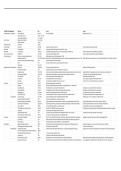
Cold War and Superpowers Key Event Date Cause 1 Cause 2
Franklin Roosevelt Joseph Stalin The Grand Alliance Nov 1941 UK and USA Capitalist USSR Communist in 1917
Tehran Conference (Iran) 28 Nov - 1 Dec 1943
Yalta Conference (Black Sea) 4 -11 Feb 1945
Harry S Truman Between Yalta and Potsdam Feb - Jul 1945
Potsdam Conference Jul 1945
Treaties/agreements War of Words 1945-46
Commonly asked Arms Race 1945-1990 6 Aug 45 USA A-bomb on Hiroshima 29 Aug 49 USSR first successful A-bomb test
Never asked Soviet Expansion 1945-48 S was angry at West for slow speed to open up 2nd Front - mistrust
Rarely asked Truman Doctrine 12 Mar 1947 USA wanted to contain spread of Comm.: many E countries attract to, eg France, Italy If Greece, Turkey become Comm, EE/ME too - Domino Effect
Look at mini post it timelines Marshall Plan 3 Apr 1948 To aid countries after devestation of WW2 To stop countries from accepting Comm. power/USSR leadership
Use Quizlet timelines Cominform - Communist Information Bureau 5 Oct 1947 USSR response to counter USA foreign policies (TD, MP)
Berlin Blockade and Airlift 24 Jun 1948 - 12 May 49 Bizonia formed - Allies administered Western Germany as a single zone, propaganda to emphasis Cap. Comm. diff USSR wanted Germany to be weak,Comm. so it couldn't attack USSR again: 27 mill Russians died in WW2
Comecon (Council for Mutual Economic Assistance) 1949 To give an alternative to MP for the Soviet Bloc
NATO 1949 USA was concerned that Comm. would now spread to other countries
Death of Stalin 5 Mar 1953
Dwight Eisenhower Nikita Khrushchev Warsaw Pact 14 May 1955 To counter the creation of NATO in 1949 After 9 May 55 W Germany joins NATO
Khrushchev Secret Speech 1956 As Stalin died, Khrushchev became the new leader - wanted change
Hungarian Uprising 23 Oct 1956 Due to poor harvest, bread shortages, Hungarias demonstated - pulling down Stalin statues, attack local Comms. K appointed liberal Imre Nagy hoping for calm solution - Nagy wants to leave Warsaw Pact
Khrushchev Berlin Ultimatum 10 Nov 1958 K didn't want any more E Berliners to move to W Berlin: Comm. looked bad, financial crisis The hard-line Comm. leader EG Walter Ulbricht looked bad
Cuban Revolution 1959 Cubans were unhappy w American exploitation of Cuba Dictator Batista was hated by Cubans
Paris Summit May 1960 Lack of agreement made in Geneva, Camp David USA U2 spy plane caught by USSR 13 days before summit
Bay of Pigs Apr 1961 The USA wanted to re-establish a non-Comm. gov in Cuba If Cuba is Comm., other countries may follow, so to contain Comm.
JF Kennedy Vienna Summit Jun 1961 Eisenhower was replaced by younger Kennedy
Berlin Wall Aug 1961 Brain drain - skilled workers left E Berlin for W Berlin, 2.7mil migrated from 49 - 61, financial crisis
Cuban Missile Crisis Oct 1962 59 Cuban Revolution - closer links to USSR, colder to USA 61 Bay of Pigs - even closer to USSR, more hostile to USA
Kennedy Visits Berlin Jun 1963 As propaganda to show how USSR needed a physical wall to prevent leaving West Berlin as a symbol of freedom - Cap. views are better
Hotline Agreement 20 Jun 1963 Confusion in communication between the USA, USSR during CMC USA, USSR want to avoid nuclear war - improve relations
Limited Test Ban Treaty 7 Oct 1963 To decrease likelihood of nuclear war by making a limit to the number of warheads created USA, USSR concerned about number of warheads owned by rival
Leonid Brezhnev Outer Space Treaty 27 Jan 1967 To stop the development of Inter-Continental Ballistic Missiles (ICBMs) ICBM range: 6k - 9.3k mi, v dangerous for any target in the world
Nuclear Non-Proliferation Treaty (NPT) 1968 To achieve nuclear disarmament - prevent any nuclear war
Prague Spring Reforms (Czechoslovakia) Mar 1968 Soviets unpopular, declined econ/living standards, no freedom - young protest peacefully, Jan 68 Dubcek Jan 68 Alexander Dubcek as new leader, Comm. but less strict, friend to B
Soviet Invasion of Czechoslovakia 20 Aug 1968 Prague Spring meant Czech. gave less power to USSR but ppl were happier, other EE would want freedom USA was occupied w Vietnam War - didn't want to provoke an international crisis
Brevhnev Doctrine 1968-69 To avoid another Prague Spring in C or other Bloc country To threaten Bloc countries from trying to protest against USSR
SALT (Strategic Arms Limitations Treaty) I May 1972 After CMC, USA, USSR both wanted to avoid nuclear war USA faced inner unrest after Vietnam War, USSR facing financial difficulty: both wanted to cut spending
Apollo Soyuz Jul 1975 As an attempt to reduce tensions between USSR, USA
Helsinki Agreements (Finland) 1975 E countries to recognise the European borders established after WW2 (eg E, W Germany) To establish some basic rights, eg freedom of speech, religion
SALT (Strategic Arms Limitations Treaty) II 1974-79 To further limit nuclear weapon production, reduce likelihood of MAD
Jimmy Carter Soviet Invasion of Afghanistan Dec 1979 20 Apr 78 Comm. party PDPA overthrew gov w USSR support, placing Nur Muhammad Taraki, imprisoning Ms Mujahadeen formed Sep 78 Amin takes over, MM declare jihad against USSR
Carter Doctrine 1979 Carter believed the USSR invasion of Afghanistan might lead to threats to USA interests in the Persian Gulf
Moscow Olympics 1980 The West disproved the invasion of Afghanistan - to protest against USSR
Ronald Reagan Reagan and the Second Cold War 1980-87 USA recovered from Vietnam War defeat, developed more information tech; USSR declining economy New president Reagan was v anti-Comm., USSR as 'that evil empire', no detente
SDI (Strategic Defence Initiative) or 'Star Wars' 1983 To defend USA from attack of ICBMs To reduce the risk of nuclear war
Mikhail Gorbachev Gorbachev's New Thinking 1985 Gorbachev became leader, realised USSR couldn't win CW, recognised USSR people were unhappy Gorbachev was more humane and compassionate vs previous leaders, but wanted stronger socialism
The Summit Conferences (Geneva, Reykjavik, Washington) 1985-86
INF (Intermediate-Range Nuclear Forces) 1987 To reduce nuclear war, especially in Europe
Sinatra Doctrine 1989 G wanted to end USSR intervention of Eastern Bloc affairs
End of Communism in Europe 1989-90 89 Sinatra Doctrine - more WP countries' freedom - also USSR couldn't afford WP USSR needed to improve trade relations w West to rebuild economy - who wanted less repression
Collapse of the Soviet Union 1991 Perestrokia made economy worse but Glasnost allowed USSR people to speak freely - demand for independence Growing opposition to G, Baltic States want to leave USSR, Aug 91 pro-Comm. coup against G
Franklin Roosevelt Joseph Stalin The Grand Alliance Nov 1941 UK and USA Capitalist USSR Communist in 1917
Tehran Conference (Iran) 28 Nov - 1 Dec 1943
Yalta Conference (Black Sea) 4 -11 Feb 1945
Harry S Truman Between Yalta and Potsdam Feb - Jul 1945
Potsdam Conference Jul 1945
Treaties/agreements War of Words 1945-46
Commonly asked Arms Race 1945-1990 6 Aug 45 USA A-bomb on Hiroshima 29 Aug 49 USSR first successful A-bomb test
Never asked Soviet Expansion 1945-48 S was angry at West for slow speed to open up 2nd Front - mistrust
Rarely asked Truman Doctrine 12 Mar 1947 USA wanted to contain spread of Comm.: many E countries attract to, eg France, Italy If Greece, Turkey become Comm, EE/ME too - Domino Effect
Look at mini post it timelines Marshall Plan 3 Apr 1948 To aid countries after devestation of WW2 To stop countries from accepting Comm. power/USSR leadership
Use Quizlet timelines Cominform - Communist Information Bureau 5 Oct 1947 USSR response to counter USA foreign policies (TD, MP)
Berlin Blockade and Airlift 24 Jun 1948 - 12 May 49 Bizonia formed - Allies administered Western Germany as a single zone, propaganda to emphasis Cap. Comm. diff USSR wanted Germany to be weak,Comm. so it couldn't attack USSR again: 27 mill Russians died in WW2
Comecon (Council for Mutual Economic Assistance) 1949 To give an alternative to MP for the Soviet Bloc
NATO 1949 USA was concerned that Comm. would now spread to other countries
Death of Stalin 5 Mar 1953
Dwight Eisenhower Nikita Khrushchev Warsaw Pact 14 May 1955 To counter the creation of NATO in 1949 After 9 May 55 W Germany joins NATO
Khrushchev Secret Speech 1956 As Stalin died, Khrushchev became the new leader - wanted change
Hungarian Uprising 23 Oct 1956 Due to poor harvest, bread shortages, Hungarias demonstated - pulling down Stalin statues, attack local Comms. K appointed liberal Imre Nagy hoping for calm solution - Nagy wants to leave Warsaw Pact
Khrushchev Berlin Ultimatum 10 Nov 1958 K didn't want any more E Berliners to move to W Berlin: Comm. looked bad, financial crisis The hard-line Comm. leader EG Walter Ulbricht looked bad
Cuban Revolution 1959 Cubans were unhappy w American exploitation of Cuba Dictator Batista was hated by Cubans
Paris Summit May 1960 Lack of agreement made in Geneva, Camp David USA U2 spy plane caught by USSR 13 days before summit
Bay of Pigs Apr 1961 The USA wanted to re-establish a non-Comm. gov in Cuba If Cuba is Comm., other countries may follow, so to contain Comm.
JF Kennedy Vienna Summit Jun 1961 Eisenhower was replaced by younger Kennedy
Berlin Wall Aug 1961 Brain drain - skilled workers left E Berlin for W Berlin, 2.7mil migrated from 49 - 61, financial crisis
Cuban Missile Crisis Oct 1962 59 Cuban Revolution - closer links to USSR, colder to USA 61 Bay of Pigs - even closer to USSR, more hostile to USA
Kennedy Visits Berlin Jun 1963 As propaganda to show how USSR needed a physical wall to prevent leaving West Berlin as a symbol of freedom - Cap. views are better
Hotline Agreement 20 Jun 1963 Confusion in communication between the USA, USSR during CMC USA, USSR want to avoid nuclear war - improve relations
Limited Test Ban Treaty 7 Oct 1963 To decrease likelihood of nuclear war by making a limit to the number of warheads created USA, USSR concerned about number of warheads owned by rival
Leonid Brezhnev Outer Space Treaty 27 Jan 1967 To stop the development of Inter-Continental Ballistic Missiles (ICBMs) ICBM range: 6k - 9.3k mi, v dangerous for any target in the world
Nuclear Non-Proliferation Treaty (NPT) 1968 To achieve nuclear disarmament - prevent any nuclear war
Prague Spring Reforms (Czechoslovakia) Mar 1968 Soviets unpopular, declined econ/living standards, no freedom - young protest peacefully, Jan 68 Dubcek Jan 68 Alexander Dubcek as new leader, Comm. but less strict, friend to B
Soviet Invasion of Czechoslovakia 20 Aug 1968 Prague Spring meant Czech. gave less power to USSR but ppl were happier, other EE would want freedom USA was occupied w Vietnam War - didn't want to provoke an international crisis
Brevhnev Doctrine 1968-69 To avoid another Prague Spring in C or other Bloc country To threaten Bloc countries from trying to protest against USSR
SALT (Strategic Arms Limitations Treaty) I May 1972 After CMC, USA, USSR both wanted to avoid nuclear war USA faced inner unrest after Vietnam War, USSR facing financial difficulty: both wanted to cut spending
Apollo Soyuz Jul 1975 As an attempt to reduce tensions between USSR, USA
Helsinki Agreements (Finland) 1975 E countries to recognise the European borders established after WW2 (eg E, W Germany) To establish some basic rights, eg freedom of speech, religion
SALT (Strategic Arms Limitations Treaty) II 1974-79 To further limit nuclear weapon production, reduce likelihood of MAD
Jimmy Carter Soviet Invasion of Afghanistan Dec 1979 20 Apr 78 Comm. party PDPA overthrew gov w USSR support, placing Nur Muhammad Taraki, imprisoning Ms Mujahadeen formed Sep 78 Amin takes over, MM declare jihad against USSR
Carter Doctrine 1979 Carter believed the USSR invasion of Afghanistan might lead to threats to USA interests in the Persian Gulf
Moscow Olympics 1980 The West disproved the invasion of Afghanistan - to protest against USSR
Ronald Reagan Reagan and the Second Cold War 1980-87 USA recovered from Vietnam War defeat, developed more information tech; USSR declining economy New president Reagan was v anti-Comm., USSR as 'that evil empire', no detente
SDI (Strategic Defence Initiative) or 'Star Wars' 1983 To defend USA from attack of ICBMs To reduce the risk of nuclear war
Mikhail Gorbachev Gorbachev's New Thinking 1985 Gorbachev became leader, realised USSR couldn't win CW, recognised USSR people were unhappy Gorbachev was more humane and compassionate vs previous leaders, but wanted stronger socialism
The Summit Conferences (Geneva, Reykjavik, Washington) 1985-86
INF (Intermediate-Range Nuclear Forces) 1987 To reduce nuclear war, especially in Europe
Sinatra Doctrine 1989 G wanted to end USSR intervention of Eastern Bloc affairs
End of Communism in Europe 1989-90 89 Sinatra Doctrine - more WP countries' freedom - also USSR couldn't afford WP USSR needed to improve trade relations w West to rebuild economy - who wanted less repression
Collapse of the Soviet Union 1991 Perestrokia made economy worse but Glasnost allowed USSR people to speak freely - demand for independence Growing opposition to G, Baltic States want to leave USSR, Aug 91 pro-Comm. coup against G


