

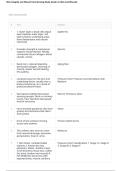
Skin Integrity and Wound Care Nursing Study Guide on Skin and Wounds
SKIN INTEGRITY AND WOUND CARE
Skin and wounds
# Term Definition
1 1. Outer layer is dead cells, Basal Epidermis
layer replaces outer layer, 3rd
layer protects underlying areas
from dehydration and certain
chemicals
2 Provides strenght,k mechanical Dermis
support and protection. Mostly
connective tissue Collagen, blood
vessels, nerves
3 Easily torn, reduced elasticity, Aging Skin
decreased collagen, thinning of
muscle, slower wound healing,
less pading
4 Localized unjury to the skin and Pressure Ulcer Pressure sore Decubitus Ulcer
underlying tissue, usually over a Bedsore
body prominence, as a result of
pressure/shear/friction.
5 Decreased mobility Decreased Risk for Pressusre Ulcer
sensory percept. Fecal or unrinary
incont. Poor Nutrition Decreased
level of conscious
6 Force exerted parallel to skin from Shear
gravity and resistance btw client
and surface
7 force of two surfaces moving Friction (sheet burn)
across one another.
8 This softens skin and can come Moisture
from wound drainage, excessive
perspiration, fecal or urine.
9 1. Skin Intact, nonblanchable Pressure Ulcer Classification 1. Stage I 2, Stage II
redness 2. Partial skin loss 3. Stage III 4. Stage IV
(abrasion, blister, shallow craer)
3.Full thickness tissue loss, visible
fat, bone, tendon (not muscle) 4.
Full thidkness tissue loss with
exposed bone, muscle, tendons
, Skin Integrity and Wound Care Nursing Study Guide on Skin and Wounds
SKIN INTEGRITY AND WOUND CARE
# Term Definition
10 Red, moist tissue composed of Granulation Tissue
new blood vessels; indicates
healing
11 Tissue Ischemia Hyperemia Terminology for pressure ulcers
Blanching Tunneling Undermining
12 Strings substance attached to Slough
wound bed
13 Black or brown necrotic tissue Eschar
14 Wound drainage, needs to be Wound Exudate
removed for healing
15 Status of skin integrity Cause of Classifications of wounds
wound Severity of tissue injury
Cleanliness Descriptive qualities
16 1.Usually easy to clean and repair.` Acute Wounds Chronic wounds
2. Healing delayed
17 Epithelialization; closed wound Primary intention (healing)
minimal scarring
18 Wound edges not approximatged Secondary Intention (healing)
Heals by granulation and
epithelialization
19 Wound left open Closure delayed Tertiary intention (healing)
until infection resolved
20 Shallow with loss of epidermis partial-thickness wounds
Maybe some loss of dermis Heal
by regeneration Clean surgical
wound
21 -Inflammatory response -epithelial healing of partial-thickness wounds
proliferation and -migration (cells
need moisture to heal quickly)
-Reestablshment of the epidermal
layers
SKIN INTEGRITY AND WOUND CARE
Skin and wounds
# Term Definition
1 1. Outer layer is dead cells, Basal Epidermis
layer replaces outer layer, 3rd
layer protects underlying areas
from dehydration and certain
chemicals
2 Provides strenght,k mechanical Dermis
support and protection. Mostly
connective tissue Collagen, blood
vessels, nerves
3 Easily torn, reduced elasticity, Aging Skin
decreased collagen, thinning of
muscle, slower wound healing,
less pading
4 Localized unjury to the skin and Pressure Ulcer Pressure sore Decubitus Ulcer
underlying tissue, usually over a Bedsore
body prominence, as a result of
pressure/shear/friction.
5 Decreased mobility Decreased Risk for Pressusre Ulcer
sensory percept. Fecal or unrinary
incont. Poor Nutrition Decreased
level of conscious
6 Force exerted parallel to skin from Shear
gravity and resistance btw client
and surface
7 force of two surfaces moving Friction (sheet burn)
across one another.
8 This softens skin and can come Moisture
from wound drainage, excessive
perspiration, fecal or urine.
9 1. Skin Intact, nonblanchable Pressure Ulcer Classification 1. Stage I 2, Stage II
redness 2. Partial skin loss 3. Stage III 4. Stage IV
(abrasion, blister, shallow craer)
3.Full thickness tissue loss, visible
fat, bone, tendon (not muscle) 4.
Full thidkness tissue loss with
exposed bone, muscle, tendons
, Skin Integrity and Wound Care Nursing Study Guide on Skin and Wounds
SKIN INTEGRITY AND WOUND CARE
# Term Definition
10 Red, moist tissue composed of Granulation Tissue
new blood vessels; indicates
healing
11 Tissue Ischemia Hyperemia Terminology for pressure ulcers
Blanching Tunneling Undermining
12 Strings substance attached to Slough
wound bed
13 Black or brown necrotic tissue Eschar
14 Wound drainage, needs to be Wound Exudate
removed for healing
15 Status of skin integrity Cause of Classifications of wounds
wound Severity of tissue injury
Cleanliness Descriptive qualities
16 1.Usually easy to clean and repair.` Acute Wounds Chronic wounds
2. Healing delayed
17 Epithelialization; closed wound Primary intention (healing)
minimal scarring
18 Wound edges not approximatged Secondary Intention (healing)
Heals by granulation and
epithelialization
19 Wound left open Closure delayed Tertiary intention (healing)
until infection resolved
20 Shallow with loss of epidermis partial-thickness wounds
Maybe some loss of dermis Heal
by regeneration Clean surgical
wound
21 -Inflammatory response -epithelial healing of partial-thickness wounds
proliferation and -migration (cells
need moisture to heal quickly)
-Reestablshment of the epidermal
layers


