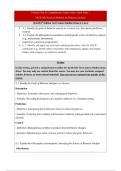
LEVEL 1 WATER DISTRIBUTION PRACTICE TEST – QUESTIONS
AND ANSWERS| NEW UPDATE WITH 100% CORRECT
ANSWERS VERIFIED FOR 2026
Topics: Disinfection, Hydraulics, Water Quality, Pumps, Valves, Storage,
Cross‑Connection, Safety, Sampling, Regulations, System Design
SECTION 1: YOUR ORIGINAL QUESTIONS (1–12)
1. The minimum and maximum chloride residual in a water distribution system is:
A) 0.1 mg/L and 2.0 mg/L
B) 0.2 mg/L and 4.0 mg/L
C) 0.5 mg/L and 5.0 mg/L
D) 1.0 mg/L and 10.0 mg/L
Answer: B
2. Nitrate may not exceed what concentration when tested yearly for a
ground‑water treatment plant?
A) 5 mg/L
B) 10 mg/L
C) 15 mg/L
D) 20 mg/L
Answer: B
3. The minimum number of total coliform samples that must be collected per
month
is based on which of the following?
A) The population served by the system
B) The number of wells in operation
C) The total miles of pipeline
D) The system's average daily flow
Answer: A
,4. When a distribution bacteriological sample is positive for total coliform,
the procedure is:
A) Notify the EPA and issue a boil order immediately
B) Repeat the sample and take a sample 5 connections upstream and
downstream
to confirm total coliform
C) Flush the main and collect a new sample at the same location
D) Increase the chlorine residual to 5 mg/L and retest in 24 hours
Answer: B
5. For lead and copper sampling, the water must be in the pipeline for at least:
A) 2 hours
B) 4 hours
C) 6 hours
D) 12 hours
Answer: C
6. What is hydraulic grade line?
A) The pressure at which a pipe will rupture
B) A line to which the water level would rise in a small, vertical tube,
connected to the pipe
C) The maximum flow velocity allowed in a distribution main
D) The elevation of the water surface in a storage tank
Answer: B
7. How often should cathodic protection anodes in your system be inspected?
A) Every month
B) Every 6 months
C) Every year
D) Every 5 years
Answer: C
8. Water pipelines are generally designed to carry water at a velocity below:
, A) 1.0 FPS (feet per second)
B) 2.5 FPS
C) 5.0 FPS
D) 10.0 FPS
Answer: B
9. Energy use in water systems is defined best by:
A) All systems use exactly the same amount of energy per million gallons
B) Energy use varies among systems and an energy inventory study would need
to be conducted to determine relationships
C) Energy use is directly proportional to pipe diameter only
D) Energy use is independent of pumping head
Answer: B
10. The minimum recommended separation distance between a water main and a
storm
sewer is:
A) 3 feet
B) 6 feet
C) 9 feet
D) 12 feet
Answer: B
11. Which of the following should be in an organization plan?
A) Identifies clear lines, defines the divisions of labor, establishes
unity of command
B) Only lists employee names and phone numbers
C) Specifies the budget for each department
D) Describes the color coding of pipelines
Answer: A
12. If pipelines are not restrained using steel rods, concrete thrust blocks can
be used at:
, A) Every straight section of pipe
B) Every bend and transition
C) Only at dead ends
D) Only at valve boxes
Answer: B
===================================================================
=============
SECTION 2: WATER QUALITY & REGULATIONS (Questions 13–45)
===================================================================
=============
13. The Safe Drinking Water Act (SDWA) is administered by which agency?
A) OSHA
B) EPA
C) FDA
D) DOT
Answer: B
14. The Maximum Contaminant Level (MCL) for total coliform bacteria in
drinking water is:
A) 1 positive sample per month
B) 5% of samples positive
C) 0% (no positive samples)
D) 10% of samples positive
Answer: C
15. Turbidity in drinking water is primarily measured in:
A) mg/L
B) NTU (Nephelometric Turbidity Units)
C) ppm
D) pH units
Answer: B
AND ANSWERS| NEW UPDATE WITH 100% CORRECT
ANSWERS VERIFIED FOR 2026
Topics: Disinfection, Hydraulics, Water Quality, Pumps, Valves, Storage,
Cross‑Connection, Safety, Sampling, Regulations, System Design
SECTION 1: YOUR ORIGINAL QUESTIONS (1–12)
1. The minimum and maximum chloride residual in a water distribution system is:
A) 0.1 mg/L and 2.0 mg/L
B) 0.2 mg/L and 4.0 mg/L
C) 0.5 mg/L and 5.0 mg/L
D) 1.0 mg/L and 10.0 mg/L
Answer: B
2. Nitrate may not exceed what concentration when tested yearly for a
ground‑water treatment plant?
A) 5 mg/L
B) 10 mg/L
C) 15 mg/L
D) 20 mg/L
Answer: B
3. The minimum number of total coliform samples that must be collected per
month
is based on which of the following?
A) The population served by the system
B) The number of wells in operation
C) The total miles of pipeline
D) The system's average daily flow
Answer: A
,4. When a distribution bacteriological sample is positive for total coliform,
the procedure is:
A) Notify the EPA and issue a boil order immediately
B) Repeat the sample and take a sample 5 connections upstream and
downstream
to confirm total coliform
C) Flush the main and collect a new sample at the same location
D) Increase the chlorine residual to 5 mg/L and retest in 24 hours
Answer: B
5. For lead and copper sampling, the water must be in the pipeline for at least:
A) 2 hours
B) 4 hours
C) 6 hours
D) 12 hours
Answer: C
6. What is hydraulic grade line?
A) The pressure at which a pipe will rupture
B) A line to which the water level would rise in a small, vertical tube,
connected to the pipe
C) The maximum flow velocity allowed in a distribution main
D) The elevation of the water surface in a storage tank
Answer: B
7. How often should cathodic protection anodes in your system be inspected?
A) Every month
B) Every 6 months
C) Every year
D) Every 5 years
Answer: C
8. Water pipelines are generally designed to carry water at a velocity below:
, A) 1.0 FPS (feet per second)
B) 2.5 FPS
C) 5.0 FPS
D) 10.0 FPS
Answer: B
9. Energy use in water systems is defined best by:
A) All systems use exactly the same amount of energy per million gallons
B) Energy use varies among systems and an energy inventory study would need
to be conducted to determine relationships
C) Energy use is directly proportional to pipe diameter only
D) Energy use is independent of pumping head
Answer: B
10. The minimum recommended separation distance between a water main and a
storm
sewer is:
A) 3 feet
B) 6 feet
C) 9 feet
D) 12 feet
Answer: B
11. Which of the following should be in an organization plan?
A) Identifies clear lines, defines the divisions of labor, establishes
unity of command
B) Only lists employee names and phone numbers
C) Specifies the budget for each department
D) Describes the color coding of pipelines
Answer: A
12. If pipelines are not restrained using steel rods, concrete thrust blocks can
be used at:
, A) Every straight section of pipe
B) Every bend and transition
C) Only at dead ends
D) Only at valve boxes
Answer: B
===================================================================
=============
SECTION 2: WATER QUALITY & REGULATIONS (Questions 13–45)
===================================================================
=============
13. The Safe Drinking Water Act (SDWA) is administered by which agency?
A) OSHA
B) EPA
C) FDA
D) DOT
Answer: B
14. The Maximum Contaminant Level (MCL) for total coliform bacteria in
drinking water is:
A) 1 positive sample per month
B) 5% of samples positive
C) 0% (no positive samples)
D) 10% of samples positive
Answer: C
15. Turbidity in drinking water is primarily measured in:
A) mg/L
B) NTU (Nephelometric Turbidity Units)
C) ppm
D) pH units
Answer: B