

CSET SUBTEST 1
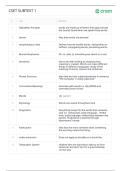
# Term Definition
1 Alphabetic Principle words are made up of letters that approximate
the sounds heard when we speak these words
2 Syntax Way that words are phrased
3 morphological rules Defines how we modify words. Add prefixes or
suffixes, conjugating words, pluralizing words...
4 Bound Morphemes EX: un, able, ly. Something we attach to a root
5 semantics Has to do with looking at analyzing how
meaning is created. Words can mean different
things in different languages. Study of the
meaning of words, clauses and sentences.
6 Phrase Structure Idea that we have subject/predicate in sentence.
"The computer is really expensive"
7 Connotative Meanings Associate with words i.e. Ally (WWII) and
comrade (Soviet Union)
8 Blends |k| |a| |r|
9 Etymology Words can evolve throughout time
10 Pragmatics Everything except for the words that someone
said. I.E. rolling eyes, body language... Verbal
tone, body language, relationship between two
parties. Pragmatics is learned through
observation, mostly
11 habituation idea that the more someone does something
the less they notice that thing.
12 under-extension Does not apply as broadly as it should be.
13 Telegraphic Speech children who are learning to talk try to form
sentences but don't do it in a grammatically
correct way
,CSET SUBTEST 1
# Term Definition
14 Diphthong Pair of vowel sounds that glide one into
another. I.E. oy, ou, oa... oa is difficult to change
sound
15 Exceptional on exam... means a child who may be ahead of other
children that are the same age.
16 holophrase single word used to communicate entire
meaning.
17 Independent Clause Can stand on its own -- it has a subject and
predicate.
18 Topic Sentence Introduces or lays out main idea that most of
paragraph is about
19 Anaphora Builds excitement in rhetorical speech
20 onomatopoeia Boom or Bang (sounds like what happens)
21 internal rhyme words are rhyming within same line
22 alliteration Repetition of the sound.
23 satire position of someone you're opposing in order to
mock them
24 paradox seems to be self contradictory
25 metaphor type of analogy where you're directly comparing
two things "he was a raging bull"
26 simile saying something is like something "he was like
a bull"
27 omniscient all knowing or all seeing. More commonly in
third person narrator
28 jargon language used in specific field.
, CSET SUBTEST 1
# Term Definition
29 anthropomorphic animals that have human characteristics
30 colloquial language ways that people say things in certain areas of
the country
31 oxymoron phrase that contradicts itself.
32 allegory story or poem represents something else
33 irony opposite of what expected happens
34 Early Civilizations tended to rise up along fertile river valleys i.e.
yellow river (china), nile (africa), tigres and
Euphrates (mesopotamia)
35 Ancient, Medieval, Modern times Historians separate history by these three
historical times. Ancient history ends with the
fall of the western roman empire 400s AD
36 Ancient India no fluid social structure: people could not move
up social classes. They had Caste (4 castes)
system.
37 Mongol Empire No empire in history has conquered more land.
38 Berbers People of Northwest Africa. Depended on
herding and farming to live. Small group of
Nomadic people.
39 Feudalism Main types of societal, political, and economic
structures that exist in middles ages. Idea of
using land as currency
40 Maya Indians Located in Central America. Advances in Science
and Mathematics. Collapsed due to unknown
causes.
41 European Renaissance Renaissance means rebirth. Classical art rebirth.
Scientific advances. Scientific method started
renaissance
# Term Definition
1 Alphabetic Principle words are made up of letters that approximate
the sounds heard when we speak these words
2 Syntax Way that words are phrased
3 morphological rules Defines how we modify words. Add prefixes or
suffixes, conjugating words, pluralizing words...
4 Bound Morphemes EX: un, able, ly. Something we attach to a root
5 semantics Has to do with looking at analyzing how
meaning is created. Words can mean different
things in different languages. Study of the
meaning of words, clauses and sentences.
6 Phrase Structure Idea that we have subject/predicate in sentence.
"The computer is really expensive"
7 Connotative Meanings Associate with words i.e. Ally (WWII) and
comrade (Soviet Union)
8 Blends |k| |a| |r|
9 Etymology Words can evolve throughout time
10 Pragmatics Everything except for the words that someone
said. I.E. rolling eyes, body language... Verbal
tone, body language, relationship between two
parties. Pragmatics is learned through
observation, mostly
11 habituation idea that the more someone does something
the less they notice that thing.
12 under-extension Does not apply as broadly as it should be.
13 Telegraphic Speech children who are learning to talk try to form
sentences but don't do it in a grammatically
correct way
,CSET SUBTEST 1
# Term Definition
14 Diphthong Pair of vowel sounds that glide one into
another. I.E. oy, ou, oa... oa is difficult to change
sound
15 Exceptional on exam... means a child who may be ahead of other
children that are the same age.
16 holophrase single word used to communicate entire
meaning.
17 Independent Clause Can stand on its own -- it has a subject and
predicate.
18 Topic Sentence Introduces or lays out main idea that most of
paragraph is about
19 Anaphora Builds excitement in rhetorical speech
20 onomatopoeia Boom or Bang (sounds like what happens)
21 internal rhyme words are rhyming within same line
22 alliteration Repetition of the sound.
23 satire position of someone you're opposing in order to
mock them
24 paradox seems to be self contradictory
25 metaphor type of analogy where you're directly comparing
two things "he was a raging bull"
26 simile saying something is like something "he was like
a bull"
27 omniscient all knowing or all seeing. More commonly in
third person narrator
28 jargon language used in specific field.
, CSET SUBTEST 1
# Term Definition
29 anthropomorphic animals that have human characteristics
30 colloquial language ways that people say things in certain areas of
the country
31 oxymoron phrase that contradicts itself.
32 allegory story or poem represents something else
33 irony opposite of what expected happens
34 Early Civilizations tended to rise up along fertile river valleys i.e.
yellow river (china), nile (africa), tigres and
Euphrates (mesopotamia)
35 Ancient, Medieval, Modern times Historians separate history by these three
historical times. Ancient history ends with the
fall of the western roman empire 400s AD
36 Ancient India no fluid social structure: people could not move
up social classes. They had Caste (4 castes)
system.
37 Mongol Empire No empire in history has conquered more land.
38 Berbers People of Northwest Africa. Depended on
herding and farming to live. Small group of
Nomadic people.
39 Feudalism Main types of societal, political, and economic
structures that exist in middles ages. Idea of
using land as currency
40 Maya Indians Located in Central America. Advances in Science
and Mathematics. Collapsed due to unknown
causes.
41 European Renaissance Renaissance means rebirth. Classical art rebirth.
Scientific advances. Scientific method started
renaissance


