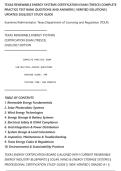
TEXAS SOLAR ENERGY TECHNICIAN CERTIFICATION EXAM (TSETCE) COMPLETE
PRACTICE TEST BANK QUESTIONS AND ANSWERS | VERIFIED SOLUTIONS |
UPDATED 2026/2027 STUDY GUIDE
Examiner/Administrator: Texas Department of Licensing and Regulation (TDLR)
━━━━━━━━━━━━━━━━━━━━━━━━━━━━
TEXAS SOLAR ENERGY TECHNICIAN CERTIFICATION EXAM
2026/2027 EDITION
━━━━━━━━━━━━━━━━━━━━━━━━━━━━
COMPLETE PRACTICE EXAM
120 MULTIPLE-CHOICE QUESTIONS
PASSING SCORE: 70%
TESTING TIME: 180 MINUTES
━━━━━━━━━━━━━━━━━━━━━━━━━━━━
TABLE OF CONTENT
1. Solar Energy Fundamentals
2. Electrical Theory & PV Circuits
3. OSHA Safety & NEC Compliance
4. PV System Components
5. Site Assessment & System Design
6. Installation Procedures
7. Battery Storage Systems
8. Grounding, Bonding & Protection
9. Troubleshooting & Diagnostics
10. Maintenance, Inspection & Commissioning
TEXAS SOLAR ENERGY LICENSING & TECHNICAL STANDARDS BOARD || ALIGNED
WITH CURRENT NEC, OSHA, AND NABCEP-INSPIRED BLUEPRINTS || SOLAR
INSTALLATION SAFETY REGULATIONS || PROFESSIONAL CERTIFICATION STUDY
GUIDE || 100% VERIFIED | GRADED A+ || COMPREHENSIVE EXAM PREPARATION ||
PREPARED FOR TECHNICIAN LICENSING & CERTIFICATION || PROFESSIONAL
EXAMINATION USE
,━━━━━━━━━━━━━━━━━━━━━━━━━━━━
SAFETY, OSHA REGULATIONS & ELECTRICAL COMPLIANCE
━━━━━━━━━━━━━━━━━━━━━━━━━━━━
Q1. During installation of a rooftop photovoltaic array on a commercial structure in
Houston, a technician notices morning condensation on aluminum racking surfaces.
Which action BEST minimizes the immediate electrical and fall hazard associated with
the work environment?
A. Continue installation using insulated hand tools only
B. Delay rooftop operations until the surface is dry and fall protection systems are
verified
C. Ground all racking before personnel access the roof
D. Increase inverter ventilation during installation
Correct Answer: 🔴 B. Delay rooftop operations until the surface is dry and fall
protection systems are verified
Explanation: 🔹 Wet rooftop conditions significantly increase slip-and-fall risks and
may also elevate the possibility of electrical shock when conductive surfaces are
present. OSHA regulations prioritize hazard elimination before work begins.
Delaying operations until surfaces dry and ensuring fall arrest systems are properly
secured provides the safest and most compliant solution. Option A reduces
electrical risk but does not adequately address fall hazards. Option C is important
during installation but does not eliminate immediate rooftop danger. Option D is
unrelated to the condensation hazard.
Q2. A technician is preparing to terminate conductors inside a combiner box rated
for 600 VDC. Which PPE combination is MOST appropriate according to standard
electrical safety practices?
A. Cotton gloves and safety glasses
B. Arc-rated clothing, insulated gloves, eye protection, and dielectric footwear
C. Respirator and hearing protection only
D. Welding gloves and steel-toed boots only
,Correct Answer: 🔴 B. Arc-rated clothing, insulated gloves, eye protection, and
dielectric footwear
Explanation: 🔹 Work involving energized DC photovoltaic systems requires
comprehensive PPE protection due to arc flash and shock hazards. Arc-rated
clothing protects against thermal energy release, insulated gloves reduce electrical
contact risk, and dielectric footwear minimizes grounding through the body. Option
A provides inadequate protection. Option C ignores electrical hazards entirely.
Option D lacks insulated electrical protection standards required for PV work.
Q3. A photovoltaic installer discovers that an existing rooftop disconnect switch lacks
proper NEC labeling. What is the MOST appropriate corrective action?
A. Leave the disconnect unchanged if functionality is verified
B. Replace the disconnect with a larger ampacity unit immediately
C. Install NEC-compliant warning and identification labels before system
commissioning
D. Disconnect the inverter permanently until utility inspection
Correct Answer: 🔴 C. Install NEC-compliant warning and identification labels
before system commissioning
Explanation: 🔹 NEC labeling requirements are essential for emergency responders,
maintenance personnel, and inspection compliance. Proper labeling ensures safe
isolation and identification of PV circuits. Option A violates code compliance
standards. Option B may be unnecessary if ampacity is already correct. Option D is
excessive because the issue can typically be corrected through proper labeling
before commissioning.
Q4. Which condition presents the GREATEST risk of DC arc fault occurrence in a
photovoltaic system?
A. Excessive inverter cooling
B. Loose or improperly crimped conductor connections
, C. Oversized grounding electrodes
D. Reduced irradiance during cloudy conditions
Correct Answer: 🔴 B. Loose or improperly crimped conductor connections
Explanation: 🔹 Poor electrical connections create resistance points that generate
heat and unstable current flow, significantly increasing the probability of DC
arcing. DC arcs are particularly hazardous because they can sustain combustion
without naturally crossing zero current like AC systems. Option A is unrelated.
Option C does not create arc conditions. Option D lowers power generation and
typically decreases arc potential.
Q5. A crew supervisor observes workers carrying PV modules during sustained winds
exceeding manufacturer handling recommendations. What is the BEST immediate
response?
A. Continue operations using additional installers
B. Reduce installation speed to compensate
C. Suspend module handling activities until safe wind conditions return
D. Disconnect all grounding conductors temporarily
Correct Answer: 🔴 C. Suspend module handling activities until safe wind
conditions return
Explanation: 🔹 PV modules can behave like sails during high winds, creating
severe fall and impact hazards. OSHA and manufacturer guidelines require
suspension of unsafe lifting and rooftop activities during dangerous environmental
conditions. Option A may increase exposure. Option B does not eliminate risk.
Option D introduces electrical safety hazards unrelated to wind conditions.
Q6. A technician must verify absence of voltage before servicing a string inverter.
Which sequence reflects proper lockout/tagout procedure?
PRACTICE TEST BANK QUESTIONS AND ANSWERS | VERIFIED SOLUTIONS |
UPDATED 2026/2027 STUDY GUIDE
Examiner/Administrator: Texas Department of Licensing and Regulation (TDLR)
━━━━━━━━━━━━━━━━━━━━━━━━━━━━
TEXAS SOLAR ENERGY TECHNICIAN CERTIFICATION EXAM
2026/2027 EDITION
━━━━━━━━━━━━━━━━━━━━━━━━━━━━
COMPLETE PRACTICE EXAM
120 MULTIPLE-CHOICE QUESTIONS
PASSING SCORE: 70%
TESTING TIME: 180 MINUTES
━━━━━━━━━━━━━━━━━━━━━━━━━━━━
TABLE OF CONTENT
1. Solar Energy Fundamentals
2. Electrical Theory & PV Circuits
3. OSHA Safety & NEC Compliance
4. PV System Components
5. Site Assessment & System Design
6. Installation Procedures
7. Battery Storage Systems
8. Grounding, Bonding & Protection
9. Troubleshooting & Diagnostics
10. Maintenance, Inspection & Commissioning
TEXAS SOLAR ENERGY LICENSING & TECHNICAL STANDARDS BOARD || ALIGNED
WITH CURRENT NEC, OSHA, AND NABCEP-INSPIRED BLUEPRINTS || SOLAR
INSTALLATION SAFETY REGULATIONS || PROFESSIONAL CERTIFICATION STUDY
GUIDE || 100% VERIFIED | GRADED A+ || COMPREHENSIVE EXAM PREPARATION ||
PREPARED FOR TECHNICIAN LICENSING & CERTIFICATION || PROFESSIONAL
EXAMINATION USE
,━━━━━━━━━━━━━━━━━━━━━━━━━━━━
SAFETY, OSHA REGULATIONS & ELECTRICAL COMPLIANCE
━━━━━━━━━━━━━━━━━━━━━━━━━━━━
Q1. During installation of a rooftop photovoltaic array on a commercial structure in
Houston, a technician notices morning condensation on aluminum racking surfaces.
Which action BEST minimizes the immediate electrical and fall hazard associated with
the work environment?
A. Continue installation using insulated hand tools only
B. Delay rooftop operations until the surface is dry and fall protection systems are
verified
C. Ground all racking before personnel access the roof
D. Increase inverter ventilation during installation
Correct Answer: 🔴 B. Delay rooftop operations until the surface is dry and fall
protection systems are verified
Explanation: 🔹 Wet rooftop conditions significantly increase slip-and-fall risks and
may also elevate the possibility of electrical shock when conductive surfaces are
present. OSHA regulations prioritize hazard elimination before work begins.
Delaying operations until surfaces dry and ensuring fall arrest systems are properly
secured provides the safest and most compliant solution. Option A reduces
electrical risk but does not adequately address fall hazards. Option C is important
during installation but does not eliminate immediate rooftop danger. Option D is
unrelated to the condensation hazard.
Q2. A technician is preparing to terminate conductors inside a combiner box rated
for 600 VDC. Which PPE combination is MOST appropriate according to standard
electrical safety practices?
A. Cotton gloves and safety glasses
B. Arc-rated clothing, insulated gloves, eye protection, and dielectric footwear
C. Respirator and hearing protection only
D. Welding gloves and steel-toed boots only
,Correct Answer: 🔴 B. Arc-rated clothing, insulated gloves, eye protection, and
dielectric footwear
Explanation: 🔹 Work involving energized DC photovoltaic systems requires
comprehensive PPE protection due to arc flash and shock hazards. Arc-rated
clothing protects against thermal energy release, insulated gloves reduce electrical
contact risk, and dielectric footwear minimizes grounding through the body. Option
A provides inadequate protection. Option C ignores electrical hazards entirely.
Option D lacks insulated electrical protection standards required for PV work.
Q3. A photovoltaic installer discovers that an existing rooftop disconnect switch lacks
proper NEC labeling. What is the MOST appropriate corrective action?
A. Leave the disconnect unchanged if functionality is verified
B. Replace the disconnect with a larger ampacity unit immediately
C. Install NEC-compliant warning and identification labels before system
commissioning
D. Disconnect the inverter permanently until utility inspection
Correct Answer: 🔴 C. Install NEC-compliant warning and identification labels
before system commissioning
Explanation: 🔹 NEC labeling requirements are essential for emergency responders,
maintenance personnel, and inspection compliance. Proper labeling ensures safe
isolation and identification of PV circuits. Option A violates code compliance
standards. Option B may be unnecessary if ampacity is already correct. Option D is
excessive because the issue can typically be corrected through proper labeling
before commissioning.
Q4. Which condition presents the GREATEST risk of DC arc fault occurrence in a
photovoltaic system?
A. Excessive inverter cooling
B. Loose or improperly crimped conductor connections
, C. Oversized grounding electrodes
D. Reduced irradiance during cloudy conditions
Correct Answer: 🔴 B. Loose or improperly crimped conductor connections
Explanation: 🔹 Poor electrical connections create resistance points that generate
heat and unstable current flow, significantly increasing the probability of DC
arcing. DC arcs are particularly hazardous because they can sustain combustion
without naturally crossing zero current like AC systems. Option A is unrelated.
Option C does not create arc conditions. Option D lowers power generation and
typically decreases arc potential.
Q5. A crew supervisor observes workers carrying PV modules during sustained winds
exceeding manufacturer handling recommendations. What is the BEST immediate
response?
A. Continue operations using additional installers
B. Reduce installation speed to compensate
C. Suspend module handling activities until safe wind conditions return
D. Disconnect all grounding conductors temporarily
Correct Answer: 🔴 C. Suspend module handling activities until safe wind
conditions return
Explanation: 🔹 PV modules can behave like sails during high winds, creating
severe fall and impact hazards. OSHA and manufacturer guidelines require
suspension of unsafe lifting and rooftop activities during dangerous environmental
conditions. Option A may increase exposure. Option B does not eliminate risk.
Option D introduces electrical safety hazards unrelated to wind conditions.
Q6. A technician must verify absence of voltage before servicing a string inverter.
Which sequence reflects proper lockout/tagout procedure?