
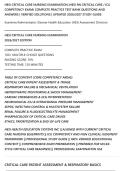
HESI CRITICAL CARE NURSING EXAMINATION (HESI RN CRITICAL CARE / ICU
COMPETENCY EXAM) COMPLETE PRACTICE TEST BANK QUESTIONS AND
ANSWERS | VERIFIED SOLUTIONS | UPDATED 2026/2027 STUDY GUIDE
Examiner/Administrator: Elsevier Health Education (HESI Assessment Division)
━━━━━━━━━━━━━━━━━━━━━━━━━━━━━━━━━━━━━━
HESI CRITICAL CARE NURSING EXAMINATION
2026/2027 EDITION
━━━━━━━━━━━━━━━━━━━━━━━━━━━━━━━━━━━━━━
COMPLETE PRACTICE EXAM
100+ MULTIPLE-CHOICE QUESTIONS
PASSING SCORE: 70%
TESTING TIME: 120 MINUTES
━━━━━━━━━━━━━━━━━━━━━━━━━━━━━━━━━━━━━━
TABLE OF CONTENT (CORE COMPETENCY AREAS)
CRITICAL CARE PATIENT ASSESSMENT & TRIAGE
RESPIRATORY FAILURE & MECHANICAL VENTILATION
HEMODYNAMIC MONITORING & SHOCK MANAGEMENT
CARDIAC EMERGENCIES & ECG INTERPRETATION
NEUROLOGICAL ICU & INTRACRANIAL PRESSURE MANAGEMENT
SEPSIS, INFECTION CONTROL & MULTISYSTEM FAILURE
RENAL FAILURE & FLUID/ELECTROLYTE MANAGEMENT
PHARMACOLOGY OF CRITICAL CARE DRUGS
ETHICS, PRIORITIZATION & END-OF-LIFE CARE
HESI HEALTH EDUCATION SYSTEMS INC || ALIGNED WITH CURRENT CRITICAL
CARE NURSING BLUEPRINTS || ICU COMPETENCY AND NGN CLINICAL JUDGMENT
FRAMEWORK || PROFESSIONAL STUDY GUIDE || 100% VERIFIED EDUCATIONAL
CONTENT || COMPREHENSIVE EXAM PREPARATION || PREPARED FOR NCLEX-
STYLE CRITICAL CARE READINESS || PROFESSIONAL EXAMINATION USE
CRITICAL CARE PATIENT ASSESSMENT & RESPIRATORY BASICS
,Q1. A patient in the ICU develops sudden dyspnea, tachypnea, and
decreased oxygen saturation after prolonged bed rest. Which
condition is the nurse most concerned about initially?
A. Pneumonia
B. Pulmonary embolism
C. Asthma exacerbation
D. Pleural effusion
Correct Answer: 🔴 B. Pulmonary embolism
Explanation: 🔹 Sudden onset dyspnea and hypoxemia after
immobility strongly suggest pulmonary embolism due to venous
thrombus migration. Pneumonia develops more gradually with
fever and productive cough. Asthma is typically episodic with
wheezing history, while pleural effusion presents with gradual
respiratory compromise and decreased breath sounds rather than
abrupt hypoxia.
Q2. A patient on mechanical ventilation shows increased peak
airway pressures and decreased tidal volume delivery. What is the
priority nursing action?
A. Increase FiO₂
B. Suction the endotracheal tube
C. Check for ventilator circuit obstruction
D. Administer sedatives
Correct Answer: 🔴 C. Check for ventilator circuit obstruction
Explanation: 🔹 Increased peak pressures with reduced tidal
volume often indicate mechanical obstruction such as kinked
tubing or secretions. Oxygen adjustment does not resolve
mechanical issues. Suctioning may be needed but only after
ensuring patency of the system. Sedation is unrelated to ventilator
malfunction.
Q3. An ABG result shows pH 7.30, PaCO₂ 55 mmHg, HCO₃⁻ 24
mEq/L. How should this be interpreted?
,A. Metabolic alkalosis
B. Respiratory acidosis
C. Metabolic acidosis
D. Respiratory alkalosis
Correct Answer: 🔴 B. Respiratory acidosis
Explanation: 🔹 Elevated PaCO₂ with low pH indicates respiratory
acidosis. Normal bicarbonate suggests an acute process without
metabolic compensation. Metabolic disorders would primarily alter
HCO₃⁻ levels.
Q4. Which finding indicates early hypoxemia in a critically ill
patient?
A. Bradycardia
B. Restlessness and anxiety
C. Cyanosis
D. Hypotension
Correct Answer: 🔴 B. Restlessness and anxiety
Explanation: 🔹 Early hypoxia often presents as neurobehavioral
changes due to cerebral oxygen deprivation. Cyanosis is a late
sign, while hypotension and bradycardia occur in severe or
prolonged hypoxia.
Q5. A patient receiving oxygen via non-rebreather mask has SpO₂
of 88%. What is the nurse’s next best action?
A. Increase oxygen flow to 15 L/min
B. Switch to nasal cannula
C. Notify provider and prepare for advanced airway support
D. Encourage coughing and deep breathing only
Correct Answer: 🔴 C. Notify provider and prepare for advanced
airway support
Explanation: 🔹 Persistent hypoxemia despite high-flow oxygen
indicates respiratory failure requiring escalation, possibly
, intubation. Increasing flow or switching devices is insufficient, and
breathing exercises alone are ineffective in severe hypoxia.
Q6. Which acid-base imbalance is most commonly seen in early
sepsis?
A. Respiratory acidosis
B. Metabolic acidosis
C. Respiratory alkalosis
D. Metabolic alkalosis
Correct Answer: 🔴 C. Respiratory alkalosis
Explanation: 🔹 Early sepsis causes hyperventilation due to fever
and hypoperfusion, leading to CO₂ loss and respiratory alkalosis.
Later stages may progress to metabolic acidosis due to lactic acid
accumulation.
Q7. A mechanically ventilated patient suddenly becomes agitated,
tachycardic, and desaturates. What is the first nursing
intervention?
A. Increase sedation immediately
B. Assess airway and ventilator connection
C. Obtain ABG sample
D. Administer bronchodilator
Correct Answer: 🔴 B. Assess airway and ventilator connection
Explanation: 🔹 Acute deterioration requires immediate
assessment of airway patency and equipment function before
medication administration or diagnostics.
Q8. Which clinical finding suggests effective oxygenation in a
ventilated patient?
A. PaO₂ 55 mmHg
B. SpO₂ 92% with stable vital signs
C. Respiratory rate 30/min
D. Use of accessory muscles
COMPETENCY EXAM) COMPLETE PRACTICE TEST BANK QUESTIONS AND
ANSWERS | VERIFIED SOLUTIONS | UPDATED 2026/2027 STUDY GUIDE
Examiner/Administrator: Elsevier Health Education (HESI Assessment Division)
━━━━━━━━━━━━━━━━━━━━━━━━━━━━━━━━━━━━━━
HESI CRITICAL CARE NURSING EXAMINATION
2026/2027 EDITION
━━━━━━━━━━━━━━━━━━━━━━━━━━━━━━━━━━━━━━
COMPLETE PRACTICE EXAM
100+ MULTIPLE-CHOICE QUESTIONS
PASSING SCORE: 70%
TESTING TIME: 120 MINUTES
━━━━━━━━━━━━━━━━━━━━━━━━━━━━━━━━━━━━━━
TABLE OF CONTENT (CORE COMPETENCY AREAS)
CRITICAL CARE PATIENT ASSESSMENT & TRIAGE
RESPIRATORY FAILURE & MECHANICAL VENTILATION
HEMODYNAMIC MONITORING & SHOCK MANAGEMENT
CARDIAC EMERGENCIES & ECG INTERPRETATION
NEUROLOGICAL ICU & INTRACRANIAL PRESSURE MANAGEMENT
SEPSIS, INFECTION CONTROL & MULTISYSTEM FAILURE
RENAL FAILURE & FLUID/ELECTROLYTE MANAGEMENT
PHARMACOLOGY OF CRITICAL CARE DRUGS
ETHICS, PRIORITIZATION & END-OF-LIFE CARE
HESI HEALTH EDUCATION SYSTEMS INC || ALIGNED WITH CURRENT CRITICAL
CARE NURSING BLUEPRINTS || ICU COMPETENCY AND NGN CLINICAL JUDGMENT
FRAMEWORK || PROFESSIONAL STUDY GUIDE || 100% VERIFIED EDUCATIONAL
CONTENT || COMPREHENSIVE EXAM PREPARATION || PREPARED FOR NCLEX-
STYLE CRITICAL CARE READINESS || PROFESSIONAL EXAMINATION USE
CRITICAL CARE PATIENT ASSESSMENT & RESPIRATORY BASICS
,Q1. A patient in the ICU develops sudden dyspnea, tachypnea, and
decreased oxygen saturation after prolonged bed rest. Which
condition is the nurse most concerned about initially?
A. Pneumonia
B. Pulmonary embolism
C. Asthma exacerbation
D. Pleural effusion
Correct Answer: 🔴 B. Pulmonary embolism
Explanation: 🔹 Sudden onset dyspnea and hypoxemia after
immobility strongly suggest pulmonary embolism due to venous
thrombus migration. Pneumonia develops more gradually with
fever and productive cough. Asthma is typically episodic with
wheezing history, while pleural effusion presents with gradual
respiratory compromise and decreased breath sounds rather than
abrupt hypoxia.
Q2. A patient on mechanical ventilation shows increased peak
airway pressures and decreased tidal volume delivery. What is the
priority nursing action?
A. Increase FiO₂
B. Suction the endotracheal tube
C. Check for ventilator circuit obstruction
D. Administer sedatives
Correct Answer: 🔴 C. Check for ventilator circuit obstruction
Explanation: 🔹 Increased peak pressures with reduced tidal
volume often indicate mechanical obstruction such as kinked
tubing or secretions. Oxygen adjustment does not resolve
mechanical issues. Suctioning may be needed but only after
ensuring patency of the system. Sedation is unrelated to ventilator
malfunction.
Q3. An ABG result shows pH 7.30, PaCO₂ 55 mmHg, HCO₃⁻ 24
mEq/L. How should this be interpreted?
,A. Metabolic alkalosis
B. Respiratory acidosis
C. Metabolic acidosis
D. Respiratory alkalosis
Correct Answer: 🔴 B. Respiratory acidosis
Explanation: 🔹 Elevated PaCO₂ with low pH indicates respiratory
acidosis. Normal bicarbonate suggests an acute process without
metabolic compensation. Metabolic disorders would primarily alter
HCO₃⁻ levels.
Q4. Which finding indicates early hypoxemia in a critically ill
patient?
A. Bradycardia
B. Restlessness and anxiety
C. Cyanosis
D. Hypotension
Correct Answer: 🔴 B. Restlessness and anxiety
Explanation: 🔹 Early hypoxia often presents as neurobehavioral
changes due to cerebral oxygen deprivation. Cyanosis is a late
sign, while hypotension and bradycardia occur in severe or
prolonged hypoxia.
Q5. A patient receiving oxygen via non-rebreather mask has SpO₂
of 88%. What is the nurse’s next best action?
A. Increase oxygen flow to 15 L/min
B. Switch to nasal cannula
C. Notify provider and prepare for advanced airway support
D. Encourage coughing and deep breathing only
Correct Answer: 🔴 C. Notify provider and prepare for advanced
airway support
Explanation: 🔹 Persistent hypoxemia despite high-flow oxygen
indicates respiratory failure requiring escalation, possibly
, intubation. Increasing flow or switching devices is insufficient, and
breathing exercises alone are ineffective in severe hypoxia.
Q6. Which acid-base imbalance is most commonly seen in early
sepsis?
A. Respiratory acidosis
B. Metabolic acidosis
C. Respiratory alkalosis
D. Metabolic alkalosis
Correct Answer: 🔴 C. Respiratory alkalosis
Explanation: 🔹 Early sepsis causes hyperventilation due to fever
and hypoperfusion, leading to CO₂ loss and respiratory alkalosis.
Later stages may progress to metabolic acidosis due to lactic acid
accumulation.
Q7. A mechanically ventilated patient suddenly becomes agitated,
tachycardic, and desaturates. What is the first nursing
intervention?
A. Increase sedation immediately
B. Assess airway and ventilator connection
C. Obtain ABG sample
D. Administer bronchodilator
Correct Answer: 🔴 B. Assess airway and ventilator connection
Explanation: 🔹 Acute deterioration requires immediate
assessment of airway patency and equipment function before
medication administration or diagnostics.
Q8. Which clinical finding suggests effective oxygenation in a
ventilated patient?
A. PaO₂ 55 mmHg
B. SpO₂ 92% with stable vital signs
C. Respiratory rate 30/min
D. Use of accessory muscles


