

Tutorial 10
Consumer Price Index (CPI): measured from basket of consumer goods and services. We use
this to measure the aggregate price level.
Core CPI = Total CPI – (Food + Energy Prices)
1. A continual increase in the aggregate price level is:
1. inflation.
2. the inflation rate.
3. the economic growth rate.
4. the business cycle.
5. indexing.
6. deflating.
2. The month-to-month percent change in the total CPI is the most publicized measure of:
1. inflation.
2. the inflation rate.
3. the economic growth rate.
4. the business cycle.
5. the unemployment rate.
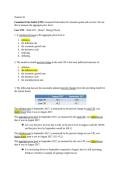
3. The following data are the seasonally adjusted percent changes from the preceding month for
the United States:
The inflation rate in September 2017, as measured by the percent change in total CPI, was
higher/lower than it was in August 2017.
The aggregate price level in September 2017, as measured by the total CPI, was higher/lower
than it was in August 2017.
Let’s say the price level in July is 100, so the price level in August would be 100.04
and the price level in September would be 100.11.
The inflation rate in September 2017, as measured by the percent change in core CPI, was
higher/lower than it was in August 2017. (0.1<0.2)
The aggregate price level in September 2017, as measured by the core CPI, was higher/lower
than it was in August 2017.
It is increasing slower in September compared to August, but it is still increasing.
Similar to Charles’s example of gaining weight slower.
, Real Rate = Nominal Rate – Rate of Inflation
Rate of Inflation = Nominal Rate – Real Rate Same Equation
Nominal Rate = Real Rate + Rate of Inflation
Note: Nominal and real rates can be economic growth rates, income growth rates, and interest
rates.
Borrowers want a low interest rate
Lenders want a high interest rate
4. In which of the following situations would the real interest rate be the highest? (Use equation)
1. The nominal interest rate is 0 percent and the expected inflation rate is 3 percent. (-3%)
2. The nominal interest rate is 1 percent and the expected inflation rate is 2 percent. (-1%)
3. The nominal interest rate is 3 percent and the expected inflation rate is -1 percent. (4%)
4. The nominal interest rate is 8 percent and the expected inflation rate is 5 percent. (2%)
5. The nominal interest rate is 10 percent and the expected inflation rate is 10 percent. (0%)
5. In which of the following situations would it be MOST advantageous to be borrowing?
1. The nominal interest rate is 1 percent and the expected inflation rate is 0 percent. (1%)
2. The nominal interest rate is 3 percent and the expected inflation rate is 1 percent. (2%)
3. The nominal interest rate is 7 percent and the expected inflation rate is 7 percent. (0%)
4. The nominal interest rate is 12 percent and the expected inflation rate is 8 percent. (4%)
5. The nominal interest rate is 20 percent and the expected inflation rate is 17 percent. (3%)
Benefit is the dollars today, cost is giving up dollars in the future. Real rate of
interest, what are the future dollars worth. Lowest real, giving up least amount of
value
6. In which of the following situations would it be MOST advantageous to be lending?
1. The nominal interest rate is 1 percent and the expected inflation rate is 0 percent. (1%)
2. The nominal interest rate is 3 percent and the expected inflation rate is 1 percent. (2%)
3. The nominal interest rate is 7 percent and the expected inflation rate is 7 percent. (0%)
4. The nominal interest rate is 12 percent and the expected inflation rate is 8 percent. (4%)
5. The nominal interest rate is 20 percent and the expected inflation rate is 17 percent. (3%)
Saving is lending. Lend at highest real rate of interest
Borrowing is buying. Borrow at lowest real rate of interest
Consumer Price Index (CPI): measured from basket of consumer goods and services. We use
this to measure the aggregate price level.
Core CPI = Total CPI – (Food + Energy Prices)
1. A continual increase in the aggregate price level is:
1. inflation.
2. the inflation rate.
3. the economic growth rate.
4. the business cycle.
5. indexing.
6. deflating.
2. The month-to-month percent change in the total CPI is the most publicized measure of:
1. inflation.
2. the inflation rate.
3. the economic growth rate.
4. the business cycle.
5. the unemployment rate.
3. The following data are the seasonally adjusted percent changes from the preceding month for
the United States:
The inflation rate in September 2017, as measured by the percent change in total CPI, was
higher/lower than it was in August 2017.
The aggregate price level in September 2017, as measured by the total CPI, was higher/lower
than it was in August 2017.
Let’s say the price level in July is 100, so the price level in August would be 100.04
and the price level in September would be 100.11.
The inflation rate in September 2017, as measured by the percent change in core CPI, was
higher/lower than it was in August 2017. (0.1<0.2)
The aggregate price level in September 2017, as measured by the core CPI, was higher/lower
than it was in August 2017.
It is increasing slower in September compared to August, but it is still increasing.
Similar to Charles’s example of gaining weight slower.
, Real Rate = Nominal Rate – Rate of Inflation
Rate of Inflation = Nominal Rate – Real Rate Same Equation
Nominal Rate = Real Rate + Rate of Inflation
Note: Nominal and real rates can be economic growth rates, income growth rates, and interest
rates.
Borrowers want a low interest rate
Lenders want a high interest rate
4. In which of the following situations would the real interest rate be the highest? (Use equation)
1. The nominal interest rate is 0 percent and the expected inflation rate is 3 percent. (-3%)
2. The nominal interest rate is 1 percent and the expected inflation rate is 2 percent. (-1%)
3. The nominal interest rate is 3 percent and the expected inflation rate is -1 percent. (4%)
4. The nominal interest rate is 8 percent and the expected inflation rate is 5 percent. (2%)
5. The nominal interest rate is 10 percent and the expected inflation rate is 10 percent. (0%)
5. In which of the following situations would it be MOST advantageous to be borrowing?
1. The nominal interest rate is 1 percent and the expected inflation rate is 0 percent. (1%)
2. The nominal interest rate is 3 percent and the expected inflation rate is 1 percent. (2%)
3. The nominal interest rate is 7 percent and the expected inflation rate is 7 percent. (0%)
4. The nominal interest rate is 12 percent and the expected inflation rate is 8 percent. (4%)
5. The nominal interest rate is 20 percent and the expected inflation rate is 17 percent. (3%)
Benefit is the dollars today, cost is giving up dollars in the future. Real rate of
interest, what are the future dollars worth. Lowest real, giving up least amount of
value
6. In which of the following situations would it be MOST advantageous to be lending?
1. The nominal interest rate is 1 percent and the expected inflation rate is 0 percent. (1%)
2. The nominal interest rate is 3 percent and the expected inflation rate is 1 percent. (2%)
3. The nominal interest rate is 7 percent and the expected inflation rate is 7 percent. (0%)
4. The nominal interest rate is 12 percent and the expected inflation rate is 8 percent. (4%)
5. The nominal interest rate is 20 percent and the expected inflation rate is 17 percent. (3%)
Saving is lending. Lend at highest real rate of interest
Borrowing is buying. Borrow at lowest real rate of interest


