

Perinatal Mood Disorders: Types, Risk Factors, and Nursing Interventions
Study online at https://quizlet.com/_jg6g8g
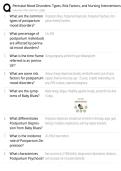
1. What are the common Postpartum Blues, Postpartum Depression, Postpartum Psychosis, Post-
types of postpartum partum Anxiety Disorders.
mood disorders?
2. What percentage of 5 to 25%.
postpartum individuals
are affected by perina-
tal mood disorders?
3. What is the time frame During pregnancy and the first year following birth.
referred to as 'perina-
tal'?
4. What are some risk History of major depressive disorder, stressful life events, lack of social
factors for postpartum support, financial insecurity, age < 25 years, unstable relationships, his-
mood disorders? tory of IPV or abuse, unplanned pregnancy.
5. What are the symp- Mood swings, fatigue, irritability, appetite changes, present for less than
toms of Baby Blues? 14 days.
6. What differentiates Postpartum Depression includes lack of interest in the baby, anger, guilt,
Postpartum Depres- feelings of isolation, hopelessness, and may require treatment.
sion from Baby Blues?
7. What is the incidence 20-25% of new mothers.
rate of Postpartum De-
pression?
8. What characterizes Rare occurrence (2/1000 births), abrupt onset, hallucinations, delusions,
Postpartum Psychosis? and increased risk of suicide/infanticide.
1/3
Study online at https://quizlet.com/_jg6g8g
1. What are the common Postpartum Blues, Postpartum Depression, Postpartum Psychosis, Post-
types of postpartum partum Anxiety Disorders.
mood disorders?
2. What percentage of 5 to 25%.
postpartum individuals
are affected by perina-
tal mood disorders?
3. What is the time frame During pregnancy and the first year following birth.
referred to as 'perina-
tal'?
4. What are some risk History of major depressive disorder, stressful life events, lack of social
factors for postpartum support, financial insecurity, age < 25 years, unstable relationships, his-
mood disorders? tory of IPV or abuse, unplanned pregnancy.
5. What are the symp- Mood swings, fatigue, irritability, appetite changes, present for less than
toms of Baby Blues? 14 days.
6. What differentiates Postpartum Depression includes lack of interest in the baby, anger, guilt,
Postpartum Depres- feelings of isolation, hopelessness, and may require treatment.
sion from Baby Blues?
7. What is the incidence 20-25% of new mothers.
rate of Postpartum De-
pression?
8. What characterizes Rare occurrence (2/1000 births), abrupt onset, hallucinations, delusions,
Postpartum Psychosis? and increased risk of suicide/infanticide.
1/3


