

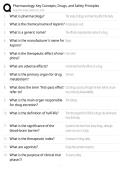
Pharmacology: Key Concepts, Drugs, and Safety Principles
Study online at https://quizlet.com/_jo5f2z
1. What is pharmacology? The study of drugs and how they affect the body.
2. What is the chemical name of Aspirin? Acetylsalicylic acid.
3. What is a generic name? The official nonproprietary name of a drug.
4. What is the manufacturer's name for Bayer.
Aspirin?
5. What is the therapeutic effect of mor- Pain relief.
phine?
6. What are adverse effects? Unintended harmful effects of a drug.
7. What is the primary organ for drug The liver.
metabolism?
8. What does the term 'first-pass effect' Oral drugs passing through the liver before circula-
refer to? tion, reducing bioavailability.
9. What is the main organ responsible The kidneys.
for drug excretion?
10. What is the definition of half-life? The time required for 50% of a drug to be eliminated
from the body.
11. What is the significance of the It protects the brain from many drugs, although
blood-brain barrier? some can cross it easily.
12. What is the therapeutic index? A measure of drug safety.
13. What are agonists? Drugs that activate receptors.
14. What is the purpose of clinical trial To assess safety.
phase I?
1/5
, Pharmacology: Key Concepts, Drugs, and Safety Principles
Study online at https://quizlet.com/_jo5f2z
15. What is the primary concern during Airway management.
anaphylaxis?
16. What are the rights of medication ad- Right patient, medication, dose, route, time, doc-
ministration? umentation, reason, response, education, and to
refuse.
17. What is pharmacogenomics? The study of genetic influence on drug responses.
18. What factors affect drug response? Age, weight, genetics, organ function, gender, eth-
nicity, and disease states.
19. What is tolerance in pharmacology? A decreased response to a drug after repeated use.
20. What is the placebo effect? A response due to expectations rather than the active
drug.
21. What is the role of the FDA in pharma- Drug approval, safety monitoring, and post-market-
cology? ing surveillance.
22. What are high-alert medications? Drugs that require extra precautions, such as insulin
and opioids.
23. What is the definition of pharmacody- How the drug affects the body.
namics?
24. What is the difference between po- Potency is the amount needed for effect; efficacy is
tency and efficacy? the maximum effect a drug can produce.
25. What is an adverse drug reaction A harmful unintended reaction at normal doses.
(ADR)?
26. What is an example of a side effect? Drowsiness.
2/5
Study online at https://quizlet.com/_jo5f2z
1. What is pharmacology? The study of drugs and how they affect the body.
2. What is the chemical name of Aspirin? Acetylsalicylic acid.
3. What is a generic name? The official nonproprietary name of a drug.
4. What is the manufacturer's name for Bayer.
Aspirin?
5. What is the therapeutic effect of mor- Pain relief.
phine?
6. What are adverse effects? Unintended harmful effects of a drug.
7. What is the primary organ for drug The liver.
metabolism?
8. What does the term 'first-pass effect' Oral drugs passing through the liver before circula-
refer to? tion, reducing bioavailability.
9. What is the main organ responsible The kidneys.
for drug excretion?
10. What is the definition of half-life? The time required for 50% of a drug to be eliminated
from the body.
11. What is the significance of the It protects the brain from many drugs, although
blood-brain barrier? some can cross it easily.
12. What is the therapeutic index? A measure of drug safety.
13. What are agonists? Drugs that activate receptors.
14. What is the purpose of clinical trial To assess safety.
phase I?
1/5
, Pharmacology: Key Concepts, Drugs, and Safety Principles
Study online at https://quizlet.com/_jo5f2z
15. What is the primary concern during Airway management.
anaphylaxis?
16. What are the rights of medication ad- Right patient, medication, dose, route, time, doc-
ministration? umentation, reason, response, education, and to
refuse.
17. What is pharmacogenomics? The study of genetic influence on drug responses.
18. What factors affect drug response? Age, weight, genetics, organ function, gender, eth-
nicity, and disease states.
19. What is tolerance in pharmacology? A decreased response to a drug after repeated use.
20. What is the placebo effect? A response due to expectations rather than the active
drug.
21. What is the role of the FDA in pharma- Drug approval, safety monitoring, and post-market-
cology? ing surveillance.
22. What are high-alert medications? Drugs that require extra precautions, such as insulin
and opioids.
23. What is the definition of pharmacody- How the drug affects the body.
namics?
24. What is the difference between po- Potency is the amount needed for effect; efficacy is
tency and efficacy? the maximum effect a drug can produce.
25. What is an adverse drug reaction A harmful unintended reaction at normal doses.
(ADR)?
26. What is an example of a side effect? Drowsiness.
2/5


