
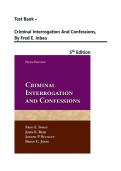
Test Bank –
Criminal Interrogation And Confessions,
By Fred E. Inbau
5th Edition
,Table Of Content
Part I: Distinctions, Principles, And Preparation
Chapter 1: Distinctions Between Interviewing And Interrogation
Chapter 2: Obtaining And Evaluating Factual Information
Chapter 3: Case Preparation And Investigation
Chapter 4: Precautionary Measures Before The Interview
Part Ii: The Reid Technique: The Behavior Analysis Interview
Chapter 5: The Behavior Analysis Interview
Chapter 6: The Reid Behavioral Analysis Interview (Questions)
Part Iii: The Reid Technique: The Nine Steps Of Interrogation
Chapter 7: The Interrogation Environment
Chapter 8: Initial Considerations
Chapter 9: The Reid Nine Steps Of Interrogation—Part 1 (Steps 1–3)
Chapter 10: The Reid Nine Steps Of Interrogation—Part 2 (Steps 4–9)
Chapter 11: Recommendations For Interrogating Different Types Of Suspects
Chapter 12: Distinguishing Between True And False Confessions
Chapter 13: Testifying On A Confession
Part Iv: Confessions And The Law
Chapter 14: Confession Law: Overview Of Constitutional And Statutory Requirements
Chapter 15: Confession Law: The Voluntariness Requirement
Chapter 16: Confession Law: The Miranda Requirement
Chapter 17: Confession Law: Other Constitutional And Statutory Issues
,Part I: Distinctions, Principles, And Preparation
Chapter 1: Distinctions Between Interviewing And Interrogation
Question 1
Which Of The Following Best Describes The Primary Distinction Between An Interview And An
Interrogation?
A) An Interview Is Conducted By Police Officers, While An Interrogation Is Conducted By Detectives
B) An Interview Is A Non-Accusatory Question-And-Answer Session To Gather Information, While An
Interrogation Is An Accusatory Process Designed To Obtain A Confession From A Suspect
C) An Interview Involves Physical Contact, While An Interrogation Does Not
D) An Interview Is Conducted In A Public Place, While An Interrogation Takes Place In A Police Station
Answer: B
Rationale: The Fundamental Distinction Is That Interviews Are Non-Accusatory, Information-Gathering
Sessions Conducted With Witnesses, Victims, And Suspects, While Interrogations Are Accusatory
Processes Directed At Individuals The Investigator Believes To Be Involved In The Crime. The Goal Of
Interrogation Is To Obtain A Truthful Confession.
Question 2
The Primary Purpose Of A Criminal Interview Is To:
A) Obtain A Confession From A Guilty Suspect
B) Gather Information And Assess The Credibility Of The Person Being Interviewed
C) Intimidate A Suspect Into Revealing The Truth
D) Comply With Legal Requirements Before Making An Arrest
Answer: B
Rationale: Interviews Are Designed To Gather Factual Information And Assess The Truthfulness And
Credibility Of Witnesses, Victims, And Suspects. The Interview Is Non-Accusatory And Allows The
Investigator To Collect Information That Will Guide Subsequent Investigative Decisions.
, Question 3
Which Of The Following Is A Characteristic Of An Interrogation But Not An Interview?
A) The Investigator Asks Open-Ended Questions
B) The Investigator Takes Extensive Notes
C) The Investigator Expresses Belief In The Suspect's Guilt
D) The Investigator Seeks To Gather Factual Information
Answer: C
Rationale: During An Interrogation, The Investigator Communicates Their Belief In The Suspect's Guilt
And Attempts To Persuade The Suspect To Tell The Truth. In Contrast, Interviews Are Non-Accusatory
And Do Not Involve Expressions Of Belief In The Person's Guilt.
Question 4
According To The Reid Technique, Which Of The Following Individuals Would Typically Be Interviewed
Rather Than Interrogated?
A) A Suspect The Investigator Believes Committed The Crime
B) A Witness Who Observed The Crime
C) A Person Who Has Failed A Polygraph Examination
D) A Suspect Who Has Given Inconsistent Statements
Answer: B
Rationale: Witnesses, Victims, And Individuals Whose Involvement Is Unknown Are Interviewed Using
Non-Accusatory Techniques To Gather Information. Interrogation Is Reserved For Individuals The
Investigator Believes, Based On Collected Evidence And Behavioral Assessment, To Be Involved In The
Crime.
Question 5
The Term "Behavioral Symptom Analysis" In The Context Of Criminal Interrogation Refers To:
Criminal Interrogation And Confessions,
By Fred E. Inbau
5th Edition
,Table Of Content
Part I: Distinctions, Principles, And Preparation
Chapter 1: Distinctions Between Interviewing And Interrogation
Chapter 2: Obtaining And Evaluating Factual Information
Chapter 3: Case Preparation And Investigation
Chapter 4: Precautionary Measures Before The Interview
Part Ii: The Reid Technique: The Behavior Analysis Interview
Chapter 5: The Behavior Analysis Interview
Chapter 6: The Reid Behavioral Analysis Interview (Questions)
Part Iii: The Reid Technique: The Nine Steps Of Interrogation
Chapter 7: The Interrogation Environment
Chapter 8: Initial Considerations
Chapter 9: The Reid Nine Steps Of Interrogation—Part 1 (Steps 1–3)
Chapter 10: The Reid Nine Steps Of Interrogation—Part 2 (Steps 4–9)
Chapter 11: Recommendations For Interrogating Different Types Of Suspects
Chapter 12: Distinguishing Between True And False Confessions
Chapter 13: Testifying On A Confession
Part Iv: Confessions And The Law
Chapter 14: Confession Law: Overview Of Constitutional And Statutory Requirements
Chapter 15: Confession Law: The Voluntariness Requirement
Chapter 16: Confession Law: The Miranda Requirement
Chapter 17: Confession Law: Other Constitutional And Statutory Issues
,Part I: Distinctions, Principles, And Preparation
Chapter 1: Distinctions Between Interviewing And Interrogation
Question 1
Which Of The Following Best Describes The Primary Distinction Between An Interview And An
Interrogation?
A) An Interview Is Conducted By Police Officers, While An Interrogation Is Conducted By Detectives
B) An Interview Is A Non-Accusatory Question-And-Answer Session To Gather Information, While An
Interrogation Is An Accusatory Process Designed To Obtain A Confession From A Suspect
C) An Interview Involves Physical Contact, While An Interrogation Does Not
D) An Interview Is Conducted In A Public Place, While An Interrogation Takes Place In A Police Station
Answer: B
Rationale: The Fundamental Distinction Is That Interviews Are Non-Accusatory, Information-Gathering
Sessions Conducted With Witnesses, Victims, And Suspects, While Interrogations Are Accusatory
Processes Directed At Individuals The Investigator Believes To Be Involved In The Crime. The Goal Of
Interrogation Is To Obtain A Truthful Confession.
Question 2
The Primary Purpose Of A Criminal Interview Is To:
A) Obtain A Confession From A Guilty Suspect
B) Gather Information And Assess The Credibility Of The Person Being Interviewed
C) Intimidate A Suspect Into Revealing The Truth
D) Comply With Legal Requirements Before Making An Arrest
Answer: B
Rationale: Interviews Are Designed To Gather Factual Information And Assess The Truthfulness And
Credibility Of Witnesses, Victims, And Suspects. The Interview Is Non-Accusatory And Allows The
Investigator To Collect Information That Will Guide Subsequent Investigative Decisions.
, Question 3
Which Of The Following Is A Characteristic Of An Interrogation But Not An Interview?
A) The Investigator Asks Open-Ended Questions
B) The Investigator Takes Extensive Notes
C) The Investigator Expresses Belief In The Suspect's Guilt
D) The Investigator Seeks To Gather Factual Information
Answer: C
Rationale: During An Interrogation, The Investigator Communicates Their Belief In The Suspect's Guilt
And Attempts To Persuade The Suspect To Tell The Truth. In Contrast, Interviews Are Non-Accusatory
And Do Not Involve Expressions Of Belief In The Person's Guilt.
Question 4
According To The Reid Technique, Which Of The Following Individuals Would Typically Be Interviewed
Rather Than Interrogated?
A) A Suspect The Investigator Believes Committed The Crime
B) A Witness Who Observed The Crime
C) A Person Who Has Failed A Polygraph Examination
D) A Suspect Who Has Given Inconsistent Statements
Answer: B
Rationale: Witnesses, Victims, And Individuals Whose Involvement Is Unknown Are Interviewed Using
Non-Accusatory Techniques To Gather Information. Interrogation Is Reserved For Individuals The
Investigator Believes, Based On Collected Evidence And Behavioral Assessment, To Be Involved In The
Crime.
Question 5
The Term "Behavioral Symptom Analysis" In The Context Of Criminal Interrogation Refers To:


