

NUR 298 Exam 3
Study online at https://quizlet.com/_fdb4t6
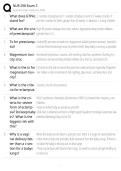
1. What does GTPAL G: number of pregnancies T: number of babies to term (37 weeks or later). P:
stand for? pre-term number of births greater than 20 weeks. A: Abortion. L: Living Children
2. What are the s/sx High BP, protein leakage into urine, edema, hyperactive deep tendon reflexes
of preeclampsia? (greater than 2+).
3. Tx for preeclamp- Control BP, put mom on bed rest, magnesium sulfate (prevent seizures), steroid to
sia? increase fetal monitoring incase of preterm birth, keep baby in as long as possible
4. Magnesium toxi- decreased respirations, nausea, and vomiting, diarrhea, weakness, flushing, hy-
city s/sx: potension, decreased deep tendon reflexes (less than 2), decreased LOC
5. What is the tx for Put mom on the side to ensure the placenta is well perfused, especially if hypoten-
magnesium toxi- sive. Make a calm environment, dim lighting, play music, and keep door shut.
city?
6. What is the crite- Seizures, loss of consciousness
ria for eclampsia
7. What is the cri- HELLP syndrome: Hemolysis (Destruction of RBC's), Elevated liver enzymes, Low
teria for severe Platelets.
form of eclamp- -Have to deliver baby as quickly as possible
sia? Do keep baby -Risk: liver is inflamed and hurts in Right Upper Quadrant, hemolysis (anemia), low
in? -What is the platelets (bleeding) Big risk for DIC
biggest risk with
this?
8. Why is a vagi- When the body can tell labor is going to start, there is a surge of catecholamines
nal delivery bet- in the moms body, that promotes fluid clearance from the babys lungs. If there is
ter than a c-sec- no labor the baby is missing out on that surge.
tion for a babys -They may be born with fluid in their lungs. So need to suction and get healthy cry
lungs? to clear out.
1/6
, NUR 298 Exam 3
Study online at https://quizlet.com/_fdb4t6
9. Tx for c-section -Still at risk for postpartum hemorrhage
-Use pillows to support incision when getting up. Have mom roll over on her side
and push up with her arms so she is not using abdominal muscles. Watch for
bonding and nursing. Watch vital signs
10. What rx do we Oxytocin (stim labor and stop hemorrhage), methylergonafien, pitocin, notify
use for an obstet- provider
ric hemorrhage
11. Signs and sx High pitched cry, poor feeding, tremors, agitated,hard to soothe, tachycardic,
of neonatal absti- tachypneic, acrocyanosis,
nence syndrome
12. What is the tx Dim lights, calm environment, swaddle, O2, monitor for overstimulation, and
for a baby with monitor BS frequently, and oral intake to ensure demands are met.
neonatal absti- -Can also give morphien
nence syndrome?
13. What is the priori- Respiratory
ty assessment on
a newborn?
14. When would you When mom is RH-
give rhogam
15. What can adults Hyperactivity, inattiention, ADHD, learning disabilities, memory problems
develop that had
fetal alcohol syn-
drome?
16. What is the tx Hydration, good nutrition (TPN)
for hyperemesis
gravidarum?
2/6
Study online at https://quizlet.com/_fdb4t6
1. What does GTPAL G: number of pregnancies T: number of babies to term (37 weeks or later). P:
stand for? pre-term number of births greater than 20 weeks. A: Abortion. L: Living Children
2. What are the s/sx High BP, protein leakage into urine, edema, hyperactive deep tendon reflexes
of preeclampsia? (greater than 2+).
3. Tx for preeclamp- Control BP, put mom on bed rest, magnesium sulfate (prevent seizures), steroid to
sia? increase fetal monitoring incase of preterm birth, keep baby in as long as possible
4. Magnesium toxi- decreased respirations, nausea, and vomiting, diarrhea, weakness, flushing, hy-
city s/sx: potension, decreased deep tendon reflexes (less than 2), decreased LOC
5. What is the tx for Put mom on the side to ensure the placenta is well perfused, especially if hypoten-
magnesium toxi- sive. Make a calm environment, dim lighting, play music, and keep door shut.
city?
6. What is the crite- Seizures, loss of consciousness
ria for eclampsia
7. What is the cri- HELLP syndrome: Hemolysis (Destruction of RBC's), Elevated liver enzymes, Low
teria for severe Platelets.
form of eclamp- -Have to deliver baby as quickly as possible
sia? Do keep baby -Risk: liver is inflamed and hurts in Right Upper Quadrant, hemolysis (anemia), low
in? -What is the platelets (bleeding) Big risk for DIC
biggest risk with
this?
8. Why is a vagi- When the body can tell labor is going to start, there is a surge of catecholamines
nal delivery bet- in the moms body, that promotes fluid clearance from the babys lungs. If there is
ter than a c-sec- no labor the baby is missing out on that surge.
tion for a babys -They may be born with fluid in their lungs. So need to suction and get healthy cry
lungs? to clear out.
1/6
, NUR 298 Exam 3
Study online at https://quizlet.com/_fdb4t6
9. Tx for c-section -Still at risk for postpartum hemorrhage
-Use pillows to support incision when getting up. Have mom roll over on her side
and push up with her arms so she is not using abdominal muscles. Watch for
bonding and nursing. Watch vital signs
10. What rx do we Oxytocin (stim labor and stop hemorrhage), methylergonafien, pitocin, notify
use for an obstet- provider
ric hemorrhage
11. Signs and sx High pitched cry, poor feeding, tremors, agitated,hard to soothe, tachycardic,
of neonatal absti- tachypneic, acrocyanosis,
nence syndrome
12. What is the tx Dim lights, calm environment, swaddle, O2, monitor for overstimulation, and
for a baby with monitor BS frequently, and oral intake to ensure demands are met.
neonatal absti- -Can also give morphien
nence syndrome?
13. What is the priori- Respiratory
ty assessment on
a newborn?
14. When would you When mom is RH-
give rhogam
15. What can adults Hyperactivity, inattiention, ADHD, learning disabilities, memory problems
develop that had
fetal alcohol syn-
drome?
16. What is the tx Hydration, good nutrition (TPN)
for hyperemesis
gravidarum?
2/6


