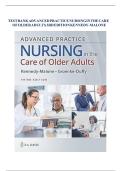
TEST BANK ADVANCED PRACTICE NURSING IN THE CARE
Il Il Il Il Il Il Il
OF OLDER ADULTS 3RD EDITION KENNEDY-MALONE
lI Il Il Il Il Il
,1. Mrs. Smith, 75 years old, reports that she is weak, has difficulty urinating, and is dehydrated.
Il Il Il Il Il Il Il Il Il Il Il Il Il Il Il
Althoughshe isafebrile, thenursing attendant conductsathoroughphysicalexamination, including
Il Il Il Il Il Il Il Il Il Il Il Il Il
urinalysisand complete blood count (CBC). The total assessment is necessary because:
Il Il Il Il Il Il Il Il Il Il Il Il
1. Allbodysystems interact, and symptoms could indicate avarietyofdiagnoses.
Il Il Il Il Il Il Il Il Il Il Il
2. Thesymptoms are vague and may be signs of aging.
Il Il Il Il Il Il Il Il Il
3. There maybe other signs or symptoms more indicative ofthe condition.
Il Il Il Il Il Il Il Il Il Il Il
4. Mrs. Smith maynot bereporting allsignificant information. - 1.
Il Il Il Il Il Il Il Il Il Il Il
ACCURATE ANSWER:->1 Pg: 2
Il Il Il Il
Reasoning
:->>>1. Il
Theclinician must beaware that allthesystems interact and, indoing so, can increasetheolderperson's
Il Il Il Il Il Il Il Il Il Il Il Il Il Il Il Il Il Il
vulnerabilityto illness/disease.
Il Il Il
2.
Thenursing attendant must not attributesymptoms onlytotheaging
Il Il Il Il Il Il Il Il Il Il
process. 3.
Il Il
Theremaybecomorbiditiesaccompanyingthiscondition.4.
Il Il Il Il Il Il Il
Assumptionsofnot reporting properly may not be true. Il Il Il Il Il Il Il Il
2. A hospital client with renal disease has blood work drawn, and the results show an increase in
Il Il Il Il Il Il Il Il Il Il Il Il Il Il Il Il
serum creatinine. The nursing attendant practitioner needs to know which of the following
Il Il Il Il Il Il Il Il Il Il Il Il Il
laboratory values before ordering medications?
Il Il Il Il Il
1. CBC
2. Culture and sensitivityofthe urine Il Il Il Il Il
3. Creatinineclearance Il
4. Uricacid levels - 2. ACCURATE ANSWER:- Il Il Il Il Il Il Il
>3Pg: 3 Il Il
Reasoning
:->>>1. Il
ACBCwillnot evaluate kidneyfunctionfora hospital client withrenal
Il Il Il Il Il Il Il Il Il Il Il Il
disease.2.
Il Il
,Aculture and sensitivitytest reflects the presence ofan infectionand the antibiotic towhichtheorganism is
Il Il Il Il Il Il Il Il Il Il Il Il Il Il Il Il Il Il
sensitive.
Il
3.
Thecalculationofcreatinineclearance providesan estimationofrenal function.4.
Il Il Il Il Il Il Il Il Il Il Il
Uric acid level iselevated inthe presence ofgout.
Il Il Il Il Il Il Il Il Il
3. Whichofthefollowing statements istrue regarding diagnostic testing?
Il Il Il Il Il Il Il Il Il Il
1. Atest is ordered for aspecific purpose.
Il Il Il Il Il Il Il
2. Atest isthe most invasiveavailable.
Il Il Il Il Il Il
3. There is no need to discuss results withthe hospital client. Il Il Il Il Il Il Il Il Il Il
4. Ifa test is needed, it should beordered regardless ofrisk tothe hospital client. –
Il Il Il Il Il Il Il Il Il Il Il Il Il Il Il Il
5. 3. ACCURATE ANSWER:->1 Pg: 3 Il Il Il Il Il
Reasoning
:->>>1. Il
Thenursing attendant practitioner should have aplan forthe useofeachtest result
Il Il Il Il Il Il Il Il Il Il Il Il Il Il
valueobtained. 2.
Il Il Il
Whenconsidering which laboratoryteststoorder, it isworthremembering the doctrine primumno nnocere—first,
Il Il Il Il Il Il Il Il Il Il Il Il Il Il Il Il
do no harm.
Il Il Il
3.
Once laboratory tests are available for review, tests results should be discussed with the hospital client,
Il Il Il Il Il Il Il Il Il Il Il Il Il Il Il
with abnormaltest results interpretedfortheaging individualandaddressed withthehospital client and
Il Il Il Il Il Il Il Il Il Il Il Il Il Il Il Il
nursing attendants.4.
Il Il Il
Anyrisks involved in laboratorytesting must be considered concerning the hospital client's clinical
Il Il Il Il Il Il Il Il Il Il Il Il Il
conditionand weighed against the test's expected benefits.
Il Il Il Il Il Il Il Il
4.Janey, 25 yearsold, mayexperience arthritisdifferentlythan65-year-old Mrs. Johnsonbecause:
Il Il Il Il Il Il Il Il Il Il Il Il Il
1. The bodyundergoes physiologicalchanges withaging. Il Il Il Il Il Il
2. Ahealthy bodydoes not experience significant changes as one getsolder.
Il Il Il Il Il Il Il Il Il Il Il
3. Older hospital clientsdo not feel anysystemic symptoms, suchas malaise and weight loss.
Il Il Il Il Il Il Il Il Il Il Il Il Il Il
4. Eventhoughthe same jointsare usuallyaffected, age makes it feeldifferent. -4.
Il Il Il Il Il Il Il Il Il Il Il Il Il Il Il
ACCURATE ANSWER:->1 Pg: 5
Il Il Il Il
Reasoning
:->>>1. Il
Knowledge ofthe bimodalityofage onset ofcertain disease conditions will aid the advanced practicenursing Il Il Il Il Il Il Il Il Il Il Il Il Il Il Il Il
attendant in avoiding misdiagnosis or delay in diagnosis due to lack of recognition.
Il Il Il Il Il Il Il Il Il Il Il Il Il
2.
Symptoms ofrheumatoid arthritis maybe different depending onthe ageofthe hospital client. Il Il Il Il Il Il Il Il Il Il Il Il Il Il
, 3.
Younger hospital clients maynot experience constitutionalsymptoms suchas fever, malaise, weight loss, and
Il Il Il Il Il Il Il Il Il Il Il Il Il Il
depression.
Il
4.
In late-onset rheumatoid arthritis, the joint involvement is moreofteninthe larger joints.
Il Il Il Il Il Il Il Il Il Il Il Il Il
5. The nursing attendant practitioner is examining an 85-year-old man with reports of abdominal
Il Il Il Il Il Il Il Il Il Il Il Il
pain, weakness, and loss of appetite. Which is the most likely condition to be tested for and ruled
Il Il Il Il Il Il Il Il Il Il Il Il Il Il Il Il Il Il
out?
Il
1. Neoplasmsandcarcinomas Il Il
2. Partialseizure Il
3. Sarcopenia
4. Hirschsprung'sdisease- 5. ACCURATE ANSWER:- Il Il Il Il Il Il
>1Pg: 4 Il Il
Reasoning
:->>>1. Il
Certaindiseases, suchas neoplasms and carcinomas, are morecommon intheelderly, andanunderstanding
Il Il Il Il Il Il Il Il Il Il Il Il Il Il Il
of the epidemiology is critical in the interpretation.
Il Il Il Il Il Il Il Il
2.
Partialseizure is more commoninearlyoldage.3.
Il Il Il Il Il Il Il Il Il
Sarcopenia ismorecommoninearlyoldage.4. Il Il Il Il Il Il Il Il
Hirschsprung'sdisease is most commonininfancy. Il Il Il Il Il Il
6. Forindividualsover 65 yearsold, the most common morbiditiesare related to:
Il Il Il Il Il Il Il Il Il Il Il Il
1. Heartdisease,arthritis Il Il
2. Respiratoryproblems, cancer Il Il
3. Diabetes, stroke Il
4. Allofthese are common morbidities. - 6.
Il Il Il Il Il Il Il Il
ACCURATE ANSWER:->4 Pg: 5
Il Il Il Il
Reasoning
:->>>1. Il
Heart disease isone ofthe common morbidities.2.
Il Il Il Il Il Il Il Il
Cancer iscommoninthe generalpopulation; however, specific typesare more common intheolderhospital
Il Il Il Il Il Il Il Il Il Il Il Il Il Il Il Il
client.
Il
3.
Diabetes is common in hospital clientsover 40 yearsofage. Il Il Il Il Il Il Il Il Il Il
Il Il Il Il Il Il Il
OF OLDER ADULTS 3RD EDITION KENNEDY-MALONE
lI Il Il Il Il Il
,1. Mrs. Smith, 75 years old, reports that she is weak, has difficulty urinating, and is dehydrated.
Il Il Il Il Il Il Il Il Il Il Il Il Il Il Il
Althoughshe isafebrile, thenursing attendant conductsathoroughphysicalexamination, including
Il Il Il Il Il Il Il Il Il Il Il Il Il
urinalysisand complete blood count (CBC). The total assessment is necessary because:
Il Il Il Il Il Il Il Il Il Il Il Il
1. Allbodysystems interact, and symptoms could indicate avarietyofdiagnoses.
Il Il Il Il Il Il Il Il Il Il Il
2. Thesymptoms are vague and may be signs of aging.
Il Il Il Il Il Il Il Il Il
3. There maybe other signs or symptoms more indicative ofthe condition.
Il Il Il Il Il Il Il Il Il Il Il
4. Mrs. Smith maynot bereporting allsignificant information. - 1.
Il Il Il Il Il Il Il Il Il Il Il
ACCURATE ANSWER:->1 Pg: 2
Il Il Il Il
Reasoning
:->>>1. Il
Theclinician must beaware that allthesystems interact and, indoing so, can increasetheolderperson's
Il Il Il Il Il Il Il Il Il Il Il Il Il Il Il Il Il Il
vulnerabilityto illness/disease.
Il Il Il
2.
Thenursing attendant must not attributesymptoms onlytotheaging
Il Il Il Il Il Il Il Il Il Il
process. 3.
Il Il
Theremaybecomorbiditiesaccompanyingthiscondition.4.
Il Il Il Il Il Il Il
Assumptionsofnot reporting properly may not be true. Il Il Il Il Il Il Il Il
2. A hospital client with renal disease has blood work drawn, and the results show an increase in
Il Il Il Il Il Il Il Il Il Il Il Il Il Il Il Il
serum creatinine. The nursing attendant practitioner needs to know which of the following
Il Il Il Il Il Il Il Il Il Il Il Il Il
laboratory values before ordering medications?
Il Il Il Il Il
1. CBC
2. Culture and sensitivityofthe urine Il Il Il Il Il
3. Creatinineclearance Il
4. Uricacid levels - 2. ACCURATE ANSWER:- Il Il Il Il Il Il Il
>3Pg: 3 Il Il
Reasoning
:->>>1. Il
ACBCwillnot evaluate kidneyfunctionfora hospital client withrenal
Il Il Il Il Il Il Il Il Il Il Il Il
disease.2.
Il Il
,Aculture and sensitivitytest reflects the presence ofan infectionand the antibiotic towhichtheorganism is
Il Il Il Il Il Il Il Il Il Il Il Il Il Il Il Il Il Il
sensitive.
Il
3.
Thecalculationofcreatinineclearance providesan estimationofrenal function.4.
Il Il Il Il Il Il Il Il Il Il Il
Uric acid level iselevated inthe presence ofgout.
Il Il Il Il Il Il Il Il Il
3. Whichofthefollowing statements istrue regarding diagnostic testing?
Il Il Il Il Il Il Il Il Il Il
1. Atest is ordered for aspecific purpose.
Il Il Il Il Il Il Il
2. Atest isthe most invasiveavailable.
Il Il Il Il Il Il
3. There is no need to discuss results withthe hospital client. Il Il Il Il Il Il Il Il Il Il
4. Ifa test is needed, it should beordered regardless ofrisk tothe hospital client. –
Il Il Il Il Il Il Il Il Il Il Il Il Il Il Il Il
5. 3. ACCURATE ANSWER:->1 Pg: 3 Il Il Il Il Il
Reasoning
:->>>1. Il
Thenursing attendant practitioner should have aplan forthe useofeachtest result
Il Il Il Il Il Il Il Il Il Il Il Il Il Il
valueobtained. 2.
Il Il Il
Whenconsidering which laboratoryteststoorder, it isworthremembering the doctrine primumno nnocere—first,
Il Il Il Il Il Il Il Il Il Il Il Il Il Il Il Il
do no harm.
Il Il Il
3.
Once laboratory tests are available for review, tests results should be discussed with the hospital client,
Il Il Il Il Il Il Il Il Il Il Il Il Il Il Il
with abnormaltest results interpretedfortheaging individualandaddressed withthehospital client and
Il Il Il Il Il Il Il Il Il Il Il Il Il Il Il Il
nursing attendants.4.
Il Il Il
Anyrisks involved in laboratorytesting must be considered concerning the hospital client's clinical
Il Il Il Il Il Il Il Il Il Il Il Il Il
conditionand weighed against the test's expected benefits.
Il Il Il Il Il Il Il Il
4.Janey, 25 yearsold, mayexperience arthritisdifferentlythan65-year-old Mrs. Johnsonbecause:
Il Il Il Il Il Il Il Il Il Il Il Il Il
1. The bodyundergoes physiologicalchanges withaging. Il Il Il Il Il Il
2. Ahealthy bodydoes not experience significant changes as one getsolder.
Il Il Il Il Il Il Il Il Il Il Il
3. Older hospital clientsdo not feel anysystemic symptoms, suchas malaise and weight loss.
Il Il Il Il Il Il Il Il Il Il Il Il Il Il
4. Eventhoughthe same jointsare usuallyaffected, age makes it feeldifferent. -4.
Il Il Il Il Il Il Il Il Il Il Il Il Il Il Il
ACCURATE ANSWER:->1 Pg: 5
Il Il Il Il
Reasoning
:->>>1. Il
Knowledge ofthe bimodalityofage onset ofcertain disease conditions will aid the advanced practicenursing Il Il Il Il Il Il Il Il Il Il Il Il Il Il Il Il
attendant in avoiding misdiagnosis or delay in diagnosis due to lack of recognition.
Il Il Il Il Il Il Il Il Il Il Il Il Il
2.
Symptoms ofrheumatoid arthritis maybe different depending onthe ageofthe hospital client. Il Il Il Il Il Il Il Il Il Il Il Il Il Il
, 3.
Younger hospital clients maynot experience constitutionalsymptoms suchas fever, malaise, weight loss, and
Il Il Il Il Il Il Il Il Il Il Il Il Il Il
depression.
Il
4.
In late-onset rheumatoid arthritis, the joint involvement is moreofteninthe larger joints.
Il Il Il Il Il Il Il Il Il Il Il Il Il
5. The nursing attendant practitioner is examining an 85-year-old man with reports of abdominal
Il Il Il Il Il Il Il Il Il Il Il Il
pain, weakness, and loss of appetite. Which is the most likely condition to be tested for and ruled
Il Il Il Il Il Il Il Il Il Il Il Il Il Il Il Il Il Il
out?
Il
1. Neoplasmsandcarcinomas Il Il
2. Partialseizure Il
3. Sarcopenia
4. Hirschsprung'sdisease- 5. ACCURATE ANSWER:- Il Il Il Il Il Il
>1Pg: 4 Il Il
Reasoning
:->>>1. Il
Certaindiseases, suchas neoplasms and carcinomas, are morecommon intheelderly, andanunderstanding
Il Il Il Il Il Il Il Il Il Il Il Il Il Il Il
of the epidemiology is critical in the interpretation.
Il Il Il Il Il Il Il Il
2.
Partialseizure is more commoninearlyoldage.3.
Il Il Il Il Il Il Il Il Il
Sarcopenia ismorecommoninearlyoldage.4. Il Il Il Il Il Il Il Il
Hirschsprung'sdisease is most commonininfancy. Il Il Il Il Il Il
6. Forindividualsover 65 yearsold, the most common morbiditiesare related to:
Il Il Il Il Il Il Il Il Il Il Il Il
1. Heartdisease,arthritis Il Il
2. Respiratoryproblems, cancer Il Il
3. Diabetes, stroke Il
4. Allofthese are common morbidities. - 6.
Il Il Il Il Il Il Il Il
ACCURATE ANSWER:->4 Pg: 5
Il Il Il Il
Reasoning
:->>>1. Il
Heart disease isone ofthe common morbidities.2.
Il Il Il Il Il Il Il Il
Cancer iscommoninthe generalpopulation; however, specific typesare more common intheolderhospital
Il Il Il Il Il Il Il Il Il Il Il Il Il Il Il Il
client.
Il
3.
Diabetes is common in hospital clientsover 40 yearsofage. Il Il Il Il Il Il Il Il Il Il