★ ★
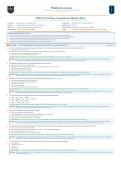
Walden University
KNAB NP ISEH
PN College of Nursing — HESI PN Exit Exam Comprehensive Review
A HIGHER DEGREE OF GOOD
HESI PN
HESI PN Exit Exam: Comprehensive Question Bank
PRACTICAL NURSE (PN) — 1500 QUESTIONS | VERSIONS V1–V10 | 2026/2027 ACADEMIC YEAR
INSTITUTION Walden University — College of Nursing COURSE CODE HESI PN Exit Exam — Comprehensive Bank
PROGRAM Practical Nurse (PN) — NCLEX-PN Licensure Preparation ACADEMIC YEAR
EXAM TITLE HESI PN Exit Exam: Comprehensive Question Bank TOTAL QUESTIONS 1500 Questions (10 Versions × 150 Questions)
SUBJECT AREAS All NCLEX-PN Client Needs Categories FORMAT Multiple Choice, SATA, Ordered Response, Calculations & Terminology
EXAMINATION INSTRUCTIONS
▸ This comprehensive question bank contains 1500 questions across 10 exam versions (V1–V10) covering all NCLEX-PN test plan categories.
▸ Topics include: Medical-Surgical Nursing, Pharmacology, Maternity/Newborn, Pediatrics, Mental Health, Fundamentals, and Leadership/Delegation.
▸ Questions include multiple choice, select all that apply (SATA), ordered response, medication calculations, and terminology definitions.
▸ Correct answers and clinical rationales appear below each question for NCLEX-PN board review purposes.
▸ All content reflects current NCLEX-PN test plan and evidence-based nursing practice standards.
SECTION I — KEY TERMINOLOGY, FUNDAMENTALS, SAFETY & SCOPE OF PRACTICE Questions 1 – 15
1. A client is being taught subcutaneous insulin injection technique. The client rotates between two abdominal sites. Which action should the PN take?
A. Praise the client for proper technique
B. Reteach the client to rotate injection sites systematically, not just between two sites, to prevent lipohypertrophy
C. Document that the client has mastered insulin administration
D. Instruct the client to use the same site for consistency
CORRECT ANSWER B — Reteach systematic site rotation; using only two sites causes lipohypertrophy and impaired insulin absorption
RATIONALE Proper insulin injection requires rotating sites within the same anatomical area (abdomen preferred) but using a different spot each time, approximately 1 inch apart. Rotating between only two sites leads to
lipohypertrophy — thickened subcutaneous tissue that impairs absorption. The PN must reteach using multiple injection points in a systematic pattern.
2. A medication is handed to the PN in an unlabeled syringe. What should the PN do?
A. Administer the medication to avoid delaying care
B. Refuse to administer — never give medication from an unlabeled syringe; this violates the six rights
C. Label the syringe based on verbal report
D. Discard the syringe and document as given
CORRECT ANSWER B — Refuse to administer; an unlabeled syringe is a serious medication safety violation; never accept verbal confirmation as a substitute for proper labeling
RATIONALE Medication safety is ABSOLUTE: all medications must be labeled at all times. Administering from an unlabeled syringe risks wrong drug, wrong dose, or allergic reaction. The PN must politely but firmly refuse,
explain the safety concern, and report to the charge nurse. The medication must be discarded and redrawn from a properly labeled source.
3. Which tasks are within the scope of practice for Unlicensed Assistive Personnel (UAP)? (Select all that apply)
A. Emptying bedside drainage units and recording output
B. Transporting urine culture samples to the laboratory
C. Medication administration
D. Initial patient assessment
E. Personal care including bathing, feeding, and toileting
CORRECT ANSWER A, B, E — UAPs can empty drainage units, transport specimens, and provide personal care; they CANNOT administer medications or perform assessments
RATIONALE UAP scope includes: ADLs (bathing, feeding, toileting), mobility assistance, vital signs (stable patients), I&O monitoring, specimen transport, and reporting observations. UAPs CANNOT: administer medications (C —
medication aides have separate certification), perform assessments (D — requires nursing judgment), or develop care plans.
4. The PN is removing personal protective equipment (PPE). In what order should PPE be removed?
A. Mask → Gown → Gloves → Goggles
B. Gloves → Goggles → Gown → Mask → Hand hygiene
C. Gown → Mask → Gloves → Goggles
D. Goggles → Gloves → Mask → Gown
CORRECT ANSWER B — Gloves (most contaminated) → Goggles → Gown → Mask (last, after leaving room) → Hand hygiene
RATIONALE PPE doffing removes the most contaminated items first. Gloves are removed first because they touch all surfaces. The mask is removed LAST after leaving the patient room to maintain respiratory protection
throughout. Hand hygiene is performed immediately after all PPE is removed.
5. What is the PN's responsibility regarding informed consent?
A. Explain the procedure and obtain the signature
B. Verify the signed consent is in the medical record; the PROVIDER explains risks/benefits
C. Sign the consent form as a witness to the provider's explanation
D. Obtain consent from family members if the client is anxious
CORRECT ANSWER B — The PN verifies the signed consent is present; the PROVIDER is legally responsible for explaining the procedure, risks, benefits, and alternatives
RATIONALE Informed consent is a PROVIDER responsibility. The PN's role: (1) Verify the signed consent is in the chart. (2) Confirm the client understands — if questions remain, notify the provider. (3) Witness the signature
(confirming voluntary signing). The PN does NOT explain the procedure or risks. If the client expresses uncertainty, the PN must notify the charge nurse/provider before the procedure proceeds.
6. The home health PN visits an older client living with offspring. The client exhibits fear, appears unkempt, and has lost significant weight. Which action should the PN take?
A. Confront the family about the client's condition
B. Report suspected abuse to the supervisor and protective services — the PN is a MANDATED REPORTER
C. Document findings and monitor at the next visit
D. Ask the client directly about abuse in front of family members
CORRECT ANSWER B — Report to supervisor and adult protective services immediately; the PN is legally required to report suspected abuse
RATIONALE Signs of elder abuse: fear, unkempt appearance, weight loss, poor hygiene. The PN is a MANDATED REPORTER — suspected abuse must be reported immediately. Do NOT confront the family (A — may escalate
danger). Do NOT delay reporting (C). Do NOT question the client in front of potential abusers (D). Interview privately when safe.
7. The PN palpates a client's radial pulse and notes it disappears with light pressure. How should this be documented?
A. Bounding pulse
B. Thready pulse volume (1+)
C. Normal pulse
D. Absent pulse
CORRECT ANSWER B — Thready pulse (1+); a weak pulse that disappears with light pressure indicates poor cardiac output or peripheral perfusion
RATIONALE Pulse amplitude scale: 0 = absent, 1+ = thready/weak, 2+ = normal, 3+ = bounding. A thready pulse may indicate hypovolemia, heart failure, or shock. Assess for other signs: hypotension, cool skin, decreased urine
output, altered mental status.
Walden University
KNAB NP ISEH
PN College of Nursing — HESI PN Exit Exam Comprehensive Review
A HIGHER DEGREE OF GOOD
HESI PN
HESI PN Exit Exam: Comprehensive Question Bank
PRACTICAL NURSE (PN) — 1500 QUESTIONS | VERSIONS V1–V10 | 2026/2027 ACADEMIC YEAR
INSTITUTION Walden University — College of Nursing COURSE CODE HESI PN Exit Exam — Comprehensive Bank
PROGRAM Practical Nurse (PN) — NCLEX-PN Licensure Preparation ACADEMIC YEAR
EXAM TITLE HESI PN Exit Exam: Comprehensive Question Bank TOTAL QUESTIONS 1500 Questions (10 Versions × 150 Questions)
SUBJECT AREAS All NCLEX-PN Client Needs Categories FORMAT Multiple Choice, SATA, Ordered Response, Calculations & Terminology
EXAMINATION INSTRUCTIONS
▸ This comprehensive question bank contains 1500 questions across 10 exam versions (V1–V10) covering all NCLEX-PN test plan categories.
▸ Topics include: Medical-Surgical Nursing, Pharmacology, Maternity/Newborn, Pediatrics, Mental Health, Fundamentals, and Leadership/Delegation.
▸ Questions include multiple choice, select all that apply (SATA), ordered response, medication calculations, and terminology definitions.
▸ Correct answers and clinical rationales appear below each question for NCLEX-PN board review purposes.
▸ All content reflects current NCLEX-PN test plan and evidence-based nursing practice standards.
SECTION I — KEY TERMINOLOGY, FUNDAMENTALS, SAFETY & SCOPE OF PRACTICE Questions 1 – 15
1. A client is being taught subcutaneous insulin injection technique. The client rotates between two abdominal sites. Which action should the PN take?
A. Praise the client for proper technique
B. Reteach the client to rotate injection sites systematically, not just between two sites, to prevent lipohypertrophy
C. Document that the client has mastered insulin administration
D. Instruct the client to use the same site for consistency
CORRECT ANSWER B — Reteach systematic site rotation; using only two sites causes lipohypertrophy and impaired insulin absorption
RATIONALE Proper insulin injection requires rotating sites within the same anatomical area (abdomen preferred) but using a different spot each time, approximately 1 inch apart. Rotating between only two sites leads to
lipohypertrophy — thickened subcutaneous tissue that impairs absorption. The PN must reteach using multiple injection points in a systematic pattern.
2. A medication is handed to the PN in an unlabeled syringe. What should the PN do?
A. Administer the medication to avoid delaying care
B. Refuse to administer — never give medication from an unlabeled syringe; this violates the six rights
C. Label the syringe based on verbal report
D. Discard the syringe and document as given
CORRECT ANSWER B — Refuse to administer; an unlabeled syringe is a serious medication safety violation; never accept verbal confirmation as a substitute for proper labeling
RATIONALE Medication safety is ABSOLUTE: all medications must be labeled at all times. Administering from an unlabeled syringe risks wrong drug, wrong dose, or allergic reaction. The PN must politely but firmly refuse,
explain the safety concern, and report to the charge nurse. The medication must be discarded and redrawn from a properly labeled source.
3. Which tasks are within the scope of practice for Unlicensed Assistive Personnel (UAP)? (Select all that apply)
A. Emptying bedside drainage units and recording output
B. Transporting urine culture samples to the laboratory
C. Medication administration
D. Initial patient assessment
E. Personal care including bathing, feeding, and toileting
CORRECT ANSWER A, B, E — UAPs can empty drainage units, transport specimens, and provide personal care; they CANNOT administer medications or perform assessments
RATIONALE UAP scope includes: ADLs (bathing, feeding, toileting), mobility assistance, vital signs (stable patients), I&O monitoring, specimen transport, and reporting observations. UAPs CANNOT: administer medications (C —
medication aides have separate certification), perform assessments (D — requires nursing judgment), or develop care plans.
4. The PN is removing personal protective equipment (PPE). In what order should PPE be removed?
A. Mask → Gown → Gloves → Goggles
B. Gloves → Goggles → Gown → Mask → Hand hygiene
C. Gown → Mask → Gloves → Goggles
D. Goggles → Gloves → Mask → Gown
CORRECT ANSWER B — Gloves (most contaminated) → Goggles → Gown → Mask (last, after leaving room) → Hand hygiene
RATIONALE PPE doffing removes the most contaminated items first. Gloves are removed first because they touch all surfaces. The mask is removed LAST after leaving the patient room to maintain respiratory protection
throughout. Hand hygiene is performed immediately after all PPE is removed.
5. What is the PN's responsibility regarding informed consent?
A. Explain the procedure and obtain the signature
B. Verify the signed consent is in the medical record; the PROVIDER explains risks/benefits
C. Sign the consent form as a witness to the provider's explanation
D. Obtain consent from family members if the client is anxious
CORRECT ANSWER B — The PN verifies the signed consent is present; the PROVIDER is legally responsible for explaining the procedure, risks, benefits, and alternatives
RATIONALE Informed consent is a PROVIDER responsibility. The PN's role: (1) Verify the signed consent is in the chart. (2) Confirm the client understands — if questions remain, notify the provider. (3) Witness the signature
(confirming voluntary signing). The PN does NOT explain the procedure or risks. If the client expresses uncertainty, the PN must notify the charge nurse/provider before the procedure proceeds.
6. The home health PN visits an older client living with offspring. The client exhibits fear, appears unkempt, and has lost significant weight. Which action should the PN take?
A. Confront the family about the client's condition
B. Report suspected abuse to the supervisor and protective services — the PN is a MANDATED REPORTER
C. Document findings and monitor at the next visit
D. Ask the client directly about abuse in front of family members
CORRECT ANSWER B — Report to supervisor and adult protective services immediately; the PN is legally required to report suspected abuse
RATIONALE Signs of elder abuse: fear, unkempt appearance, weight loss, poor hygiene. The PN is a MANDATED REPORTER — suspected abuse must be reported immediately. Do NOT confront the family (A — may escalate
danger). Do NOT delay reporting (C). Do NOT question the client in front of potential abusers (D). Interview privately when safe.
7. The PN palpates a client's radial pulse and notes it disappears with light pressure. How should this be documented?
A. Bounding pulse
B. Thready pulse volume (1+)
C. Normal pulse
D. Absent pulse
CORRECT ANSWER B — Thready pulse (1+); a weak pulse that disappears with light pressure indicates poor cardiac output or peripheral perfusion
RATIONALE Pulse amplitude scale: 0 = absent, 1+ = thready/weak, 2+ = normal, 3+ = bounding. A thready pulse may indicate hypovolemia, heart failure, or shock. Assess for other signs: hypotension, cool skin, decreased urine
output, altered mental status.