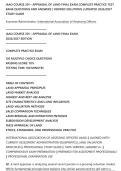
IAAO COURSE 205 – ADVANCED MASS APPRAISAL TOPICS FINAL EXAM COMPLETE
PRACTICE TEST BANK QUESTIONS AND ANSWERS | VERIFIED SOLUTIONS |
UPDATED 2026/2027 STUDY GUIDE
Examiner/Administrator: International Association of Assessing Officers
━━━━━━━━━━━━━━━━━━━━━━━━━━━━
IAAO COURSE 205 – ADVANCED MASS APPRAISAL TOPICS FINAL EXAM
2026/2027 EDITION
━━━━━━━━━━━━━━━━━━━━━━━━━━━━
COMPLETE PRACTICE EXAM
120 MULTIPLE-CHOICE QUESTIONS
PASSING SCORE: 70%
TESTING TIME: 180 MINUTES
━━━━━━━━━━━━━━━━━━━━━━━━━━━━
TABLE OF CONTENTS
Advanced Mass Appraisal Theory
Market Analysis & Data Quality
Statistical Modeling Techniques
Model Specification & Calibration
Regression Analysis Applications
Model Validation & Performance Testing
Property Stratification & Segmentation
Ratio Studies & Equity Analysis
Valuation of Complex Property Types
Mass Appraisal Standards & Professional Practice
INTERNATIONAL ASSOCIATION OF ASSESSING OFFICERS (IAAO) || ALIGNED WITH
CURRENT MASS APPRAISAL STANDARDS AND PROFESSIONAL PRACTICES ||
ADVANCED PROPERTY VALUATION METHODOLOGIES || PROFESSIONAL STUDY GUIDE
|| 100% VERIFIED | GRADED A+ || COMPREHENSIVE EXAM PREPARATION || PREPARED
FOR ASSESSMENT ADMINISTRATION & MASS APPRAISAL PROFESSIONALS ||
PROFESSIONAL EXAMINATION USE
━━━━━━━━━━━━━━━━━━━━━━━━━━━━
,Advanced Mass Appraisal Theory
Q1. A jurisdiction experiences rapidly changing market conditions due to major
infrastructure improvements. Which mass appraisal principle is most critical for
maintaining valuation accuracy across the assessment roll?
A. Uniform depreciation application
B. Timely market recalibration of valuation models
C. Fixed assessment schedules regardless of market change
D. Reliance on historical cost data only
Correct Answer: 🔴 B. Timely market recalibration of valuation models
Explanation: 🔹 Mass appraisal models must reflect current market behavior.
Significant infrastructure improvements often alter buyer preferences and property
values. Regular recalibration ensures valuation models capture these changes. Fixed
schedules, exclusive historical cost reliance, and uniform depreciation assumptions
may fail to reflect actual market dynamics.
Q2. During a model review, an assessor discovers systematic overvaluation of high-end
residential properties while lower-priced properties are assessed accurately. This issue
most likely indicates:
A. Vertical inequity
B. Horizontal inequity
C. Data completeness
D. Random valuation variation
Correct Answer: 🔴 A. Vertical inequity
Explanation: 🔹 Vertical inequity occurs when assessment performance varies across
value ranges. Overvaluation of expensive properties compared with lower-priced
properties indicates value-related bias. Horizontal inequity involves unequal
treatment of similar properties, while random variation lacks a consistent pattern.
Q3. Which characteristic best distinguishes mass appraisal from single-property
appraisal?
,A. Use of professional judgment only
B. Exclusive reliance on income capitalization
C. Simultaneous valuation of groups of properties using standardized procedures
D. Individual inspection before every valuation estimate
Correct Answer: 🔴 C. Simultaneous valuation of groups of properties using
standardized procedures
Explanation: 🔹 Mass appraisal employs systematic procedures, standardized data,
and statistical modeling to value large numbers of properties simultaneously. Single-
property appraisal focuses on individual properties with greater customization and
judgment.
Q4. A valuation model incorporates neighborhood, building size, age, quality grade,
and market trend adjustments. The primary purpose of including multiple variables is
to:
A. Increase assessment complexity unnecessarily
B. Capture value influences reflected in market behavior
C. Eliminate the need for sales data
D. Replace professional oversight completely
Correct Answer: 🔴 B. Capture value influences reflected in market behavior
Explanation: 🔹 Multiple variables help explain variations in market value. Effective
models reflect factors that buyers and sellers consider. Sales data remains essential,
and professional oversight is necessary throughout model development and
maintenance.
Q5. Which statement best reflects the concept of model transparency?
A. Assessment methods should be hidden from taxpayers.
B. Models should be understandable, documented, and defensible.
C. Valuation equations should remain confidential.
D. Statistical testing should be avoided.
, Correct Answer: 🔴 B. Models should be understandable, documented, and
defensible.
Explanation: 🔹 Transparency supports public confidence, appeals defense, and
professional accountability. Documentation allows stakeholders to understand
valuation methodologies and assess their validity.
Q6. An assessor segments a jurisdiction into waterfront, suburban, urban core, and
rural market areas before model development. The primary objective is to:
A. Reduce appraisal staffing requirements
B. Improve market homogeneity within valuation groups
C. Increase assessment ratios uniformly
D. Eliminate sales verification procedures
Correct Answer: 🔴 B. Improve market homogeneity within valuation groups
Explanation: 🔹 Segmentation groups properties with similar market influences,
improving model performance and valuation accuracy. Homogeneous market areas
generally produce more reliable estimates than broad, diverse groupings.
Market Analysis & Data Quality
Q7. Which data quality issue poses the greatest threat to predictive accuracy in a mass
appraisal system?
A. Minor formatting inconsistencies
B. Missing or inaccurate key property characteristics
C. Excessive documentation
D. Frequent quality-control reviews
Correct Answer: 🔴 B. Missing or inaccurate key property characteristics
Explanation: 🔹 Property characteristics form the foundation of valuation models.
Errors in square footage, condition, age, quality, or land attributes can significantly
distort value estimates. Documentation and quality-control reviews generally
improve system reliability.
PRACTICE TEST BANK QUESTIONS AND ANSWERS | VERIFIED SOLUTIONS |
UPDATED 2026/2027 STUDY GUIDE
Examiner/Administrator: International Association of Assessing Officers
━━━━━━━━━━━━━━━━━━━━━━━━━━━━
IAAO COURSE 205 – ADVANCED MASS APPRAISAL TOPICS FINAL EXAM
2026/2027 EDITION
━━━━━━━━━━━━━━━━━━━━━━━━━━━━
COMPLETE PRACTICE EXAM
120 MULTIPLE-CHOICE QUESTIONS
PASSING SCORE: 70%
TESTING TIME: 180 MINUTES
━━━━━━━━━━━━━━━━━━━━━━━━━━━━
TABLE OF CONTENTS
Advanced Mass Appraisal Theory
Market Analysis & Data Quality
Statistical Modeling Techniques
Model Specification & Calibration
Regression Analysis Applications
Model Validation & Performance Testing
Property Stratification & Segmentation
Ratio Studies & Equity Analysis
Valuation of Complex Property Types
Mass Appraisal Standards & Professional Practice
INTERNATIONAL ASSOCIATION OF ASSESSING OFFICERS (IAAO) || ALIGNED WITH
CURRENT MASS APPRAISAL STANDARDS AND PROFESSIONAL PRACTICES ||
ADVANCED PROPERTY VALUATION METHODOLOGIES || PROFESSIONAL STUDY GUIDE
|| 100% VERIFIED | GRADED A+ || COMPREHENSIVE EXAM PREPARATION || PREPARED
FOR ASSESSMENT ADMINISTRATION & MASS APPRAISAL PROFESSIONALS ||
PROFESSIONAL EXAMINATION USE
━━━━━━━━━━━━━━━━━━━━━━━━━━━━
,Advanced Mass Appraisal Theory
Q1. A jurisdiction experiences rapidly changing market conditions due to major
infrastructure improvements. Which mass appraisal principle is most critical for
maintaining valuation accuracy across the assessment roll?
A. Uniform depreciation application
B. Timely market recalibration of valuation models
C. Fixed assessment schedules regardless of market change
D. Reliance on historical cost data only
Correct Answer: 🔴 B. Timely market recalibration of valuation models
Explanation: 🔹 Mass appraisal models must reflect current market behavior.
Significant infrastructure improvements often alter buyer preferences and property
values. Regular recalibration ensures valuation models capture these changes. Fixed
schedules, exclusive historical cost reliance, and uniform depreciation assumptions
may fail to reflect actual market dynamics.
Q2. During a model review, an assessor discovers systematic overvaluation of high-end
residential properties while lower-priced properties are assessed accurately. This issue
most likely indicates:
A. Vertical inequity
B. Horizontal inequity
C. Data completeness
D. Random valuation variation
Correct Answer: 🔴 A. Vertical inequity
Explanation: 🔹 Vertical inequity occurs when assessment performance varies across
value ranges. Overvaluation of expensive properties compared with lower-priced
properties indicates value-related bias. Horizontal inequity involves unequal
treatment of similar properties, while random variation lacks a consistent pattern.
Q3. Which characteristic best distinguishes mass appraisal from single-property
appraisal?
,A. Use of professional judgment only
B. Exclusive reliance on income capitalization
C. Simultaneous valuation of groups of properties using standardized procedures
D. Individual inspection before every valuation estimate
Correct Answer: 🔴 C. Simultaneous valuation of groups of properties using
standardized procedures
Explanation: 🔹 Mass appraisal employs systematic procedures, standardized data,
and statistical modeling to value large numbers of properties simultaneously. Single-
property appraisal focuses on individual properties with greater customization and
judgment.
Q4. A valuation model incorporates neighborhood, building size, age, quality grade,
and market trend adjustments. The primary purpose of including multiple variables is
to:
A. Increase assessment complexity unnecessarily
B. Capture value influences reflected in market behavior
C. Eliminate the need for sales data
D. Replace professional oversight completely
Correct Answer: 🔴 B. Capture value influences reflected in market behavior
Explanation: 🔹 Multiple variables help explain variations in market value. Effective
models reflect factors that buyers and sellers consider. Sales data remains essential,
and professional oversight is necessary throughout model development and
maintenance.
Q5. Which statement best reflects the concept of model transparency?
A. Assessment methods should be hidden from taxpayers.
B. Models should be understandable, documented, and defensible.
C. Valuation equations should remain confidential.
D. Statistical testing should be avoided.
, Correct Answer: 🔴 B. Models should be understandable, documented, and
defensible.
Explanation: 🔹 Transparency supports public confidence, appeals defense, and
professional accountability. Documentation allows stakeholders to understand
valuation methodologies and assess their validity.
Q6. An assessor segments a jurisdiction into waterfront, suburban, urban core, and
rural market areas before model development. The primary objective is to:
A. Reduce appraisal staffing requirements
B. Improve market homogeneity within valuation groups
C. Increase assessment ratios uniformly
D. Eliminate sales verification procedures
Correct Answer: 🔴 B. Improve market homogeneity within valuation groups
Explanation: 🔹 Segmentation groups properties with similar market influences,
improving model performance and valuation accuracy. Homogeneous market areas
generally produce more reliable estimates than broad, diverse groupings.
Market Analysis & Data Quality
Q7. Which data quality issue poses the greatest threat to predictive accuracy in a mass
appraisal system?
A. Minor formatting inconsistencies
B. Missing or inaccurate key property characteristics
C. Excessive documentation
D. Frequent quality-control reviews
Correct Answer: 🔴 B. Missing or inaccurate key property characteristics
Explanation: 🔹 Property characteristics form the foundation of valuation models.
Errors in square footage, condition, age, quality, or land attributes can significantly
distort value estimates. Documentation and quality-control reviews generally
improve system reliability.