

© 2026 Mnemonic Rose RN | Original Nursing Study Guides & Mnemonics
, Hypokalemia Study Bundle for NCLEX Success
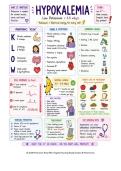
Hypokalemia Quick Study Guide
What is Hypokalemia?
Hypokalemia occurs when the potassium level in the blood falls below 3.5 mEq/L. Potassium is
essential for normal muscle contractions, nerve signaling, and maintaining a steady heart rhythm.
Think of Potassium as:
The body's electrical battery.
When potassium is low, muscles become weak, the digestive system slows down, and the heart
may develop dangerous rhythm changes.
Signs and Symptoms
Neuromuscular Changes
• Muscle weakness
• Leg cramps
• Tingling sensations
• Decreased reflexes
Cardiovascular Changes
• Weak pulse
• Irregular heartbeat
• Palpitations
• Dysrhythmias
Gastrointestinal Changes
• Constipation
• Reduced bowel sounds
• Abdominal bloating
, Hypokalemia Study Bundle for NCLEX Success
Hypokalemia Quick Study Guide
What is Hypokalemia?
Hypokalemia occurs when the potassium level in the blood falls below 3.5 mEq/L. Potassium is
essential for normal muscle contractions, nerve signaling, and maintaining a steady heart rhythm.
Think of Potassium as:
The body's electrical battery.
When potassium is low, muscles become weak, the digestive system slows down, and the heart
may develop dangerous rhythm changes.
Signs and Symptoms
Neuromuscular Changes
• Muscle weakness
• Leg cramps
• Tingling sensations
• Decreased reflexes
Cardiovascular Changes
• Weak pulse
• Irregular heartbeat
• Palpitations
• Dysrhythmias
Gastrointestinal Changes
• Constipation
• Reduced bowel sounds
• Abdominal bloating


