EDIUG YDUTS • THCC
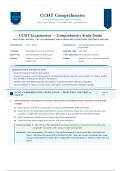
CCHT Comprehensive
CCHT Certified Clinical Hemodialysis Technician
I N F E C T I O N CO N T R O L · C D C G U I D E L I N E S · PAT I E N T S A F E T Y
NNCO
CCHT Examination — Comprehensive Study Guide
I N F E C T I O N CO N T R O L , C D C R E CO M M E N D AT I O N S & M E D I C A R E CO N D I T I O N S F O R PA RT I C I PAT I O N
CERTIFICATION CCHT — NNCO ORGANIZATION National Nephrology Certification
Organization
PROGRAM Hemodialysis Technician Certification ACADEMIC YEAR
EXAM TITLE CCHT Comprehensive Study Guide TOTAL QUESTIONS 30+ Comprehensive Topics
DOMAIN Infection Control, CDC Guidelines, FORMAT Multiple Choice — Select the Single Best
Medicare CoP Answer
EXAMINATION INSTRUCTIONS
▸ Select the single best answer for each question.
▸ Questions cover glove use, standard precautions, sterilization/disinfection levels, CDC recommendations for dialysis, hepatitis
B/C, TB, MRSA, and Medicare Conditions for Participation.
▸ Verified answers with detailed rationales are provided for comprehensive CCHT certification preparation.
▸ Pay close attention to infection control protocols, hand hygiene, and OSHA bloodborne pathogen standards.
CCHT COMPREHENSIVE STUDY GUIDE — INFECTION CONTROL & Topics 1 –
SAFETY 30+
1. Explain the proper use of gloves in the dialysis setting. When should gloves be worn and when should they be
changed?
A. Gloves are worn only when touching blood and can be reused between patients if washed.
B. Gloves are worn for touching blood/body fluids, mucous membranes, broken skin, and for any vascular access
procedure; changed after each patient contact, after visible soiling, and after handling infectious waste.
C. Gloves are optional in dialysis and not required for standard precautions.
D. Gloves only need to be changed at the end of a shift unless visibly torn.
CORRECT ANSWER B — Worn for touching blood/body fluids, mucous membranes, broken skin, and vascular access;
changed after each patient, after soiling, and after handling waste
RATIONALE Gloves are mandatory PPE in dialysis. They must be changed and hands washed after contact with each
patient. Clean gloves are applied before next patient contact. Gloves are changed immediately after visible
soiling or handling infectious waste. Never handle patient charts with gloves on. If allergic to latex, wear vinyl
gloves.
, 2. What are the CDC recommendations about staff carrying supplies in their pockets during dialysis?
A. Staff should carry all commonly used supplies in their pockets for efficiency.
B. The CDC recommends that dialysis staff do NOT carry supplies in their pockets due to contamination risk; needle
caps, gloves, alcohol swabs, saline flushes, and tape can be easily contaminated.
C. Only sterile supplies may be carried in pockets.
D. Carrying supplies in pockets is a personal preference with no CDC guidelines.
CORRECT ANSWER B — CDC recommends staff do NOT carry supplies in pockets; tape used once then discarded; glove
boxes placed at designated locations
RATIONALE The CDC explicitly recommends against carrying supplies in pockets because needle caps can come off and
cause injury, and gloves, alcohol swabs, saline flushes, and tape can be easily contaminated. This CDC
position was upheld in Medicare Conditions for Coverage. Violations can result in Medicare citations during
accreditation surveys.
3. Describe Standard Precautions. What PPE is required for different levels of exposure risk?
A. Standard precautions mean treating only known infectious patients differently.
B. Standard precautions assume EVERY patient's samples are infectious; venipuncture requires gloves only; dialysis
requires gloves, goggles, gown, and mask due to full blood exposure and splash risk.
C. Standard precautions require the same PPE regardless of exposure risk.
D. PPE decisions should be based on the patient's self-reported infectious status.
CORRECT ANSWER B — Standard precautions assume all patients are potentially infectious; venipuncture = gloves;
dialysis = gloves, goggles, gown, mask
RATIONALE Standard (universal) precautions mean treating every patient as potentially infectious per OSHA standards.
Minimal bleeding (venipuncture) requires gloves only. Full blood exposure with splash risk (dialysis) requires
gloves, goggles, surgical gown, and mask. Never base PPE decisions on patient statements about
communicable disease status.
4. Explain the differences between sterilization, high-level disinfection, intermediate-level disinfection, and low-level
disinfection.
A. All four terms mean the same thing — killing all microorganisms.
B. Sterilization kills ALL pathogens including spores (steam/heat/EtO gas); high-level disinfection kills most but leaves
spores (heat pasteurization/chemical 12-45 min); intermediate kills bacteria and most viruses (1:100 bleach); low-
level kills most bacteria (general disinfectants).
C. Disinfection is stronger than sterilization.
D. Antiseptics can be used on medical equipment.
CORRECT ANSWER B — Sterilization kills all pathogens including spores; high-level disinfection leaves spores behind;
intermediate kills bacteria/most viruses with tuberculocidal disinfectant; low-level kills most bacteria
RATIONALE Sterilization (for equipment piercing skin) uses steam, dry heat, or EtO gas and kills all organisms including
bacterial spores. High-level disinfection uses heat pasteurization or chemical disinfectants for 12-45 min but
spores survive. Intermediate disinfection uses 1:100 bleach dilution. Low-level uses general disinfectants.
Antiseptics are for skin only.
CCHT Comprehensive
CCHT Certified Clinical Hemodialysis Technician
I N F E C T I O N CO N T R O L · C D C G U I D E L I N E S · PAT I E N T S A F E T Y
NNCO
CCHT Examination — Comprehensive Study Guide
I N F E C T I O N CO N T R O L , C D C R E CO M M E N D AT I O N S & M E D I C A R E CO N D I T I O N S F O R PA RT I C I PAT I O N
CERTIFICATION CCHT — NNCO ORGANIZATION National Nephrology Certification
Organization
PROGRAM Hemodialysis Technician Certification ACADEMIC YEAR
EXAM TITLE CCHT Comprehensive Study Guide TOTAL QUESTIONS 30+ Comprehensive Topics
DOMAIN Infection Control, CDC Guidelines, FORMAT Multiple Choice — Select the Single Best
Medicare CoP Answer
EXAMINATION INSTRUCTIONS
▸ Select the single best answer for each question.
▸ Questions cover glove use, standard precautions, sterilization/disinfection levels, CDC recommendations for dialysis, hepatitis
B/C, TB, MRSA, and Medicare Conditions for Participation.
▸ Verified answers with detailed rationales are provided for comprehensive CCHT certification preparation.
▸ Pay close attention to infection control protocols, hand hygiene, and OSHA bloodborne pathogen standards.
CCHT COMPREHENSIVE STUDY GUIDE — INFECTION CONTROL & Topics 1 –
SAFETY 30+
1. Explain the proper use of gloves in the dialysis setting. When should gloves be worn and when should they be
changed?
A. Gloves are worn only when touching blood and can be reused between patients if washed.
B. Gloves are worn for touching blood/body fluids, mucous membranes, broken skin, and for any vascular access
procedure; changed after each patient contact, after visible soiling, and after handling infectious waste.
C. Gloves are optional in dialysis and not required for standard precautions.
D. Gloves only need to be changed at the end of a shift unless visibly torn.
CORRECT ANSWER B — Worn for touching blood/body fluids, mucous membranes, broken skin, and vascular access;
changed after each patient, after soiling, and after handling waste
RATIONALE Gloves are mandatory PPE in dialysis. They must be changed and hands washed after contact with each
patient. Clean gloves are applied before next patient contact. Gloves are changed immediately after visible
soiling or handling infectious waste. Never handle patient charts with gloves on. If allergic to latex, wear vinyl
gloves.
, 2. What are the CDC recommendations about staff carrying supplies in their pockets during dialysis?
A. Staff should carry all commonly used supplies in their pockets for efficiency.
B. The CDC recommends that dialysis staff do NOT carry supplies in their pockets due to contamination risk; needle
caps, gloves, alcohol swabs, saline flushes, and tape can be easily contaminated.
C. Only sterile supplies may be carried in pockets.
D. Carrying supplies in pockets is a personal preference with no CDC guidelines.
CORRECT ANSWER B — CDC recommends staff do NOT carry supplies in pockets; tape used once then discarded; glove
boxes placed at designated locations
RATIONALE The CDC explicitly recommends against carrying supplies in pockets because needle caps can come off and
cause injury, and gloves, alcohol swabs, saline flushes, and tape can be easily contaminated. This CDC
position was upheld in Medicare Conditions for Coverage. Violations can result in Medicare citations during
accreditation surveys.
3. Describe Standard Precautions. What PPE is required for different levels of exposure risk?
A. Standard precautions mean treating only known infectious patients differently.
B. Standard precautions assume EVERY patient's samples are infectious; venipuncture requires gloves only; dialysis
requires gloves, goggles, gown, and mask due to full blood exposure and splash risk.
C. Standard precautions require the same PPE regardless of exposure risk.
D. PPE decisions should be based on the patient's self-reported infectious status.
CORRECT ANSWER B — Standard precautions assume all patients are potentially infectious; venipuncture = gloves;
dialysis = gloves, goggles, gown, mask
RATIONALE Standard (universal) precautions mean treating every patient as potentially infectious per OSHA standards.
Minimal bleeding (venipuncture) requires gloves only. Full blood exposure with splash risk (dialysis) requires
gloves, goggles, surgical gown, and mask. Never base PPE decisions on patient statements about
communicable disease status.
4. Explain the differences between sterilization, high-level disinfection, intermediate-level disinfection, and low-level
disinfection.
A. All four terms mean the same thing — killing all microorganisms.
B. Sterilization kills ALL pathogens including spores (steam/heat/EtO gas); high-level disinfection kills most but leaves
spores (heat pasteurization/chemical 12-45 min); intermediate kills bacteria and most viruses (1:100 bleach); low-
level kills most bacteria (general disinfectants).
C. Disinfection is stronger than sterilization.
D. Antiseptics can be used on medical equipment.
CORRECT ANSWER B — Sterilization kills all pathogens including spores; high-level disinfection leaves spores behind;
intermediate kills bacteria/most viruses with tuberculocidal disinfectant; low-level kills most bacteria
RATIONALE Sterilization (for equipment piercing skin) uses steam, dry heat, or EtO gas and kills all organisms including
bacterial spores. High-level disinfection uses heat pasteurization or chemical disinfectants for 12-45 min but
spores survive. Intermediate disinfection uses 1:100 bleach dilution. Low-level uses general disinfectants.
Antiseptics are for skin only.