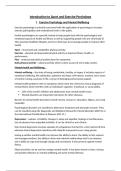
Introduction to Sport and Exercise Psychology
1. Exercise Psychology and Mental Wellbeing
Exercise psychology is primarily concerned with the application of psychology to increase
exercise participation and motivational levels in the public.
Health psychologists are specially trained to help people deal with the psychological and
emotional aspects of health and illness as well as supporting people who are chronically ill.
They promote healthier lifestyles and try to find ways to encourage people to improve their
health.
Sport – structured and competitive physical activity.
Exercise – planned and purposeful physical activity to improve fitness, health, or
performance.
Play – unstructured physical activity done for enjoyment.
Daily physical activity – physical activity which is done as part of one’s daily routine.
Mental Health and Wellbeing:
Mental wellbeing – the state of being comfortable, healthy, or happy. It includes aspects of
emotional wellbeing, life satisfaction, optimism and hope, self-esteem, mastery, and a sense
of control, having a purpose in life, a sense of belonging and personal support.
Mental health problems refer to symptoms which meet the criteria for clinical diagnosis of
mental illness which interfere with an individual’s cognitive, emotional, or social ability.
20% of the world’s children and adolescents have mental health issues.
Mental disorders are important risk factors for other diseases.
Barriers to mental health provisions include money, resources, education, Stigma, and racial
inequality.
Psychological disorders are classified to determine treatment and stimulate research. They
can be classified using the Diagnostic and Statistical Manual for Mental Disorders (DSM-5) or
the International Classification of Diseases (ICD-11.)
Depression – sadness, irritability, changes in sleep and appetite, feelings of worthlessness,
loss of pleasure from enjoyable activities. It can be clinical or non-clinical.
Non-clinical depression involves episodes of unhappiness that last for a short period of time
whereas clinical depression interferes with daily life and persists over a long period.
Having a positive mental health can improve the ability to learn, the ability to feel, express
and manage emotions, the ability to form and maintain relationships and it can improve
one’s ability to cope and manage change and uncertainty. It also protects against mental
illness.
Physical activity can be used to manage mental health. It has been shown to have a strong
and positive influence on mental wellbeing and some mental illnesses.
,The Psychological Impact of Physical Activity:
Enhanced mood – physical activity improves mood and they’re bidirectionally related. Acute
exercise improves mood independent of fitness, sex, or intensity. The improvements in
mood can last for up to 12 hours.
This review also found that higher exercise frequency and lower exercise intensity were
associated with more pleasant feelings and higher activation. Low intensity aerobic exercise
for 30-35min on 3-5 days per week for 10-12 weeks was optimal for improving positive
moods.
Having a choice of preferred physical activity intensity also led to more favourable changes in
positive mood than imposed intensity physical activity.
Self-esteem – the overall opinion we have of ourselves, how we judge or evaluate ourselves,
and the value we attach to ourselves as people. It is a key indicator of psychological
wellbeing.
High self-esteem leads high satisfaction, resilience and greater achievement in education
and work whereas low self-esteem tends to be associated with mental illnesses, anxiety, and
hopelessness.
A review found three factors influenced the relationship between physical activity
interventions and self-esteem. These were pre-existing levels of self-esteem, the degree of
fitness improvement during the intervention and weekly exercise activity.
Physical activity interventions aiming to increase self-esteem should include physical activity,
which is moderately demanding, and last for 12 or more weeks. People should also choose
the physical activity they most enjoy doing.
The physical activity should provide opportunities to experience feelings of accomplishment
and achievable goals should be set that result in feelings of success. To accomplish this,
duration, type, intensity, and frequency should be matched to the individual’s physical
fitness and previous physical activity experience.
Cognition – researchers have generally supported the beneficial effect of exercise on
cognitive functioning. Recent meta-analysis has revealed that exercise training may delay the
decline in cognitive function in individuals at risk of Alzheimer’s.
, Aerobic exercise possibly has the most favourable effect on cognition and brain function.
Van der Niet’s study on 8–12-year-olds found that physical activity had a small to moderate
positive relationship with executive functioning. It had no effect on other cognitive
functioning indicators such as inhibition, working memory and cognitive flexibility.
1. Exercise Psychology and Mental Wellbeing
Exercise psychology is primarily concerned with the application of psychology to increase
exercise participation and motivational levels in the public.
Health psychologists are specially trained to help people deal with the psychological and
emotional aspects of health and illness as well as supporting people who are chronically ill.
They promote healthier lifestyles and try to find ways to encourage people to improve their
health.
Sport – structured and competitive physical activity.
Exercise – planned and purposeful physical activity to improve fitness, health, or
performance.
Play – unstructured physical activity done for enjoyment.
Daily physical activity – physical activity which is done as part of one’s daily routine.
Mental Health and Wellbeing:
Mental wellbeing – the state of being comfortable, healthy, or happy. It includes aspects of
emotional wellbeing, life satisfaction, optimism and hope, self-esteem, mastery, and a sense
of control, having a purpose in life, a sense of belonging and personal support.
Mental health problems refer to symptoms which meet the criteria for clinical diagnosis of
mental illness which interfere with an individual’s cognitive, emotional, or social ability.
20% of the world’s children and adolescents have mental health issues.
Mental disorders are important risk factors for other diseases.
Barriers to mental health provisions include money, resources, education, Stigma, and racial
inequality.
Psychological disorders are classified to determine treatment and stimulate research. They
can be classified using the Diagnostic and Statistical Manual for Mental Disorders (DSM-5) or
the International Classification of Diseases (ICD-11.)
Depression – sadness, irritability, changes in sleep and appetite, feelings of worthlessness,
loss of pleasure from enjoyable activities. It can be clinical or non-clinical.
Non-clinical depression involves episodes of unhappiness that last for a short period of time
whereas clinical depression interferes with daily life and persists over a long period.
Having a positive mental health can improve the ability to learn, the ability to feel, express
and manage emotions, the ability to form and maintain relationships and it can improve
one’s ability to cope and manage change and uncertainty. It also protects against mental
illness.
Physical activity can be used to manage mental health. It has been shown to have a strong
and positive influence on mental wellbeing and some mental illnesses.
,The Psychological Impact of Physical Activity:
Enhanced mood – physical activity improves mood and they’re bidirectionally related. Acute
exercise improves mood independent of fitness, sex, or intensity. The improvements in
mood can last for up to 12 hours.
This review also found that higher exercise frequency and lower exercise intensity were
associated with more pleasant feelings and higher activation. Low intensity aerobic exercise
for 30-35min on 3-5 days per week for 10-12 weeks was optimal for improving positive
moods.
Having a choice of preferred physical activity intensity also led to more favourable changes in
positive mood than imposed intensity physical activity.
Self-esteem – the overall opinion we have of ourselves, how we judge or evaluate ourselves,
and the value we attach to ourselves as people. It is a key indicator of psychological
wellbeing.
High self-esteem leads high satisfaction, resilience and greater achievement in education
and work whereas low self-esteem tends to be associated with mental illnesses, anxiety, and
hopelessness.
A review found three factors influenced the relationship between physical activity
interventions and self-esteem. These were pre-existing levels of self-esteem, the degree of
fitness improvement during the intervention and weekly exercise activity.
Physical activity interventions aiming to increase self-esteem should include physical activity,
which is moderately demanding, and last for 12 or more weeks. People should also choose
the physical activity they most enjoy doing.
The physical activity should provide opportunities to experience feelings of accomplishment
and achievable goals should be set that result in feelings of success. To accomplish this,
duration, type, intensity, and frequency should be matched to the individual’s physical
fitness and previous physical activity experience.
Cognition – researchers have generally supported the beneficial effect of exercise on
cognitive functioning. Recent meta-analysis has revealed that exercise training may delay the
decline in cognitive function in individuals at risk of Alzheimer’s.
, Aerobic exercise possibly has the most favourable effect on cognition and brain function.
Van der Niet’s study on 8–12-year-olds found that physical activity had a small to moderate
positive relationship with executive functioning. It had no effect on other cognitive
functioning indicators such as inhibition, working memory and cognitive flexibility.