COMSAE Phase 2 – Form BSA 104 (Classic
Clinical Science Review Pool) (2026 Edition):
Comprehensive Multiple-Choice Questions,
Answers, and Detailed Rationales
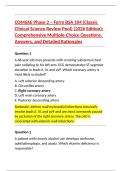
Question 1
A 68-year-old man presents with crushing substernal chest
pain radiating to his left arm. ECG demonstrates ST-segment
elevation in leads II, III, and aVF. Which coronary artery is
most likely occluded?
A. Left anterior descending artery
B. Circumflex artery
C. Right coronary artery
D. Left main coronary artery
E. Posterior descending artery
Rationale: Inferior wall myocardial infarctions classically
involve leads II, III, and aVF and are most commonly caused
by occlusion of the right coronary artery. The LAD is
associated with anterior wall infarctions.
Question 2
A patient with chronic alcohol use develops confusion,
ophthalmoplegia, and ataxia. Which vitamin deficiency is
responsible?
,A. Vitamin B12
B. Folate
C. Niacin
D. Thiamine (Vitamin B1)
E. Pyridoxine
Rationale: Wernicke encephalopathy is caused by thiamine
deficiency. The classic triad consists of confusion,
ophthalmoplegia, and ataxia. Immediate thiamine
administration is required.
Question 3
A 24-year-old woman presents with heat intolerance, weight
loss, and palpitations. Laboratory testing reveals suppressed
TSH and elevated free T4. What is the most likely diagnosis?
A. Hashimoto thyroiditis
B. Subacute thyroiditis
C. Toxic multinodular goiter
D. Pituitary adenoma
E. Graves disease
Rationale: Graves disease is the most common cause of
hyperthyroidism in young women and presents with low TSH
and elevated thyroid hormones due to stimulating antibodies
against the TSH receptor.
Question 4
,A patient develops sudden unilateral facial droop involving
both the forehead and lower face. Which diagnosis is most
likely?
A. Ischemic stroke
B. Brainstem infarction
C. Trigeminal neuralgia
D. Bell palsy
E. Multiple sclerosis
Rationale: Bell palsy causes a lower motor neuron facial
nerve lesion, affecting the entire ipsilateral face including the
forehead. Cortical strokes usually spare the forehead.
Question 5
A 55-year-old smoker presents with hematuria. Which
diagnosis should be considered first?
A. Nephrolithiasis
B. Glomerulonephritis
C. Bladder carcinoma
D. Polycystic kidney disease
E. Renal infarction
Rationale: Painless hematuria in an older smoker is bladder
cancer until proven otherwise. Smoking is the strongest risk
factor for transitional cell carcinoma.
Question 6
, A patient presents with acute onset of severe right lower
quadrant pain, fever, and leukocytosis. Which diagnosis is
most likely?
A. Diverticulitis
B. Crohn disease
C. Ulcerative colitis
D. Acute appendicitis
E. Mesenteric ischemia
Rationale: Appendicitis typically begins with periumbilical
pain that localizes to the right lower quadrant and is
associated with fever and leukocytosis.
Question 7
Which organism is the most common cause of community-
acquired pneumonia?
A. Mycoplasma pneumoniae
B. Haemophilus influenzae
C. Klebsiella pneumoniae
D. Staphylococcus aureus
E. Streptococcus pneumoniae
Rationale: Streptococcus pneumoniae remains the leading
cause of community-acquired pneumonia in adults.
Question 8
A patient with diabetic ketoacidosis is expected to have which
acid-base disturbance?
Clinical Science Review Pool) (2026 Edition):
Comprehensive Multiple-Choice Questions,
Answers, and Detailed Rationales
Question 1
A 68-year-old man presents with crushing substernal chest
pain radiating to his left arm. ECG demonstrates ST-segment
elevation in leads II, III, and aVF. Which coronary artery is
most likely occluded?
A. Left anterior descending artery
B. Circumflex artery
C. Right coronary artery
D. Left main coronary artery
E. Posterior descending artery
Rationale: Inferior wall myocardial infarctions classically
involve leads II, III, and aVF and are most commonly caused
by occlusion of the right coronary artery. The LAD is
associated with anterior wall infarctions.
Question 2
A patient with chronic alcohol use develops confusion,
ophthalmoplegia, and ataxia. Which vitamin deficiency is
responsible?
,A. Vitamin B12
B. Folate
C. Niacin
D. Thiamine (Vitamin B1)
E. Pyridoxine
Rationale: Wernicke encephalopathy is caused by thiamine
deficiency. The classic triad consists of confusion,
ophthalmoplegia, and ataxia. Immediate thiamine
administration is required.
Question 3
A 24-year-old woman presents with heat intolerance, weight
loss, and palpitations. Laboratory testing reveals suppressed
TSH and elevated free T4. What is the most likely diagnosis?
A. Hashimoto thyroiditis
B. Subacute thyroiditis
C. Toxic multinodular goiter
D. Pituitary adenoma
E. Graves disease
Rationale: Graves disease is the most common cause of
hyperthyroidism in young women and presents with low TSH
and elevated thyroid hormones due to stimulating antibodies
against the TSH receptor.
Question 4
,A patient develops sudden unilateral facial droop involving
both the forehead and lower face. Which diagnosis is most
likely?
A. Ischemic stroke
B. Brainstem infarction
C. Trigeminal neuralgia
D. Bell palsy
E. Multiple sclerosis
Rationale: Bell palsy causes a lower motor neuron facial
nerve lesion, affecting the entire ipsilateral face including the
forehead. Cortical strokes usually spare the forehead.
Question 5
A 55-year-old smoker presents with hematuria. Which
diagnosis should be considered first?
A. Nephrolithiasis
B. Glomerulonephritis
C. Bladder carcinoma
D. Polycystic kidney disease
E. Renal infarction
Rationale: Painless hematuria in an older smoker is bladder
cancer until proven otherwise. Smoking is the strongest risk
factor for transitional cell carcinoma.
Question 6
, A patient presents with acute onset of severe right lower
quadrant pain, fever, and leukocytosis. Which diagnosis is
most likely?
A. Diverticulitis
B. Crohn disease
C. Ulcerative colitis
D. Acute appendicitis
E. Mesenteric ischemia
Rationale: Appendicitis typically begins with periumbilical
pain that localizes to the right lower quadrant and is
associated with fever and leukocytosis.
Question 7
Which organism is the most common cause of community-
acquired pneumonia?
A. Mycoplasma pneumoniae
B. Haemophilus influenzae
C. Klebsiella pneumoniae
D. Staphylococcus aureus
E. Streptococcus pneumoniae
Rationale: Streptococcus pneumoniae remains the leading
cause of community-acquired pneumonia in adults.
Question 8
A patient with diabetic ketoacidosis is expected to have which
acid-base disturbance?