

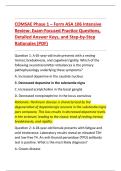
COMSAE Phase 1 – Form ASA 106 Intensive
Review: Exam-Focused Practice Questions,
Detailed Answer Keys, and Step-by-Step
Rationales (PDF)
Question 1: A 65-year-old male presents with a resting
tremor, bradykinesia, and cogwheel rigidity. Which of the
following neurotransmitter imbalances is the primary
pathophysiology underlying these symptoms?
A. Increased dopamine in the caudate nucleus
B. Decreased dopamine in the substantia nigra
C. Increased acetylcholine in the basal ganglia
D. Decreased norepinephrine in the locus coeruleus
Rationale: Parkinson disease is characterized by the
degeneration of dopaminergic neurons in the substantia nigra
pars compacta. This loss results in decreased dopamine levels
in the striatum, leading to the classic triad of resting tremor,
bradykinesia, and rigidity.
Question 2: A 28-year-old female presents with fatigue and
cold intolerance. Laboratory results reveal an elevated TSH
and low free T4. An anti-thyroid peroxidase (TPO) antibody
test is positive. What is the most likely diagnosis?
A. Graves disease
,B. De Quervain thyroiditis
C. Hashimoto thyroiditis
D. Thyroid adenoma
Rationale: Hashimoto thyroiditis is the most common cause of
hypothyroidism in iodine-sufficient areas. It is an autoimmune
condition characterized by the presence of anti-TPO
antibodies and the destruction of thyroid follicles.
Question 3: A 45-year-old male with a history of alcohol use
disorder presents with confusion, ophthalmoplegia, and
ataxia. Which vitamin deficiency is the most likely cause of
this patient's presentation?
A. Vitamin B3 (Niacin)
B. Vitamin B1 (Thiamine)
C. Vitamin B6 (Pyridoxine)
D. Vitamin B12 (Cobalamin)
Rationale: The clinical triad of confusion, ophthalmoplegia,
and ataxia is diagnostic of Wernicke encephalopathy, which is
caused by a severe deficiency of thiamine (Vitamin B1),
commonly seen in chronic alcohol use.
Question 4: Which of the following structural changes in the
sacrum is most commonly associated with a right-on-right
sacral torsion?
A. The right sacral base moves anteriorly
B. The right sacral base moves posteriorly
C. The left sacral base moves anteriorly
,D. The sacrum rotates on the left oblique axis
Rationale: In a right-on-right (forward) sacral torsion, the
sacrum rotates right on the right oblique axis. The right sacral
base moves anteriorly, while the left sacral base moves
posteriorly (often described in terms of the sacral sulcus and
ILA findings).
Question 5: A 32-year-old patient develops a dry cough and
shortness of breath after starting a new medication for
hypertension. Which class of antihypertensive medication is
the most likely cause of this side effect?
A. Beta-blockers
B. Calcium channel blockers
C. ACE inhibitors
D. Thiazide diuretics
Rationale: ACE inhibitors prevent the breakdown of
bradykinin. The accumulation of bradykinin in the lungs is a
well-known side effect that frequently causes a persistent,
dry, non-productive cough in patients.
Question 6: A 55-year-old male is diagnosed with squamous
cell carcinoma of the lung. Which of the following
paraneoplastic syndromes is most commonly associated with
this specific histological subtype?
A. Hypercalcemia
B. SIADH
C. Cushing syndrome
, D. Eaton-Lambert syndrome
Rationale: Squamous cell carcinoma of the lung often
produces parathyroid hormone-related peptide (PTHrP),
which leads to hypercalcemia. While small cell carcinoma is
associated with SIADH and Cushing syndrome, squamous cell
carcinoma is the classic cause of malignancy-associated
hypercalcemia in lung cancer patients.
Question 7: A 22-year-old female presents with a palpable,
painless breast mass. Ultrasound reveals a well-
circumscribed, hypoechoic lesion. Core biopsy shows
proliferation of stromal and glandular components. What is
the most likely diagnosis?
A. Fibroadenoma
B. Invasive ductal carcinoma
C. Phyllodes tumor
D. Intraductal papilloma
Rationale: Fibroadenomas are the most common benign
breast tumors in women under 30, characterized by a mobile,
firm, and painless mass. They typically demonstrate both
glandular and stromal proliferation on histopathology.
Question 8: A 70-year-old male with a history of hypertension
presents with sudden onset of severe tearing chest pain
radiating to the back. Physical examination reveals a blood
pressure discrepancy between his arms. What is the most
appropriate next step in management?
A. Perform a bedside chest X-ray
Review: Exam-Focused Practice Questions,
Detailed Answer Keys, and Step-by-Step
Rationales (PDF)
Question 1: A 65-year-old male presents with a resting
tremor, bradykinesia, and cogwheel rigidity. Which of the
following neurotransmitter imbalances is the primary
pathophysiology underlying these symptoms?
A. Increased dopamine in the caudate nucleus
B. Decreased dopamine in the substantia nigra
C. Increased acetylcholine in the basal ganglia
D. Decreased norepinephrine in the locus coeruleus
Rationale: Parkinson disease is characterized by the
degeneration of dopaminergic neurons in the substantia nigra
pars compacta. This loss results in decreased dopamine levels
in the striatum, leading to the classic triad of resting tremor,
bradykinesia, and rigidity.
Question 2: A 28-year-old female presents with fatigue and
cold intolerance. Laboratory results reveal an elevated TSH
and low free T4. An anti-thyroid peroxidase (TPO) antibody
test is positive. What is the most likely diagnosis?
A. Graves disease
,B. De Quervain thyroiditis
C. Hashimoto thyroiditis
D. Thyroid adenoma
Rationale: Hashimoto thyroiditis is the most common cause of
hypothyroidism in iodine-sufficient areas. It is an autoimmune
condition characterized by the presence of anti-TPO
antibodies and the destruction of thyroid follicles.
Question 3: A 45-year-old male with a history of alcohol use
disorder presents with confusion, ophthalmoplegia, and
ataxia. Which vitamin deficiency is the most likely cause of
this patient's presentation?
A. Vitamin B3 (Niacin)
B. Vitamin B1 (Thiamine)
C. Vitamin B6 (Pyridoxine)
D. Vitamin B12 (Cobalamin)
Rationale: The clinical triad of confusion, ophthalmoplegia,
and ataxia is diagnostic of Wernicke encephalopathy, which is
caused by a severe deficiency of thiamine (Vitamin B1),
commonly seen in chronic alcohol use.
Question 4: Which of the following structural changes in the
sacrum is most commonly associated with a right-on-right
sacral torsion?
A. The right sacral base moves anteriorly
B. The right sacral base moves posteriorly
C. The left sacral base moves anteriorly
,D. The sacrum rotates on the left oblique axis
Rationale: In a right-on-right (forward) sacral torsion, the
sacrum rotates right on the right oblique axis. The right sacral
base moves anteriorly, while the left sacral base moves
posteriorly (often described in terms of the sacral sulcus and
ILA findings).
Question 5: A 32-year-old patient develops a dry cough and
shortness of breath after starting a new medication for
hypertension. Which class of antihypertensive medication is
the most likely cause of this side effect?
A. Beta-blockers
B. Calcium channel blockers
C. ACE inhibitors
D. Thiazide diuretics
Rationale: ACE inhibitors prevent the breakdown of
bradykinin. The accumulation of bradykinin in the lungs is a
well-known side effect that frequently causes a persistent,
dry, non-productive cough in patients.
Question 6: A 55-year-old male is diagnosed with squamous
cell carcinoma of the lung. Which of the following
paraneoplastic syndromes is most commonly associated with
this specific histological subtype?
A. Hypercalcemia
B. SIADH
C. Cushing syndrome
, D. Eaton-Lambert syndrome
Rationale: Squamous cell carcinoma of the lung often
produces parathyroid hormone-related peptide (PTHrP),
which leads to hypercalcemia. While small cell carcinoma is
associated with SIADH and Cushing syndrome, squamous cell
carcinoma is the classic cause of malignancy-associated
hypercalcemia in lung cancer patients.
Question 7: A 22-year-old female presents with a palpable,
painless breast mass. Ultrasound reveals a well-
circumscribed, hypoechoic lesion. Core biopsy shows
proliferation of stromal and glandular components. What is
the most likely diagnosis?
A. Fibroadenoma
B. Invasive ductal carcinoma
C. Phyllodes tumor
D. Intraductal papilloma
Rationale: Fibroadenomas are the most common benign
breast tumors in women under 30, characterized by a mobile,
firm, and painless mass. They typically demonstrate both
glandular and stromal proliferation on histopathology.
Question 8: A 70-year-old male with a history of hypertension
presents with sudden onset of severe tearing chest pain
radiating to the back. Physical examination reveals a blood
pressure discrepancy between his arms. What is the most
appropriate next step in management?
A. Perform a bedside chest X-ray


