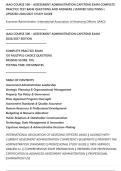
IAAO COURSE 151 – STANDARDS OF PRACTICE AND ETHICS FINAL EXAM COMPLETE
PRACTICE TEST BANK QUESTIONS AND ANSWERS | VERIFIED SOLUTIONS |
UPDATED 2026/2027 STUDY GUIDE
Examiner/Administrator: International Association of Assessing Officers
━━━━━━━━━━━━━━━━━━━━━━━━━━━━
IAAO COURSE 151 – STANDARDS OF PRACTICE AND ETHICS FINAL EXAM
2026/2027 EDITION
━━━━━━━━━━━━━━━━━━━━━━━━━━━━
COMPLETE PRACTICE EXAM
120 MULTIPLE-CHOICE QUESTIONS
PASSING SCORE: 70%
TESTING TIME: 180 MINUTES
━━━━━━━━━━━━━━━━━━━━━━━━━━━━
TABLE OF CONTENTS
ETHICS AND PROFESSIONAL RESPONSIBILITY
IAAO STANDARDS OF PRACTICE
PUBLIC TRUST AND ACCOUNTABILITY
CONFLICTS OF INTEREST
CONFIDENTIALITY AND DATA MANAGEMENT
ASSESSMENT ADMINISTRATION ETHICS
PROFESSIONAL CONDUCT AND DECISION-MAKING
VALUATION INTEGRITY AND UNIFORMITY
LEGAL AND REGULATORY COMPLIANCE
ETHICAL CASE ANALYSIS AND APPLICATION
IAAO PROFESSIONAL EDUCATION PROGRAM || ALIGNED WITH CURRENT ASSESSMENT
ADMINISTRATION STANDARDS || ETHICS AND PROFESSIONAL RESPONSIBILITY ||
PROFESSIONAL STUDY GUIDE || 100% VERIFIED | GRADED A+ || COMPREHENSIVE
EXAM PREPARATION || PREPARED FOR ASSESSMENT PROFESSIONALS || PROFESSIONAL
EXAMINATION USE
,ETHICS AND PROFESSIONAL RESPONSIBILITY (Q1–Q8)
Q1. An assessor discovers that a close relative owns a commercial property currently
under appeal. The assessor has authority to influence the valuation outcome. Which
action best aligns with professional ethics?
A. Continue handling the appeal because expertise is needed
B. Delegate only portions of the review while maintaining oversight
C. Disclose the relationship and recuse themselves from the matter
D. Proceed if the relative signs a conflict waiver
Correct Answer: 🔴 C. Disclose the relationship and recuse themselves from the
matter
Explanation: 🔹 Ethical standards require avoiding both actual conflicts of interest
and the appearance of impropriety. Full disclosure and recusal protect public
confidence and ensure impartiality. Option A and B still permit influence over the
matter. Option D does not eliminate the assessor's ethical responsibility to remain
impartial.
Q2. Which principle is most fundamental to ethical assessment administration?
A. Revenue maximization
B. Political responsiveness
C. Impartial treatment of taxpayers
D. Operational efficiency
Correct Answer: 🔴 C. Impartial treatment of taxpayers
Explanation: 🔹 The cornerstone of ethical assessment administration is fairness and
impartiality. Assessors serve the public interest rather than political, financial, or
personal interests. While efficiency is important, it must never supersede equitable
treatment.
Q3. A taxpayer offers an expensive gift to an assessor after receiving a favorable
assessment adjustment. What is the most ethical response?
,A. Accept the gift if no future matters are pending
B. Accept the gift and report it later
C. Decline the gift and document the interaction if required by policy
D. Accept the gift because the case is closed
Correct Answer: 🔴 C. Decline the gift and document the interaction if required by
policy
Explanation: 🔹 Acceptance of valuable gifts creates real or perceived bias. Ethical
practice requires refusing gifts that could compromise independence. Documentation
may be necessary to ensure transparency and accountability.
Q4. Professional ethics primarily exist to:
A. Protect employees from criticism
B. Increase departmental budgets
C. Promote confidence in public institutions
D. Reduce assessment appeals
Correct Answer: 🔴 C. Promote confidence in public institutions
Explanation: 🔹 Ethical frameworks establish public trust by ensuring officials act
honestly, fairly, and competently. Reduced appeals may occur indirectly, but public
confidence remains the primary objective.
Q5. Which action most directly violates professional integrity?
A. Applying standardized procedures consistently
B. Adjusting values based on verified market evidence
C. Altering assessments to benefit influential individuals
D. Conducting peer reviews of valuation work
Correct Answer: 🔴 C. Altering assessments to benefit influential individuals
Explanation: 🔹 Favoritism undermines uniformity, fairness, and public trust. Ethical
assessment administration requires equal treatment regardless of influence or status.
The remaining options support professional standards.
, Q6. A supervisor pressures an assessor to increase values solely to raise tax revenue.
What should the assessor do?
A. Comply to support fiscal needs
B. Apply market-supported valuation standards regardless of pressure
C. Increase only commercial values
D. Delay assessments until the pressure subsides
Correct Answer: 🔴 B. Apply market-supported valuation standards regardless of
pressure
Explanation: 🔹 Assessment values must reflect objective valuation principles rather
than revenue targets. Ethical assessors maintain professional independence even
when pressured by superiors or elected officials.
Q7. Which statement best reflects ethical leadership?
A. Prioritizing organizational image over transparency
B. Modeling ethical conduct and accountability
C. Protecting employees from all consequences
D. Avoiding difficult ethical decisions
Correct Answer: 🔴 B. Modeling ethical conduct and accountability
Explanation: 🔹 Ethical leaders establish standards through personal example,
transparency, and accountability. Organizational culture often reflects leadership
behavior. The remaining choices undermine ethical governance.
Q8. Public confidence is most strengthened when assessment decisions are:
A. Confidential and undisclosed
B. Influenced by local stakeholders
C. Consistent, transparent, and defensible
D. Based primarily on public opinion
PRACTICE TEST BANK QUESTIONS AND ANSWERS | VERIFIED SOLUTIONS |
UPDATED 2026/2027 STUDY GUIDE
Examiner/Administrator: International Association of Assessing Officers
━━━━━━━━━━━━━━━━━━━━━━━━━━━━
IAAO COURSE 151 – STANDARDS OF PRACTICE AND ETHICS FINAL EXAM
2026/2027 EDITION
━━━━━━━━━━━━━━━━━━━━━━━━━━━━
COMPLETE PRACTICE EXAM
120 MULTIPLE-CHOICE QUESTIONS
PASSING SCORE: 70%
TESTING TIME: 180 MINUTES
━━━━━━━━━━━━━━━━━━━━━━━━━━━━
TABLE OF CONTENTS
ETHICS AND PROFESSIONAL RESPONSIBILITY
IAAO STANDARDS OF PRACTICE
PUBLIC TRUST AND ACCOUNTABILITY
CONFLICTS OF INTEREST
CONFIDENTIALITY AND DATA MANAGEMENT
ASSESSMENT ADMINISTRATION ETHICS
PROFESSIONAL CONDUCT AND DECISION-MAKING
VALUATION INTEGRITY AND UNIFORMITY
LEGAL AND REGULATORY COMPLIANCE
ETHICAL CASE ANALYSIS AND APPLICATION
IAAO PROFESSIONAL EDUCATION PROGRAM || ALIGNED WITH CURRENT ASSESSMENT
ADMINISTRATION STANDARDS || ETHICS AND PROFESSIONAL RESPONSIBILITY ||
PROFESSIONAL STUDY GUIDE || 100% VERIFIED | GRADED A+ || COMPREHENSIVE
EXAM PREPARATION || PREPARED FOR ASSESSMENT PROFESSIONALS || PROFESSIONAL
EXAMINATION USE
,ETHICS AND PROFESSIONAL RESPONSIBILITY (Q1–Q8)
Q1. An assessor discovers that a close relative owns a commercial property currently
under appeal. The assessor has authority to influence the valuation outcome. Which
action best aligns with professional ethics?
A. Continue handling the appeal because expertise is needed
B. Delegate only portions of the review while maintaining oversight
C. Disclose the relationship and recuse themselves from the matter
D. Proceed if the relative signs a conflict waiver
Correct Answer: 🔴 C. Disclose the relationship and recuse themselves from the
matter
Explanation: 🔹 Ethical standards require avoiding both actual conflicts of interest
and the appearance of impropriety. Full disclosure and recusal protect public
confidence and ensure impartiality. Option A and B still permit influence over the
matter. Option D does not eliminate the assessor's ethical responsibility to remain
impartial.
Q2. Which principle is most fundamental to ethical assessment administration?
A. Revenue maximization
B. Political responsiveness
C. Impartial treatment of taxpayers
D. Operational efficiency
Correct Answer: 🔴 C. Impartial treatment of taxpayers
Explanation: 🔹 The cornerstone of ethical assessment administration is fairness and
impartiality. Assessors serve the public interest rather than political, financial, or
personal interests. While efficiency is important, it must never supersede equitable
treatment.
Q3. A taxpayer offers an expensive gift to an assessor after receiving a favorable
assessment adjustment. What is the most ethical response?
,A. Accept the gift if no future matters are pending
B. Accept the gift and report it later
C. Decline the gift and document the interaction if required by policy
D. Accept the gift because the case is closed
Correct Answer: 🔴 C. Decline the gift and document the interaction if required by
policy
Explanation: 🔹 Acceptance of valuable gifts creates real or perceived bias. Ethical
practice requires refusing gifts that could compromise independence. Documentation
may be necessary to ensure transparency and accountability.
Q4. Professional ethics primarily exist to:
A. Protect employees from criticism
B. Increase departmental budgets
C. Promote confidence in public institutions
D. Reduce assessment appeals
Correct Answer: 🔴 C. Promote confidence in public institutions
Explanation: 🔹 Ethical frameworks establish public trust by ensuring officials act
honestly, fairly, and competently. Reduced appeals may occur indirectly, but public
confidence remains the primary objective.
Q5. Which action most directly violates professional integrity?
A. Applying standardized procedures consistently
B. Adjusting values based on verified market evidence
C. Altering assessments to benefit influential individuals
D. Conducting peer reviews of valuation work
Correct Answer: 🔴 C. Altering assessments to benefit influential individuals
Explanation: 🔹 Favoritism undermines uniformity, fairness, and public trust. Ethical
assessment administration requires equal treatment regardless of influence or status.
The remaining options support professional standards.
, Q6. A supervisor pressures an assessor to increase values solely to raise tax revenue.
What should the assessor do?
A. Comply to support fiscal needs
B. Apply market-supported valuation standards regardless of pressure
C. Increase only commercial values
D. Delay assessments until the pressure subsides
Correct Answer: 🔴 B. Apply market-supported valuation standards regardless of
pressure
Explanation: 🔹 Assessment values must reflect objective valuation principles rather
than revenue targets. Ethical assessors maintain professional independence even
when pressured by superiors or elected officials.
Q7. Which statement best reflects ethical leadership?
A. Prioritizing organizational image over transparency
B. Modeling ethical conduct and accountability
C. Protecting employees from all consequences
D. Avoiding difficult ethical decisions
Correct Answer: 🔴 B. Modeling ethical conduct and accountability
Explanation: 🔹 Ethical leaders establish standards through personal example,
transparency, and accountability. Organizational culture often reflects leadership
behavior. The remaining choices undermine ethical governance.
Q8. Public confidence is most strengthened when assessment decisions are:
A. Confidential and undisclosed
B. Influenced by local stakeholders
C. Consistent, transparent, and defensible
D. Based primarily on public opinion