
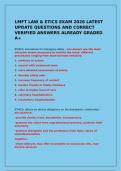
LMFT LAW & ETICS EXAM 2026 LATEST
UPDATE QUESTIONS AND CORRECT
VERIFIED ANSWERS ALREADY GRADED
A+
ETHICS: procedures for managing safety - ans-always use the least
intrusive means necessary to resolve the issue. different
procedures ranging from least-to-most intrusive:
1. continue to assess
2. consult with treatment team
3. more detailed assessment of safety
4. develop safety plan
5. increase frequency of contact
6. involve friends or family members
7. refer to higher level of care
8. voluntary hospitalization
9. involuntary hospitalization
ETHICS: effects on ethical obligations on the therapeutic relationship -
ans-positive:
-provide clarity, trust, boundaries, transparency
-protects the client from unprofessional practice, protects their
autonomy
-protects therapists and the profession from false claims of
unprofessionalism
negative:
-client distrust, may offer incomplete or inaccurate info, may
decline services
,-describing and fulfilling those obligations takes time away from
actual clinical work
LAW/ETHICS: when legal and ethical obligations conflict - ans--ethical
standards often defer to law
-where they apply different standards, follow the higher one
-where they fundamentally conflict, the law wins
-follow the law with maximum possible adherence to ethics code
-protect client welfare as much as possible
-generally speaking, follow the ethics code because you can do so
without violating law
ETHICS: advocacy - ans--advocate with payors when necessary and
appropriate (e.g., challenging denials of insurance coverage)
-advocate on behalf of clients' best interests to ensure access to
resources that support mental health needs (e.g., collaboration
with doctors, teachers, etc.)
ETHICS: ethical standard for interacting with payors - ans--MFTs
represent facts regarding services rendered and payment for
services fully and truthfully to third-party payers and/or
guarantors of payment
-when appropriate, MFTs make reasonable effort to assist their
clients in obtaining reimbursement for services rendered
ETHICS: ethical code for working with colleagues - ans--treat colleagues
with respect, uphold their confidences
-assist colleagues who are impaired
-take reasonable steps to resolve disputes before filing
complaints
-do not file frivolous complains
-(most importantly) remain true to your scope of competence
,ETHICS: protecting client rights within consultation - ans--respect
privacy: include only information relevant to the consult
-don't share identifiable information without client consent
-disclose only the information necessary to achieve the purpose
of the consult
ETHICS: knowledge of referrals and resources - ans-should have
reasonable level of knowledge of community resources and
referrals available in your area to address:
-functioning needs outside of mental health care (e.g., housing
needs)
-physical issues, assessment issues, anything else within healthcare that
is outside of your scope of practice or scope of competence
ETHICS: facilitating the transfer of clients - ans--client more likely to follow
through if there's a warm handoff
-get client permission
-make contact together if appropriate (on their behalf)
-get ROI from client authorizing release of records and allowing
collaboration
-follow up with client to ensure referral is meeting needs
ETHICS: conditions calling for interruption or termination - ans--client has
reached goals and no new goals have emerged
-client needs higher level of care
-client needs are outside therapist scope of practice or competence
-client is unable to pay (after attempts to resolve)
-client is not making gains and gains are not expected
-client is moving outside of your jurisdiction
-client is behaving inappropriately or unacceptably
-therapist is impaired
-therapist is leaving place of employment
, -bad match/fit
-otherwise unresolvable ethical conflict
ETHICS: non-abandonment or preventing client abandonment (6) - ans--
key ethical principle saying that no client in need should be left not
knowing where to go
-does not mean you (as the therapist) are held hostage to a client
1. ensure crisis needs are met
2. engage in warm handoff
3. provide records with permission
4. follow up with client and referral (if permission granted)
5. procedures for emergency or therapist absence
6. maintaining a professional will (not required)
ETHICS: telehealth ethical standards for delivering services - ans--ensure
that use of technology is legally compliant
-determine that use of technology is clinically appropriate, considering
client needs and abilities and other relevant factors
-inform clients of risks and benefits, including confidentiality risks, clinical
limitations, and risk of technology failure
ETHICS: telehealth ethical standards for communication - ans--ensure the
security of the communication channel
-take care when transmitting or receiving information electronically
ETHICS: ensuring appropriateness for telehealth - ans--client's comfort and
familiarity with telehealth
-issues to be addressed in therapy
-therapist theoretical orientation
-any other relevant factor
UPDATE QUESTIONS AND CORRECT
VERIFIED ANSWERS ALREADY GRADED
A+
ETHICS: procedures for managing safety - ans-always use the least
intrusive means necessary to resolve the issue. different
procedures ranging from least-to-most intrusive:
1. continue to assess
2. consult with treatment team
3. more detailed assessment of safety
4. develop safety plan
5. increase frequency of contact
6. involve friends or family members
7. refer to higher level of care
8. voluntary hospitalization
9. involuntary hospitalization
ETHICS: effects on ethical obligations on the therapeutic relationship -
ans-positive:
-provide clarity, trust, boundaries, transparency
-protects the client from unprofessional practice, protects their
autonomy
-protects therapists and the profession from false claims of
unprofessionalism
negative:
-client distrust, may offer incomplete or inaccurate info, may
decline services
,-describing and fulfilling those obligations takes time away from
actual clinical work
LAW/ETHICS: when legal and ethical obligations conflict - ans--ethical
standards often defer to law
-where they apply different standards, follow the higher one
-where they fundamentally conflict, the law wins
-follow the law with maximum possible adherence to ethics code
-protect client welfare as much as possible
-generally speaking, follow the ethics code because you can do so
without violating law
ETHICS: advocacy - ans--advocate with payors when necessary and
appropriate (e.g., challenging denials of insurance coverage)
-advocate on behalf of clients' best interests to ensure access to
resources that support mental health needs (e.g., collaboration
with doctors, teachers, etc.)
ETHICS: ethical standard for interacting with payors - ans--MFTs
represent facts regarding services rendered and payment for
services fully and truthfully to third-party payers and/or
guarantors of payment
-when appropriate, MFTs make reasonable effort to assist their
clients in obtaining reimbursement for services rendered
ETHICS: ethical code for working with colleagues - ans--treat colleagues
with respect, uphold their confidences
-assist colleagues who are impaired
-take reasonable steps to resolve disputes before filing
complaints
-do not file frivolous complains
-(most importantly) remain true to your scope of competence
,ETHICS: protecting client rights within consultation - ans--respect
privacy: include only information relevant to the consult
-don't share identifiable information without client consent
-disclose only the information necessary to achieve the purpose
of the consult
ETHICS: knowledge of referrals and resources - ans-should have
reasonable level of knowledge of community resources and
referrals available in your area to address:
-functioning needs outside of mental health care (e.g., housing
needs)
-physical issues, assessment issues, anything else within healthcare that
is outside of your scope of practice or scope of competence
ETHICS: facilitating the transfer of clients - ans--client more likely to follow
through if there's a warm handoff
-get client permission
-make contact together if appropriate (on their behalf)
-get ROI from client authorizing release of records and allowing
collaboration
-follow up with client to ensure referral is meeting needs
ETHICS: conditions calling for interruption or termination - ans--client has
reached goals and no new goals have emerged
-client needs higher level of care
-client needs are outside therapist scope of practice or competence
-client is unable to pay (after attempts to resolve)
-client is not making gains and gains are not expected
-client is moving outside of your jurisdiction
-client is behaving inappropriately or unacceptably
-therapist is impaired
-therapist is leaving place of employment
, -bad match/fit
-otherwise unresolvable ethical conflict
ETHICS: non-abandonment or preventing client abandonment (6) - ans--
key ethical principle saying that no client in need should be left not
knowing where to go
-does not mean you (as the therapist) are held hostage to a client
1. ensure crisis needs are met
2. engage in warm handoff
3. provide records with permission
4. follow up with client and referral (if permission granted)
5. procedures for emergency or therapist absence
6. maintaining a professional will (not required)
ETHICS: telehealth ethical standards for delivering services - ans--ensure
that use of technology is legally compliant
-determine that use of technology is clinically appropriate, considering
client needs and abilities and other relevant factors
-inform clients of risks and benefits, including confidentiality risks, clinical
limitations, and risk of technology failure
ETHICS: telehealth ethical standards for communication - ans--ensure the
security of the communication channel
-take care when transmitting or receiving information electronically
ETHICS: ensuring appropriateness for telehealth - ans--client's comfort and
familiarity with telehealth
-issues to be addressed in therapy
-therapist theoretical orientation
-any other relevant factor


