
Latest Med Surge I - Pharmacology
Med Surge I - Pharmacology
Study online at https://quizlet.com/_j10sf0
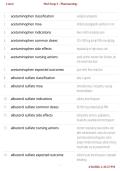
1. acetaminophen classification analgesic/antipyretic
2. acetaminophen moa inhibits prostaglandin synthesis in cns
3. acetaminophen indications fever, mild to moderate pain
4. acetaminophen common doses 325-1000 mg q4-q6 PRN, max 4g/day
5. acetaminophen side effects hepatoxicity in high doses, rash
6. acetaminophen nursing actions avoid alcohol, monitor liver function, do
not exceed max dose
7. acetaminophen expected outcomes pain relief, fever reduction
8. albuterol sulfate classification beta 2 agonist
9. albuterol sulfate moa stimulates beta 2 receptors, causing
bronchodilation
10. albuterol sulfate indications asthma, bronchospasm
11. albuterol sulfate common doses 90-180 mcg inhaled q4-q6 PRN
12. albuterol sulfate side effects tachycardia, tremors, palpitations,
headache, paradoxical bronchospasm
13. albuterol sulfate nursing actions monitor respiratory status before and
after administration, assess for overuse
and rebound bronchospasm, teach
proper inhaler technique, advise rinsing
mouth after use to prevent thrush
14. albuterol sulfate expected outcome relief of acute bronchospasm, improved
breathing
4/16/2026, 1:43:23 PM
, Latest Med Surge I - Pharmacology
Med Surge I - Pharmacology
Study online at https://quizlet.com/_j10sf0
15. alendronate (fosamax) classification bisphosphonate
16. alendronate (fosamax) moa inhibits osteoclast-mediated bone re-
sorption
17. alendronate (fosamax) indications osteoporosis, paget's disease
18. alendronate (fosamax) common doses 70mg PO weekly or 10mg daily
19. alendronate (fosamax) side effects esophagitis, jaw osteonecrosis, hypocal-
cemia, musculoskeletal pain
20. alendronate (fosamax) nursing actions instruct patient to take in the morning
with a full glass of water, remain upright
for 30 min, report any new or worsening
bone pain, monitor calcium and vitamin
D levels
21. alendronate (fosamax) expected outcome increased bone density, reduced fracture
risk
22. allopurinol classification xanthine oxidase inhibitor
23. allopurinol moa reduces uric acid production
24. allopurinol indications gout, kidney stones, tumor lysis syn-
drome
25. allopurinol common doses 100-800mg/day PO
26. allopurinol nursing actions encourage hydration to prevent kidney
stones, monitor uric acid, renal function,
and liver function, advise patient to re-
port rash or unusual brusing
4/16/2026, 1:43:23 PM
, Latest Med Surge I - Pharmacology
Med Surge I - Pharmacology
Study online at https://quizlet.com/_j10sf0
27. allopurinol side effects rash (stevens-johnson syndrome), nau-
sea, hepatoxicity, nephrotoxicity, drowsi-
ness
28. allopurinol expected outcomes reduced gout flare-ups, lower uric acid
levels
29. apixaban (eliquis) classification anticoagulant
30. apixaban (eliquis) moa direct factor xa inhibitor
31. apixaban (eliquis) indications stroke prevention, dvt, pe
32. apixaban (eliquis) common doses 5mg po BID
33. apixaban (eliquis) side effects bleeding, anemia
34. apixaban (eliquis) nursing actions no routine monitoring required, avoid
NSAIDs, watch for bleeding
35. apixaban (eliquis) expected outcomes reduced stroke/DVT risk
36. amoxicillin classification penicillin
37. amoxicillin moa inhibits bacterial cell wall synthesis
38. amoxicillin indications bacterial infections
39. amoxicillin common doeses 500-875mg po q12
40. amoxicillin side effects nausea, diarrhea, allergic reactions
(rash, anaphylaxis), yeast infections
41. amoxicillin nursing actions assess for allergies before administra-
tion, instruct to complete full course,
4/16/2026, 1:43:23 PM
Med Surge I - Pharmacology
Study online at https://quizlet.com/_j10sf0
1. acetaminophen classification analgesic/antipyretic
2. acetaminophen moa inhibits prostaglandin synthesis in cns
3. acetaminophen indications fever, mild to moderate pain
4. acetaminophen common doses 325-1000 mg q4-q6 PRN, max 4g/day
5. acetaminophen side effects hepatoxicity in high doses, rash
6. acetaminophen nursing actions avoid alcohol, monitor liver function, do
not exceed max dose
7. acetaminophen expected outcomes pain relief, fever reduction
8. albuterol sulfate classification beta 2 agonist
9. albuterol sulfate moa stimulates beta 2 receptors, causing
bronchodilation
10. albuterol sulfate indications asthma, bronchospasm
11. albuterol sulfate common doses 90-180 mcg inhaled q4-q6 PRN
12. albuterol sulfate side effects tachycardia, tremors, palpitations,
headache, paradoxical bronchospasm
13. albuterol sulfate nursing actions monitor respiratory status before and
after administration, assess for overuse
and rebound bronchospasm, teach
proper inhaler technique, advise rinsing
mouth after use to prevent thrush
14. albuterol sulfate expected outcome relief of acute bronchospasm, improved
breathing
4/16/2026, 1:43:23 PM
, Latest Med Surge I - Pharmacology
Med Surge I - Pharmacology
Study online at https://quizlet.com/_j10sf0
15. alendronate (fosamax) classification bisphosphonate
16. alendronate (fosamax) moa inhibits osteoclast-mediated bone re-
sorption
17. alendronate (fosamax) indications osteoporosis, paget's disease
18. alendronate (fosamax) common doses 70mg PO weekly or 10mg daily
19. alendronate (fosamax) side effects esophagitis, jaw osteonecrosis, hypocal-
cemia, musculoskeletal pain
20. alendronate (fosamax) nursing actions instruct patient to take in the morning
with a full glass of water, remain upright
for 30 min, report any new or worsening
bone pain, monitor calcium and vitamin
D levels
21. alendronate (fosamax) expected outcome increased bone density, reduced fracture
risk
22. allopurinol classification xanthine oxidase inhibitor
23. allopurinol moa reduces uric acid production
24. allopurinol indications gout, kidney stones, tumor lysis syn-
drome
25. allopurinol common doses 100-800mg/day PO
26. allopurinol nursing actions encourage hydration to prevent kidney
stones, monitor uric acid, renal function,
and liver function, advise patient to re-
port rash or unusual brusing
4/16/2026, 1:43:23 PM
, Latest Med Surge I - Pharmacology
Med Surge I - Pharmacology
Study online at https://quizlet.com/_j10sf0
27. allopurinol side effects rash (stevens-johnson syndrome), nau-
sea, hepatoxicity, nephrotoxicity, drowsi-
ness
28. allopurinol expected outcomes reduced gout flare-ups, lower uric acid
levels
29. apixaban (eliquis) classification anticoagulant
30. apixaban (eliquis) moa direct factor xa inhibitor
31. apixaban (eliquis) indications stroke prevention, dvt, pe
32. apixaban (eliquis) common doses 5mg po BID
33. apixaban (eliquis) side effects bleeding, anemia
34. apixaban (eliquis) nursing actions no routine monitoring required, avoid
NSAIDs, watch for bleeding
35. apixaban (eliquis) expected outcomes reduced stroke/DVT risk
36. amoxicillin classification penicillin
37. amoxicillin moa inhibits bacterial cell wall synthesis
38. amoxicillin indications bacterial infections
39. amoxicillin common doeses 500-875mg po q12
40. amoxicillin side effects nausea, diarrhea, allergic reactions
(rash, anaphylaxis), yeast infections
41. amoxicillin nursing actions assess for allergies before administra-
tion, instruct to complete full course,
4/16/2026, 1:43:23 PM


