
Latest Surgical Pharmacology and Anesthesia Chapter 9
Surgical Pharmacology and Anesthesia Chapter 9
Study online at https://quizlet.com/_20b1x4
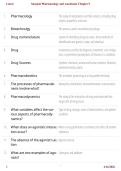
1. Pharmacology The study of medications and their actions, including drug
origins, properties, and uses
2. Biotechnolgy The process used in manufacturing drugs
3. Drug nomenclature System of identifying drugs by name, three methods of
identification are generic, trade, and chemical
4. Drug A substance used for the diagnosis, treatment, cure, mitiga-
tion, or prevention (prophylaxis) of disease or a condition
5. Drug Sources Synthetic chemicals, animal and human proteins, Minerals,
elemental metals, plants
6. Pharmacokinetics The metabolic processing of a drug within the body.
7. The processes of pharmacoki- Absorption, distribution, biotransformation, and excretion
nesis involve what?
8. Pharmacodynamics The study of the interaction of drug molecules with the
target cells of living tissue.
9. What variables affect the var- Type of drug, dosage, route of administration, and patient
ious aspects of pharmacody- condition
namics?
10. When does an agonistic interac- When a drug potentiates or enhances the effect of another
tion occur? substance.
11. The absence of the agonist's ac- Agonist reversal
tion
12. What are two examples of ago- Synergists and additives
nists?
1 4/16/2026
, Latest Surgical Pharmacology and Anesthesia Chapter 9
Surgical Pharmacology and Anesthesia Chapter 9
Study online at https://quizlet.com/_20b1x4
13. What happens when the agonis- It produces an alteration in the biological function
tic medication binds to a recep-
tor site in the body?
14. Synergistic relationship The action of one agent increases the action of the other
agent when delivered together.
15. What can be a result of a syner- Each agent can be given in lower, sometimes safer doses
gistic relationship? while obtaining the same desired effect.
16. Epinephrine is an example of Additive
an?
17. What is epinephrine added to It is added to the local anesthetic lidocaine to prolong the
and what is its purpose? anesthetic action.
18. Antagonist Binds to the agonist's receptor site, preventing the agonist
from binding there and causing its desired effect.
19. Antagonist example Protamine sulfate
20. Dantrolene Reverses malignant hyperthermia
21. Prophylactic drug used to prevent disease
22. Heparin anticoagulant aka blood thinner
23. Analgesics Used to manage pain
24. Adrenergics Used in the treatment of asthma and during allergic emer-
gencies such as anaphylactic shock
25. Allergic reaction type I Vasoconstriction/inflammation due to histamine release
causing breathing difficulty and can lead to anaphylactic
2 4/16/2026
, Latest Surgical Pharmacology and Anesthesia Chapter 9
Surgical Pharmacology and Anesthesia Chapter 9
Study online at https://quizlet.com/_20b1x4
shock which can cause death. Example is allergy to bees,
nuts, shellfish etc.
26. Allergic reaction type II Cytotoxic reaction resulting from the interaction between
two antibodies and cell surface antigens. Activates strong
immune response which can cause injury or death. Example
is mismatched blood transfusion or hemolytic disease in
newborns
27. Allergic reaction type III Caused by antigen-antibody complexes causing tissue
damage when immune response is triggered. Example is
an allergic reaction to antibiotics resulting in itching, rash,
severe swelling, and fever. Usually resolves itself
28. Allergic reaction type IV Cell mediated reactions that occur 24-72 hours after expo-
sure. Not related to antibodies, an example is a delayed hy-
persensitivity to a tuberculin skin test with a positive reaction
at the injection site
29. Therapeutic action/window Range of drug doses that can treat disease effectively while
staying within the safety range.
30. Narrow therapeutic window Drugs in which the difference between the therapeutic dose
and toxicity or lethal effects is small. Dose must be carefully
measured and administered properly.
31. Indication A listing of the medical conditions that the medication is
known to treat.
32. Contraindications A list of circumstances or medical conditions under which
the medication should not be used.
33. Depending on the medication Pregnancy, liver failure, or renal failure
and how it is metabolized in the
3 4/16/2026
Surgical Pharmacology and Anesthesia Chapter 9
Study online at https://quizlet.com/_20b1x4
1. Pharmacology The study of medications and their actions, including drug
origins, properties, and uses
2. Biotechnolgy The process used in manufacturing drugs
3. Drug nomenclature System of identifying drugs by name, three methods of
identification are generic, trade, and chemical
4. Drug A substance used for the diagnosis, treatment, cure, mitiga-
tion, or prevention (prophylaxis) of disease or a condition
5. Drug Sources Synthetic chemicals, animal and human proteins, Minerals,
elemental metals, plants
6. Pharmacokinetics The metabolic processing of a drug within the body.
7. The processes of pharmacoki- Absorption, distribution, biotransformation, and excretion
nesis involve what?
8. Pharmacodynamics The study of the interaction of drug molecules with the
target cells of living tissue.
9. What variables affect the var- Type of drug, dosage, route of administration, and patient
ious aspects of pharmacody- condition
namics?
10. When does an agonistic interac- When a drug potentiates or enhances the effect of another
tion occur? substance.
11. The absence of the agonist's ac- Agonist reversal
tion
12. What are two examples of ago- Synergists and additives
nists?
1 4/16/2026
, Latest Surgical Pharmacology and Anesthesia Chapter 9
Surgical Pharmacology and Anesthesia Chapter 9
Study online at https://quizlet.com/_20b1x4
13. What happens when the agonis- It produces an alteration in the biological function
tic medication binds to a recep-
tor site in the body?
14. Synergistic relationship The action of one agent increases the action of the other
agent when delivered together.
15. What can be a result of a syner- Each agent can be given in lower, sometimes safer doses
gistic relationship? while obtaining the same desired effect.
16. Epinephrine is an example of Additive
an?
17. What is epinephrine added to It is added to the local anesthetic lidocaine to prolong the
and what is its purpose? anesthetic action.
18. Antagonist Binds to the agonist's receptor site, preventing the agonist
from binding there and causing its desired effect.
19. Antagonist example Protamine sulfate
20. Dantrolene Reverses malignant hyperthermia
21. Prophylactic drug used to prevent disease
22. Heparin anticoagulant aka blood thinner
23. Analgesics Used to manage pain
24. Adrenergics Used in the treatment of asthma and during allergic emer-
gencies such as anaphylactic shock
25. Allergic reaction type I Vasoconstriction/inflammation due to histamine release
causing breathing difficulty and can lead to anaphylactic
2 4/16/2026
, Latest Surgical Pharmacology and Anesthesia Chapter 9
Surgical Pharmacology and Anesthesia Chapter 9
Study online at https://quizlet.com/_20b1x4
shock which can cause death. Example is allergy to bees,
nuts, shellfish etc.
26. Allergic reaction type II Cytotoxic reaction resulting from the interaction between
two antibodies and cell surface antigens. Activates strong
immune response which can cause injury or death. Example
is mismatched blood transfusion or hemolytic disease in
newborns
27. Allergic reaction type III Caused by antigen-antibody complexes causing tissue
damage when immune response is triggered. Example is
an allergic reaction to antibiotics resulting in itching, rash,
severe swelling, and fever. Usually resolves itself
28. Allergic reaction type IV Cell mediated reactions that occur 24-72 hours after expo-
sure. Not related to antibodies, an example is a delayed hy-
persensitivity to a tuberculin skin test with a positive reaction
at the injection site
29. Therapeutic action/window Range of drug doses that can treat disease effectively while
staying within the safety range.
30. Narrow therapeutic window Drugs in which the difference between the therapeutic dose
and toxicity or lethal effects is small. Dose must be carefully
measured and administered properly.
31. Indication A listing of the medical conditions that the medication is
known to treat.
32. Contraindications A list of circumstances or medical conditions under which
the medication should not be used.
33. Depending on the medication Pregnancy, liver failure, or renal failure
and how it is metabolized in the
3 4/16/2026


