https://www.stuvia.com/user/lectkeshi
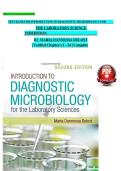
TEST BANK FOR INTRODUCTION TO DIAGNOSTIC MICROBIOLOGY FOR
THE LABORATORY SCIENCE
2NDEDITION
BY MARIA DANNESSA DELOST
| Verified Chapter's 1 - 24 | Complete
,TABLE OF CONTENTS
Chapter 1 Taxonomy, the Microbial Cell, Metabolism, and Genetics……………………………………3
Chapter 2 Safety in the Clinical Microbiology Laboratory……………………………………………….9
Chapter 3 Host and Microorganism Interactions………………………………………………………….14
Chapter 4 Specimen Collection and Management………………………………………………………..20
Chapter 5 Microscopy, Staining, and Direct Examination of Specimens…………………………………27
Chapter 6 Traditional Culture and Identification Methods…………………………………………………31
Chapter 7 Immunochemical and Molecular Methods……………………………………………………….36
Chapter 8 Antimicrobial Agents and Susceptibility Testing………………………………………………..41
Chapter 9 Staphylococci and Other Catalase-Positive Gram-Positive Cocci………………………………..47
Chapter 10 Streptococcus, Enterococcus, and Related Organisms…………………………………………51
Chapter 11 Neisseria…………………………………………………………………………………………61
Chapter 12 Enterobacteriaceae………………………………………………………………………………66
Chapter 13 Nonfermentative Gram-Negative Bacilli and Similar Bacteria…………………………………73
Chapter 14 Vibrio, Aeromonas, Campylobacter, and Similar Organisms…………………………………...79
Chapter 15 Haemophilus, HACEK, Legionella, Bordetella, and Other Fastidious Gram-Negative Bacilli...85
Chapter 16 Gram-Positive Bacilli…………………………………………………………………………..92
Chapter 17 Spirochetes………………………………………………………………………………………98
Chapter 18 Anaerobes………………………………………………………………………………………102
Chapter 19 Mycobacterium…………………………………………………………………………………110
Chapter 20 Chlamydia, Rickettsia, Mycoplasma, and Similar Organisms…………………………………116
Chapter 21 Introduction to Clinical Mycology……………………………………………………………..121
Chapter 22 Introduction to Clinical Parasitology…………………………………………………………..128
Chapter 23 Introduction to Clinical Virology……………………………………………………………..137
Chapter 24 Clinical Specimens and Infections……………………………………………………………..144
,Import Settings:
Base Settings: Brownstone Default
Information Field: Complexity
Information Field: Ahead
Information Field: Subject
Information Field: Title
Information Field: Feedback
Information Field: Taxonomy
Information Field: Objective
Highest Answer Letter: D
Multiple Keywords in Same Paragraph: No
NAS ISBN13: 9781284202212, add to Ahead, Title tags
Chapter: Chapter 01 - Quiz
Multiple Choice
1. Which of the following is a phenotypical characteristic used for classifying bacteria?
A) Staining characteristics
B) Macroscopic morphology
C) Nutritional needs
D) All of these are correct.
Ans: D
Complexity: Easy
Ahead: Classification and Taxonomy
Subject: Chapter 1
Title: Taxonomy, the Microbial Cell, Metabolism, and Genetics
Taxonomy: Recall
2. Which of the following is written correctly using the binomial system of nomenclature?
A) STAPHYLOCOCCUS aureus
B) Streptococcus pyogenes
C) Staphylococcus Epidermidis
D) enterococcus faecalis
Ans: B
Complexity:Moderate
Ahead:Classification and Taxonomy
Subject: Chapter 1
Title: Taxonomy, the Microbial Cell, Metabolism, and Genetics
Taxonomy:Application
3. The bacterial cell:
A) does not have any organelles.
B) contains DNA within the cytoplasm.
C) contains 40S and 60S ribosomal subunits.
, D) has double-stranded DNA that is bound to histones.
Ans: B
Complexity:Moderate
Ahead:Bacterial Components
Subject: Chapter 1
Title: Taxonomy, the Microbial Cell, Metabolism, and Genetics
Taxonomy:Recall
4. Which of the following extensions enable the bacterial cell to attach to host cells?
A) Flagella
B) Pili
C) Plasmids
D) Ribosomes
Ans: B
Complexity: Easy
Ahead: Bacterial Components
Subject: Chapter 1
Title: Taxonomy, the Microbial Cell, Metabolism, and Genetics
Taxonomy: Recall
5. The gram-positive cell wall contains all of the following, except:
A) O antigen.
B) peptidoglycan.
C) teichoic acids.
D) lipoteichoic acids.
Ans: A
Complexity:Moderate
Ahead:Bacterial Components
Subject: Chapter 1
Title: Taxonomy, the Microbial Cell, Metabolism, and Genetics
Taxonomy:Application
6. Exotoxins:
A) are secreted by gram negative bacteria.
B) may be extracellular enzymes.
C) consist of LPS.
D) can induce fever upon cell lysis.
Ans:B
Complexity:Moderate
Ahead:Bacterial Components
Subject: Chapter 1
Title: Taxonomy, the Microbial Cell, Metabolism, and Genetics
Taxonomy:Application
7. Gram-positive bacteria contain , which are not found in gram-negative bacteria.
A) capsules
B) periplasmic space and an outer membrane
C) teichoic acids
TEST BANK FOR INTRODUCTION TO DIAGNOSTIC MICROBIOLOGY FOR
THE LABORATORY SCIENCE
2NDEDITION
BY MARIA DANNESSA DELOST
| Verified Chapter's 1 - 24 | Complete
,TABLE OF CONTENTS
Chapter 1 Taxonomy, the Microbial Cell, Metabolism, and Genetics……………………………………3
Chapter 2 Safety in the Clinical Microbiology Laboratory……………………………………………….9
Chapter 3 Host and Microorganism Interactions………………………………………………………….14
Chapter 4 Specimen Collection and Management………………………………………………………..20
Chapter 5 Microscopy, Staining, and Direct Examination of Specimens…………………………………27
Chapter 6 Traditional Culture and Identification Methods…………………………………………………31
Chapter 7 Immunochemical and Molecular Methods……………………………………………………….36
Chapter 8 Antimicrobial Agents and Susceptibility Testing………………………………………………..41
Chapter 9 Staphylococci and Other Catalase-Positive Gram-Positive Cocci………………………………..47
Chapter 10 Streptococcus, Enterococcus, and Related Organisms…………………………………………51
Chapter 11 Neisseria…………………………………………………………………………………………61
Chapter 12 Enterobacteriaceae………………………………………………………………………………66
Chapter 13 Nonfermentative Gram-Negative Bacilli and Similar Bacteria…………………………………73
Chapter 14 Vibrio, Aeromonas, Campylobacter, and Similar Organisms…………………………………...79
Chapter 15 Haemophilus, HACEK, Legionella, Bordetella, and Other Fastidious Gram-Negative Bacilli...85
Chapter 16 Gram-Positive Bacilli…………………………………………………………………………..92
Chapter 17 Spirochetes………………………………………………………………………………………98
Chapter 18 Anaerobes………………………………………………………………………………………102
Chapter 19 Mycobacterium…………………………………………………………………………………110
Chapter 20 Chlamydia, Rickettsia, Mycoplasma, and Similar Organisms…………………………………116
Chapter 21 Introduction to Clinical Mycology……………………………………………………………..121
Chapter 22 Introduction to Clinical Parasitology…………………………………………………………..128
Chapter 23 Introduction to Clinical Virology……………………………………………………………..137
Chapter 24 Clinical Specimens and Infections……………………………………………………………..144
,Import Settings:
Base Settings: Brownstone Default
Information Field: Complexity
Information Field: Ahead
Information Field: Subject
Information Field: Title
Information Field: Feedback
Information Field: Taxonomy
Information Field: Objective
Highest Answer Letter: D
Multiple Keywords in Same Paragraph: No
NAS ISBN13: 9781284202212, add to Ahead, Title tags
Chapter: Chapter 01 - Quiz
Multiple Choice
1. Which of the following is a phenotypical characteristic used for classifying bacteria?
A) Staining characteristics
B) Macroscopic morphology
C) Nutritional needs
D) All of these are correct.
Ans: D
Complexity: Easy
Ahead: Classification and Taxonomy
Subject: Chapter 1
Title: Taxonomy, the Microbial Cell, Metabolism, and Genetics
Taxonomy: Recall
2. Which of the following is written correctly using the binomial system of nomenclature?
A) STAPHYLOCOCCUS aureus
B) Streptococcus pyogenes
C) Staphylococcus Epidermidis
D) enterococcus faecalis
Ans: B
Complexity:Moderate
Ahead:Classification and Taxonomy
Subject: Chapter 1
Title: Taxonomy, the Microbial Cell, Metabolism, and Genetics
Taxonomy:Application
3. The bacterial cell:
A) does not have any organelles.
B) contains DNA within the cytoplasm.
C) contains 40S and 60S ribosomal subunits.
, D) has double-stranded DNA that is bound to histones.
Ans: B
Complexity:Moderate
Ahead:Bacterial Components
Subject: Chapter 1
Title: Taxonomy, the Microbial Cell, Metabolism, and Genetics
Taxonomy:Recall
4. Which of the following extensions enable the bacterial cell to attach to host cells?
A) Flagella
B) Pili
C) Plasmids
D) Ribosomes
Ans: B
Complexity: Easy
Ahead: Bacterial Components
Subject: Chapter 1
Title: Taxonomy, the Microbial Cell, Metabolism, and Genetics
Taxonomy: Recall
5. The gram-positive cell wall contains all of the following, except:
A) O antigen.
B) peptidoglycan.
C) teichoic acids.
D) lipoteichoic acids.
Ans: A
Complexity:Moderate
Ahead:Bacterial Components
Subject: Chapter 1
Title: Taxonomy, the Microbial Cell, Metabolism, and Genetics
Taxonomy:Application
6. Exotoxins:
A) are secreted by gram negative bacteria.
B) may be extracellular enzymes.
C) consist of LPS.
D) can induce fever upon cell lysis.
Ans:B
Complexity:Moderate
Ahead:Bacterial Components
Subject: Chapter 1
Title: Taxonomy, the Microbial Cell, Metabolism, and Genetics
Taxonomy:Application
7. Gram-positive bacteria contain , which are not found in gram-negative bacteria.
A) capsules
B) periplasmic space and an outer membrane
C) teichoic acids