

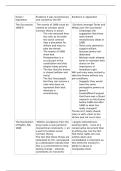
Event / Evidence it was revolutionary Evidence in opposition
legislation and caused by the GR
The Succession, The events of 1688 could be Divisions amongst Tories and
1688-9 viewed as Lockean social Whigs over the succession
contract theory in action Challenges the
The rule removed from suggestion that there
the ruler as he broke were shared
the social contract revolutionary ideals in
Sets a precedent for 1688
william and mary to Tories only seemed to
take the throne support william
The events of 1688 because james had
show that abdicated
Protestantism is a Bed-pan myth allowed
crucial part of the tories to maintain their
constitution and that stance on the
religion takes priority importance of
The fact that the throne hereditary right
is shared (william and Will and mary were invited to
mary) take the throne without any
The fact that people pre-conditions
feel they can remove a Suggests they would
ruler who does not have the same
represent their best prerogative powers as
interests is James II
revolutionary Coward/Morrill argued
that there was a Stuart
monarch on the throne
before 1688 and after
1688 so what has
really changed?
Throne isn't really shared,
mary is will's claim to the
throne and not much else
The Declaration Written acceptance from the Largely reiterated pre-
of Rights, Feb king marks a new period of existing rights – more of a
1689 monarchical constraints -> all conservative document than
a part of Lockean social anything else, but the fact
contract theory that these rights are now
The fact that these things are written down and
reiterated to him, and passed consolidated is important as
as a declaration indicate that this limits the monarch’s
this is a commitment to long- ability to abuse or
lasting change – whereas manipulate them.
constraints on monarchs’
, power in the past have been
more superficial
The Bill of Enshrined the powers of Much of its contents
Rights, Dec parliament in statutory law reinforced existing
1689 gave them greater parliamentary rights
permanence and clarity Parliament's fiscal
There were some new powers: powers dated from
Parliament's powers in 1407 as convention
relation to the raising Parliament's legislative
and keeping of an army powers could be dated
was new from 1414 as
Individual rights convention
relating to the Parliament had
condition of bail also claimed to have
new freedom of speech for
The Declaration of Rights in generations
February 1689 could be there were initially 28
viewed as more revolutionary "heads" drawn up by the
than the bill of rights (dec parliamentary committee for
1689) as MPs declared to inclusion in the bill.
Wiliam and Mary what the Coward/Morrill argue that the
monarch's rights were and 17 more revolutionary
what parliament's rights were. proposals were rejected and
It's a clear statement that the only the 11 more
monarch is bound by the law conservative proposals made
and the fact that this it into the bill.
statement is made by
parliament underlines
parliamentary power
The Toleration Huge step towards religious The rejection of the
Act, 1689 toleration comprehension bill in 1689
Enshrined in statutory law shows that there was not an
Once and for all put to bed appetite for revolutionary
the idea of England being a change in parliament in 1689
confessional state There was some small
Impact: toleration for Protestant
Even Coward dissenters before 1689
recognises that the GR Dissenters meeting places
led to important had to be registered - not to
changes in the be trusted
composition of the Doesn't include catholics,
hierarchy of the C of E non-trinitarians or non-
and, as a result, the christians
role of the Church Test and corporation Acts
Latitudinarians like John remained
legislation and caused by the GR
The Succession, The events of 1688 could be Divisions amongst Tories and
1688-9 viewed as Lockean social Whigs over the succession
contract theory in action Challenges the
The rule removed from suggestion that there
the ruler as he broke were shared
the social contract revolutionary ideals in
Sets a precedent for 1688
william and mary to Tories only seemed to
take the throne support william
The events of 1688 because james had
show that abdicated
Protestantism is a Bed-pan myth allowed
crucial part of the tories to maintain their
constitution and that stance on the
religion takes priority importance of
The fact that the throne hereditary right
is shared (william and Will and mary were invited to
mary) take the throne without any
The fact that people pre-conditions
feel they can remove a Suggests they would
ruler who does not have the same
represent their best prerogative powers as
interests is James II
revolutionary Coward/Morrill argued
that there was a Stuart
monarch on the throne
before 1688 and after
1688 so what has
really changed?
Throne isn't really shared,
mary is will's claim to the
throne and not much else
The Declaration Written acceptance from the Largely reiterated pre-
of Rights, Feb king marks a new period of existing rights – more of a
1689 monarchical constraints -> all conservative document than
a part of Lockean social anything else, but the fact
contract theory that these rights are now
The fact that these things are written down and
reiterated to him, and passed consolidated is important as
as a declaration indicate that this limits the monarch’s
this is a commitment to long- ability to abuse or
lasting change – whereas manipulate them.
constraints on monarchs’
, power in the past have been
more superficial
The Bill of Enshrined the powers of Much of its contents
Rights, Dec parliament in statutory law reinforced existing
1689 gave them greater parliamentary rights
permanence and clarity Parliament's fiscal
There were some new powers: powers dated from
Parliament's powers in 1407 as convention
relation to the raising Parliament's legislative
and keeping of an army powers could be dated
was new from 1414 as
Individual rights convention
relating to the Parliament had
condition of bail also claimed to have
new freedom of speech for
The Declaration of Rights in generations
February 1689 could be there were initially 28
viewed as more revolutionary "heads" drawn up by the
than the bill of rights (dec parliamentary committee for
1689) as MPs declared to inclusion in the bill.
Wiliam and Mary what the Coward/Morrill argue that the
monarch's rights were and 17 more revolutionary
what parliament's rights were. proposals were rejected and
It's a clear statement that the only the 11 more
monarch is bound by the law conservative proposals made
and the fact that this it into the bill.
statement is made by
parliament underlines
parliamentary power
The Toleration Huge step towards religious The rejection of the
Act, 1689 toleration comprehension bill in 1689
Enshrined in statutory law shows that there was not an
Once and for all put to bed appetite for revolutionary
the idea of England being a change in parliament in 1689
confessional state There was some small
Impact: toleration for Protestant
Even Coward dissenters before 1689
recognises that the GR Dissenters meeting places
led to important had to be registered - not to
changes in the be trusted
composition of the Doesn't include catholics,
hierarchy of the C of E non-trinitarians or non-
and, as a result, the christians
role of the Church Test and corporation Acts
Latitudinarians like John remained


