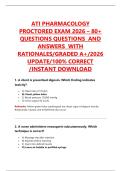
ATI PHARMACOLOGY
PROCTORED EXAM 2026 – 80+
QUESTIONS QUESTIONS AND
ANSWERS WITH
RATIONALES/GRADED A+/2026
UPDATE/100% CORRECT
/INSTANT DOWNLOAD
1. A client is prescribed digoxin. Which finding indicates
toxicity?
• A) Heart rate of 72 bpm
• B) Visual yellow halos
• C) Blood pressure 120/80 mmHg
• D) Urine output 50 mL/hr
Rationale: Yellow-green halos (xanthopsia) are classic signs of digoxin toxicity.
Bradycardia, nausea, and arrhythmias also occur.
2. A nurse administers enoxaparin subcutaneously. Which
technique is correct?
• A) Massage site after injection
• B) Aspirate before injecting
• C) Inject into deltoid muscle
• D) Leave air bubble in prefilled syringe
,Rationale: Enoxaparin’s air bubble ensures full drug delivery and prevents leakage.
Do not aspirate or massage (risk of hematoma).
3. Which medication is contraindicated in a client with acute
narrow-angle glaucoma?
• A) Acetaminophen
• B) Metformin
• C) Atropine
• D) Lisinopril
Rationale: Atropine (anticholinergic) dilates pupils, worsening narrow-angle
glaucoma by blocking aqueous humor outflow.
4. A client on warfarin has an INR of 4.5. The nurse should
anticipate:
• A) Increase warfarin dose
• B) Administer vitamin K
• C) Hold heparin infusion
• D) Give protamine sulfate
Rationale: INR >4.0 without bleeding requires vitamin K (oral/low dose). Protamine
is for heparin.
5. Which ACE inhibitor side effect requires immediate
discontinuation?
• A) Dry cough
• B) Hyperkalemia
• C) Angioedema
• D) Hypotension
, Rationale: Angioedema (swelling of lips/tongue/airway) is life-threatening. Stop
drug and seek emergency care.
6. A client takes levothyroxine. Which statement indicates
effective teaching?
• A) “I’ll take it with my antacid at bedtime.”
• B) “I can stop if I feel better.”
• C) “I’ll take it on an empty stomach each morning.”
• D) “It’s okay to switch brands if cheaper.”
Rationale: Levothyroxine requires consistent fasting, same time daily, no
calcium/iron within 4 hours, same brand.
7. Which lab value should be monitored for a client on
furosemide?
• A) Sodium, 145 mEq/L
• B) Calcium, 9 mg/dL
• C Potassium, 3.2 mEq/L
• D) Magnesium, 2.0 mg/dL
Rationale: Furosemide causes hypokalemia (K+ <3.5). Monitor for arrhythmias,
muscle weakness.
8. A nurse provides discharge teaching for metformin. Which
symptom should prompt immediate reporting?
• A) Nausea after eating
• B) Muscle pain and fatigue
• C) Mild diarrhea
• D) Metallic taste
PROCTORED EXAM 2026 – 80+
QUESTIONS QUESTIONS AND
ANSWERS WITH
RATIONALES/GRADED A+/2026
UPDATE/100% CORRECT
/INSTANT DOWNLOAD
1. A client is prescribed digoxin. Which finding indicates
toxicity?
• A) Heart rate of 72 bpm
• B) Visual yellow halos
• C) Blood pressure 120/80 mmHg
• D) Urine output 50 mL/hr
Rationale: Yellow-green halos (xanthopsia) are classic signs of digoxin toxicity.
Bradycardia, nausea, and arrhythmias also occur.
2. A nurse administers enoxaparin subcutaneously. Which
technique is correct?
• A) Massage site after injection
• B) Aspirate before injecting
• C) Inject into deltoid muscle
• D) Leave air bubble in prefilled syringe
,Rationale: Enoxaparin’s air bubble ensures full drug delivery and prevents leakage.
Do not aspirate or massage (risk of hematoma).
3. Which medication is contraindicated in a client with acute
narrow-angle glaucoma?
• A) Acetaminophen
• B) Metformin
• C) Atropine
• D) Lisinopril
Rationale: Atropine (anticholinergic) dilates pupils, worsening narrow-angle
glaucoma by blocking aqueous humor outflow.
4. A client on warfarin has an INR of 4.5. The nurse should
anticipate:
• A) Increase warfarin dose
• B) Administer vitamin K
• C) Hold heparin infusion
• D) Give protamine sulfate
Rationale: INR >4.0 without bleeding requires vitamin K (oral/low dose). Protamine
is for heparin.
5. Which ACE inhibitor side effect requires immediate
discontinuation?
• A) Dry cough
• B) Hyperkalemia
• C) Angioedema
• D) Hypotension
, Rationale: Angioedema (swelling of lips/tongue/airway) is life-threatening. Stop
drug and seek emergency care.
6. A client takes levothyroxine. Which statement indicates
effective teaching?
• A) “I’ll take it with my antacid at bedtime.”
• B) “I can stop if I feel better.”
• C) “I’ll take it on an empty stomach each morning.”
• D) “It’s okay to switch brands if cheaper.”
Rationale: Levothyroxine requires consistent fasting, same time daily, no
calcium/iron within 4 hours, same brand.
7. Which lab value should be monitored for a client on
furosemide?
• A) Sodium, 145 mEq/L
• B) Calcium, 9 mg/dL
• C Potassium, 3.2 mEq/L
• D) Magnesium, 2.0 mg/dL
Rationale: Furosemide causes hypokalemia (K+ <3.5). Monitor for arrhythmias,
muscle weakness.
8. A nurse provides discharge teaching for metformin. Which
symptom should prompt immediate reporting?
• A) Nausea after eating
• B) Muscle pain and fatigue
• C) Mild diarrhea
• D) Metallic taste