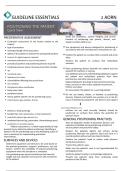
GUIDELINE ESSENTIALS z AORN
PREOPERATIVE ASSESSMENT Verify the cleanliness, surface integrity, and correct
function of positioning equ ipment, devices, and
• Conductan assessment of the factors related to the support surfaces before use.
surgery:
• type of procedure • Use equipment and devices designed for positioning in
• estimated length of the procedure accordance with the manufacturers instructions for use,
• ability of the patient to tolerate the anticipated position • Position the patient on a surface that is smooth and wrink
• amount of surgical exposure required efree.
• anesthesia professional's access to the patient Position the patient on surfaces that redistribute
• procedural position and positioning devices required pressure.
• Conducta pressure injury risk assessment that includes:
• Place positioning devices beneath the patient and not
• age beneath the mattress or overlay.
• nutritional status Use additional pressure-redistributing padding to support
• laboratory test values the patient and redistribute pressure from bony
prominences and other pressure points.
• cömorbidities affecting tissue perfusion
Apply prophylactic dressings to bony prominences (eg,
• skin condition heels, sacrum) or other areas subjected to pressure,
• ASA physical status classification friction, and shear.
• body mass index Do not position the patient on a warming blanket.
• peripheral pulses • Do not use towels, sheets, or blankets as positioning
• Assess patient-specific risk for positioning injury: dev•ces. Patients and health care workers are at risk for
• critical devices (eg, catheters, drains) injury if positioning equipment and devices and support
(lewismorgan195@gmail_com)
• jewelry or body piercings surfaces are not used correctly. Patients should be
• braided hair, hair accessories, or hair extensions positioned on surfaces that reduce the potential for
pressure injury.
• superficial implants (eg, dermal, iris)
• implanted devices (eg, pacemaker, chemotherapy port) GENERAL POSITIONING PRACTICES
Have an adequate number of personnel, devices, and
• prosthetics or corrective devices equipment available during positioning activities to
Patient assessment is a critical responsibility to help ensure patient and personnel safety.
prevent injury related to patient positioning. Identifying a
patient's risk for positioning injury and developing a plan of Respect the patien€s dignity and privacy during
care is necessary for implementing preventive positioning. Maintain the patient's head and neck in a
interventions. neutral position without extreme lateral rotation.
Position the patient's head to reduce scalp pressure
SURFACES AND DEVICES during the procedure.
Determine equipment and devices to be used based on
Protect the patient's eyes.
the planned procedure, surgeon's preferences, and risk
factors. Confirm the availability cf required positioning Make sure the patient's neck is not hyperextended for
equipment when the procedure is scheduled. prolonged periods.
Use positioning equ pment and devices that have the Verify the patient's body is in physiologic alignment.
weight and size capacities necessary for safe movement Prevent the patient's body from contacting metal
of the patient. portions of the OR bed.
, Monitor the position of the patient's hands, fingers, • pull the draw sheet up between the patien€s body and
feet, and toes during positioning, including when arm, place it over the arm, and tuck it between the
changes are made to the configuration of the OR bed. patient and the OR bed mattress
• Apply monitoring devices in a way that allows the device • ensure the draw sheet extends from above the patient's
to function effectively without nerve, tissue, or elbow to the fingertips
circulatory compression.
• ensure the draw sheet is tight enough to secure the arm
but not so tight that it creates a pressure source
• Verify placement, tightness, and security of safety When extending and securing the patient's arms on arm
restraints after positioning or repositioning.
boards:
• Assess the patient's pulses after securing safety straps to • place the arm boards level with the OR bed mattress
veöfy adequate perfusion. • abduct the arms less than 90 degrees
Confirm the correct patient position and positioning
equipment during the time out.
• position the arms with the palms facing up
• maintain the arms and wrists in neutral alignment
• Monitor the patient's position during the procedure. Use • do not position the arms above the head
intraoperative neurophysiological monitoring to identify
potential positioning injuries.
Implement repositioning interventions to redistribute
• Flex the patient's knees approximately 5 to 10 degrees.
pressure, if possible. • Place the safety strap approximately 2 i nches above the
Surgical patients are at increased risk for injury patient's knees.
caused by compression or stretching of tissues during Elevate the patien€s heels off the underlying surface.
positioning. The patient who is sedated or anesthetized
Redistribute preSSUre On the heels by using a heel—
may not be able to communicate or sense numbness,
tingling, tissue temperature changes, or mobility suspension device or by elevating the patient's calves with a
limitations. pressure-redistributing surface.
SUPINE POSITION • Protect the patient's feet from hyperfl exion and
• Position the patient's arms as determined by the needs hyperextension.
of the surgical team and the phys •cal limitations of the The supine position is the most frequently used
patient: tucked at the sides with a draw sheet, secured position for surgical procedures. This position causes extra
at the sides with arm guards, flexed and secured across pressure on the skin over the occiput, scapulae, olecranon
the body, or extended and secured on padded arm processes, sacrum, coccyx, and calcaneum.
boards,
When tucking and securing the patient's arms With a TRENDELENBURG AND REVERSE
draw sheet:
Copyright 0 2017 AORN, Inc. All rights reserved. Used with
permission,
• place the arms in a neutral position with the palms facing TRENDELENBURG POSITION
the body
• When positioning the patient in the Trendelenburg
• do not hyperextend the elbows position:
PREOPERATIVE ASSESSMENT Verify the cleanliness, surface integrity, and correct
function of positioning equ ipment, devices, and
• Conductan assessment of the factors related to the support surfaces before use.
surgery:
• type of procedure • Use equipment and devices designed for positioning in
• estimated length of the procedure accordance with the manufacturers instructions for use,
• ability of the patient to tolerate the anticipated position • Position the patient on a surface that is smooth and wrink
• amount of surgical exposure required efree.
• anesthesia professional's access to the patient Position the patient on surfaces that redistribute
• procedural position and positioning devices required pressure.
• Conducta pressure injury risk assessment that includes:
• Place positioning devices beneath the patient and not
• age beneath the mattress or overlay.
• nutritional status Use additional pressure-redistributing padding to support
• laboratory test values the patient and redistribute pressure from bony
prominences and other pressure points.
• cömorbidities affecting tissue perfusion
Apply prophylactic dressings to bony prominences (eg,
• skin condition heels, sacrum) or other areas subjected to pressure,
• ASA physical status classification friction, and shear.
• body mass index Do not position the patient on a warming blanket.
• peripheral pulses • Do not use towels, sheets, or blankets as positioning
• Assess patient-specific risk for positioning injury: dev•ces. Patients and health care workers are at risk for
• critical devices (eg, catheters, drains) injury if positioning equipment and devices and support
(lewismorgan195@gmail_com)
• jewelry or body piercings surfaces are not used correctly. Patients should be
• braided hair, hair accessories, or hair extensions positioned on surfaces that reduce the potential for
pressure injury.
• superficial implants (eg, dermal, iris)
• implanted devices (eg, pacemaker, chemotherapy port) GENERAL POSITIONING PRACTICES
Have an adequate number of personnel, devices, and
• prosthetics or corrective devices equipment available during positioning activities to
Patient assessment is a critical responsibility to help ensure patient and personnel safety.
prevent injury related to patient positioning. Identifying a
patient's risk for positioning injury and developing a plan of Respect the patien€s dignity and privacy during
care is necessary for implementing preventive positioning. Maintain the patient's head and neck in a
interventions. neutral position without extreme lateral rotation.
Position the patient's head to reduce scalp pressure
SURFACES AND DEVICES during the procedure.
Determine equipment and devices to be used based on
Protect the patient's eyes.
the planned procedure, surgeon's preferences, and risk
factors. Confirm the availability cf required positioning Make sure the patient's neck is not hyperextended for
equipment when the procedure is scheduled. prolonged periods.
Use positioning equ pment and devices that have the Verify the patient's body is in physiologic alignment.
weight and size capacities necessary for safe movement Prevent the patient's body from contacting metal
of the patient. portions of the OR bed.
, Monitor the position of the patient's hands, fingers, • pull the draw sheet up between the patien€s body and
feet, and toes during positioning, including when arm, place it over the arm, and tuck it between the
changes are made to the configuration of the OR bed. patient and the OR bed mattress
• Apply monitoring devices in a way that allows the device • ensure the draw sheet extends from above the patient's
to function effectively without nerve, tissue, or elbow to the fingertips
circulatory compression.
• ensure the draw sheet is tight enough to secure the arm
but not so tight that it creates a pressure source
• Verify placement, tightness, and security of safety When extending and securing the patient's arms on arm
restraints after positioning or repositioning.
boards:
• Assess the patient's pulses after securing safety straps to • place the arm boards level with the OR bed mattress
veöfy adequate perfusion. • abduct the arms less than 90 degrees
Confirm the correct patient position and positioning
equipment during the time out.
• position the arms with the palms facing up
• maintain the arms and wrists in neutral alignment
• Monitor the patient's position during the procedure. Use • do not position the arms above the head
intraoperative neurophysiological monitoring to identify
potential positioning injuries.
Implement repositioning interventions to redistribute
• Flex the patient's knees approximately 5 to 10 degrees.
pressure, if possible. • Place the safety strap approximately 2 i nches above the
Surgical patients are at increased risk for injury patient's knees.
caused by compression or stretching of tissues during Elevate the patien€s heels off the underlying surface.
positioning. The patient who is sedated or anesthetized
Redistribute preSSUre On the heels by using a heel—
may not be able to communicate or sense numbness,
tingling, tissue temperature changes, or mobility suspension device or by elevating the patient's calves with a
limitations. pressure-redistributing surface.
SUPINE POSITION • Protect the patient's feet from hyperfl exion and
• Position the patient's arms as determined by the needs hyperextension.
of the surgical team and the phys •cal limitations of the The supine position is the most frequently used
patient: tucked at the sides with a draw sheet, secured position for surgical procedures. This position causes extra
at the sides with arm guards, flexed and secured across pressure on the skin over the occiput, scapulae, olecranon
the body, or extended and secured on padded arm processes, sacrum, coccyx, and calcaneum.
boards,
When tucking and securing the patient's arms With a TRENDELENBURG AND REVERSE
draw sheet:
Copyright 0 2017 AORN, Inc. All rights reserved. Used with
permission,
• place the arms in a neutral position with the palms facing TRENDELENBURG POSITION
the body
• When positioning the patient in the Trendelenburg
• do not hyperextend the elbows position: