

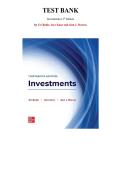
TEST BANK
Investments,13th Edition
by Zvi Bodie, Alex Kane and Alan J. Marcus
TU
TO
R
G
U
R
U
, Table of Content
PART I: Introduction
Chapter 1: The Investment Environment
Chapter 2: Asset Classes and Financial Instruments
Chapter 3: How Securities Are Traded
Chapter 4: Mutual Funds and Other InvestmentCompanies
PART II: Portfolio Theory and Practice
Chapter 5: Risk, Return, and the HistoricalRecord
Chapter 6: Capital Allocation to Risky Assets
Chapter 7: Efficient Diversification
Chapter 8: Index Models
TU
PART III: Equilibrium in Capital Markets
Chapter 9: The Capital Asset Pricing Model
Chapter 10: Arbitrage Pricing Theory andMultifactor Models of Risk and Return
Chapter 11: The Efficient Market Hypothesis
TO
Chapter 12: Behavioral Finance and TechnicalAnalysis
Chapter 13: Empirical Evidence on SecurityReturns
PART IV: Fixed-Income Securities
Chapter 14: Bond Prices and Yields
Chapter 15: The Term Structure of Interest Rates
R
Chapter 16: Managing Bond Portfolios
G
PART V: Security Analysis
Chapter 17: Macroeconomic and Industry Analysis
Chapter 18: Equity Valuation Models
U
Chapter 19: Financial Statement Analysis
PART VI: Options, Futures, and Other Derivatives
Chapter 20: Options Markets: Introduction
R
Chapter 21: Option Valuation
Chapter 22: Futures Markets
Chapter 23: Futures, Swaps, and Risk Management
U
PART VII: Applied Portfolio Management
Chapter 24: Portfolio Performance Evaluation
Chapter 25: International Diversification
Chapter 26: Alternative Assets
Chapter 27: The Theory of Active PortfolioManagement
Chapter 28: Investment Policy and the Frameworkof the CFA Institute
,Investments 13e By Zvi Bodie, Alex Kane, Alan Marcus (Test Bank All
Chapters, 100% Original Verified, A+ Grade) Answers At The End Of
Each Chapter
Chapter 1:__________
1) The material wealth of a society is a function of:
A) all financial assets.
B) all real assets.
C) all financial and real assets.
D) all physical assets.
E) all physical and financial assets.
2) _______ are real assets.
TU
A) Land and mortgages
B) Machines and bonds
C) Stocks and bonds
D) Knowledge and stocks
E) Land, machines, and knowledge
TO
3) The means by which individuals hold their claims on real assets in a well-developed
economy are:
A) investment assets.
R
B) depository assets.
C) derivative assets.
D) financial assets.
G
E) exchange-driven assets.
U
4) _______ are financial assets.
A) Bonds and land
B) Machines and derivatives
R
C) Stocks and intellectual property
D) Bonds and stocks
U
E) Bonds, machines, and stocks
. 1
, 5) _________ financial asset(s).
A) Buildings are
B) Land is a
C) Derivatives and intellectual property are
D) U.S. agency bonds and buildings are
E) Derivatives and U.S. agency bonds are
6) Financial assets:
A) directly contribute to the country's productive capacity.
TU
B) indirectly contribute to the country's productive capacity.
C) contribute to the country's productive capacity, both directly and indirectly.
D) do not contribute to the country's productive capacity, either directly or indirectly.
E) are of no value to anyone.
TO
7) In 2021, ____________ was the most significant real asset of U.S. households in terms of
total value.
A) consumer durables
B) automobiles
R
C) real estate
D) mutual fund shares
E) bank loans
G
8) In 2021, _____________was the least significant financial asset of U.S. households in terms
U
of total value.
A) real estate
B) mutual fund shares
R
C) debt securities
D) life insurance reserves
E) pension reserves
U
. 2
Investments,13th Edition
by Zvi Bodie, Alex Kane and Alan J. Marcus
TU
TO
R
G
U
R
U
, Table of Content
PART I: Introduction
Chapter 1: The Investment Environment
Chapter 2: Asset Classes and Financial Instruments
Chapter 3: How Securities Are Traded
Chapter 4: Mutual Funds and Other InvestmentCompanies
PART II: Portfolio Theory and Practice
Chapter 5: Risk, Return, and the HistoricalRecord
Chapter 6: Capital Allocation to Risky Assets
Chapter 7: Efficient Diversification
Chapter 8: Index Models
TU
PART III: Equilibrium in Capital Markets
Chapter 9: The Capital Asset Pricing Model
Chapter 10: Arbitrage Pricing Theory andMultifactor Models of Risk and Return
Chapter 11: The Efficient Market Hypothesis
TO
Chapter 12: Behavioral Finance and TechnicalAnalysis
Chapter 13: Empirical Evidence on SecurityReturns
PART IV: Fixed-Income Securities
Chapter 14: Bond Prices and Yields
Chapter 15: The Term Structure of Interest Rates
R
Chapter 16: Managing Bond Portfolios
G
PART V: Security Analysis
Chapter 17: Macroeconomic and Industry Analysis
Chapter 18: Equity Valuation Models
U
Chapter 19: Financial Statement Analysis
PART VI: Options, Futures, and Other Derivatives
Chapter 20: Options Markets: Introduction
R
Chapter 21: Option Valuation
Chapter 22: Futures Markets
Chapter 23: Futures, Swaps, and Risk Management
U
PART VII: Applied Portfolio Management
Chapter 24: Portfolio Performance Evaluation
Chapter 25: International Diversification
Chapter 26: Alternative Assets
Chapter 27: The Theory of Active PortfolioManagement
Chapter 28: Investment Policy and the Frameworkof the CFA Institute
,Investments 13e By Zvi Bodie, Alex Kane, Alan Marcus (Test Bank All
Chapters, 100% Original Verified, A+ Grade) Answers At The End Of
Each Chapter
Chapter 1:__________
1) The material wealth of a society is a function of:
A) all financial assets.
B) all real assets.
C) all financial and real assets.
D) all physical assets.
E) all physical and financial assets.
2) _______ are real assets.
TU
A) Land and mortgages
B) Machines and bonds
C) Stocks and bonds
D) Knowledge and stocks
E) Land, machines, and knowledge
TO
3) The means by which individuals hold their claims on real assets in a well-developed
economy are:
A) investment assets.
R
B) depository assets.
C) derivative assets.
D) financial assets.
G
E) exchange-driven assets.
U
4) _______ are financial assets.
A) Bonds and land
B) Machines and derivatives
R
C) Stocks and intellectual property
D) Bonds and stocks
U
E) Bonds, machines, and stocks
. 1
, 5) _________ financial asset(s).
A) Buildings are
B) Land is a
C) Derivatives and intellectual property are
D) U.S. agency bonds and buildings are
E) Derivatives and U.S. agency bonds are
6) Financial assets:
A) directly contribute to the country's productive capacity.
TU
B) indirectly contribute to the country's productive capacity.
C) contribute to the country's productive capacity, both directly and indirectly.
D) do not contribute to the country's productive capacity, either directly or indirectly.
E) are of no value to anyone.
TO
7) In 2021, ____________ was the most significant real asset of U.S. households in terms of
total value.
A) consumer durables
B) automobiles
R
C) real estate
D) mutual fund shares
E) bank loans
G
8) In 2021, _____________was the least significant financial asset of U.S. households in terms
U
of total value.
A) real estate
B) mutual fund shares
R
C) debt securities
D) life insurance reserves
E) pension reserves
U
. 2


