

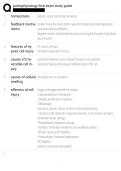
pathophysiology final exam study guide
1. homeostasis dynamic, steady state of internal balance
2. feedback mecha- Positive: moves the system further away from homeostasis (intensifying labor
nisms contractions during childbirth)
Negative: works to restore homeostasis by correcting the disruption (high blood
glucose levels)
3. features of hy- #1 cause if cell injury
poxic cell injury Decreased oxygenation of tissue
4. causes of irre- Lysosomal membrane injury: leakage of enzymes into cytoplasm
versible cell in- Duration of hypoxia and previous nutritional status of the cell
jury
5. causes of cellular Intracellular Na+ accumulation
swelling
6. effectors of cell Oxygen and oxygen-derived free radicals
injury -Lipid peroxidation of membranes
-Oxidative modifications of proteins
-DNA damage
Increase in cytosolic calcium and loss of calcium homeostasis
-Calcium is in the cytoplasm in very small amounts, so an increase can lead to
membrane/nuclear damage
-Phospholipases: membrane damage
-Proteases: break down membrane and cytoskeletal proteins
-ATPases: speed up ATP depletion
-Endonucleases: chromatin fragmentation
ATP depletion
Defects in membrane permeability
7.
, pathophysiology final exam study guide
Define nonspecif- Nonspecific: innate; natural barriers (skin, epithelial membranes)
ic vs. specific im- Specific: acquired; humoral (B lymphocytes) and cell mediated immunity (T lym-
mune responses phocytes)
8. Describe compo- Vasodilation
nents of the vas- Increased vascular permeability
cular response Migration of WBCs to the site of injury
9. Define chemo- The directed movement of cells in a gradient to a chemoattractant
taxis
10. Describe the role May destroy pathogens directly (phagocytosis)
of the following May activate or collaborate with all other components of the inflammatory re-
in inflammation: sponse
Complement sys- Results in fragmentation of complement components: vasodilation, increased
tem vascular permeability, rapid mast cell degranulation, chemotaxis of neutrophils,
opsonization, cell lysis
11. Describe the role Forms a fibrinous meshwork that...
of the following -prevents the spread of injection to adjacent tissues
in inflammation: -traps microorganisms and foreign bodies at the site of inflammation for removal
clotting cascade by infiltrating cells
-Forms a clot that stops bleeding
-Provides a framework for future repair and healing
12. Describe the role Pain stimulating receptor
of the following
in inflammation:
bradykinin
13. Describe the role Cellular bags of granules
of the following Release histamines
, pathophysiology final exam study guide
in inflammation:
mast cell
14. Describe the role Antigen presenting cells
of the following
in inflammation:
dendritic cell
15. Describe the role phagocytosis
of the following Link between nonspecific and specific response
in inflammation:
leukocytes
(monocytes and
macrophages)
16. Describe the role first responder to site of injury
of the following Primary role: phagocytosis
in inflammation: Major source of potent biochemical mediators
leukocytes (neu-
trophils)
17. Describe the role Interleukins
of the following -General enhancement or suppression of inflammation
in inflammation: Interferons
leukocytes (cy- -Protection against viral infections
tokines)
18. Describe the role Act in a nonspecific manner; main goal is to phagocytize pathogens of any kind
of the following Have direct cytotoxic activity against virus-infected and cancer cells
in inflammation:
natural killer cells
19. osmotic pressure water moves into the area with the highest concentration (solute). Draws fluid in.
, pathophysiology final exam study guide
20. hydrostatic pres- Pressure of any fluid enclosed in a space (in this case the capillaries). Pushes water
sure out.
21. Know the Potassium: intracellular
ion composi- Sodium: extracellular
tion of cytoplasm
(potassium) and
the ECF (sodium)
22. Describe the role Produced by the adrenal cortex
of aldosterone in Stimulates sodium reabsorption and thereby water reabsorption by the distal and
water balance collecting tubules of the kidney
Helps regulate the secretion of potassium by the distal tubules
23. Describe the role Secreted by the hypothalamus and released from the posterior pituitary
of ADH in water Regulates direct control of water excretion the kidneys by increasing the collecting
balance tubules' permeability to water
24. 4 problems that Edema: accumulation of fluid in the interstitial space
result in edema -Increased capillary permeability
-Decreased capillary oncotic pressure
-Increases capillary hydrostatic pressure
-Lymphatic obstruction
25. alterations in change in total body water is accompanied by proportional changes in the
sodium and wa- concentration of electrolytes
ter balance: iso- -Hemorrhage or excessive sweating
tonic -Excessive administration of IV fluids
26. alterations in osmolarity of the ECF is less than normal
sodium and wa- -Sodium deficit
ter balance: hy- (Vomiting, diarrhea, burns, diuretics, suctioning of GI secretions)
potonic
1. homeostasis dynamic, steady state of internal balance
2. feedback mecha- Positive: moves the system further away from homeostasis (intensifying labor
nisms contractions during childbirth)
Negative: works to restore homeostasis by correcting the disruption (high blood
glucose levels)
3. features of hy- #1 cause if cell injury
poxic cell injury Decreased oxygenation of tissue
4. causes of irre- Lysosomal membrane injury: leakage of enzymes into cytoplasm
versible cell in- Duration of hypoxia and previous nutritional status of the cell
jury
5. causes of cellular Intracellular Na+ accumulation
swelling
6. effectors of cell Oxygen and oxygen-derived free radicals
injury -Lipid peroxidation of membranes
-Oxidative modifications of proteins
-DNA damage
Increase in cytosolic calcium and loss of calcium homeostasis
-Calcium is in the cytoplasm in very small amounts, so an increase can lead to
membrane/nuclear damage
-Phospholipases: membrane damage
-Proteases: break down membrane and cytoskeletal proteins
-ATPases: speed up ATP depletion
-Endonucleases: chromatin fragmentation
ATP depletion
Defects in membrane permeability
7.
, pathophysiology final exam study guide
Define nonspecif- Nonspecific: innate; natural barriers (skin, epithelial membranes)
ic vs. specific im- Specific: acquired; humoral (B lymphocytes) and cell mediated immunity (T lym-
mune responses phocytes)
8. Describe compo- Vasodilation
nents of the vas- Increased vascular permeability
cular response Migration of WBCs to the site of injury
9. Define chemo- The directed movement of cells in a gradient to a chemoattractant
taxis
10. Describe the role May destroy pathogens directly (phagocytosis)
of the following May activate or collaborate with all other components of the inflammatory re-
in inflammation: sponse
Complement sys- Results in fragmentation of complement components: vasodilation, increased
tem vascular permeability, rapid mast cell degranulation, chemotaxis of neutrophils,
opsonization, cell lysis
11. Describe the role Forms a fibrinous meshwork that...
of the following -prevents the spread of injection to adjacent tissues
in inflammation: -traps microorganisms and foreign bodies at the site of inflammation for removal
clotting cascade by infiltrating cells
-Forms a clot that stops bleeding
-Provides a framework for future repair and healing
12. Describe the role Pain stimulating receptor
of the following
in inflammation:
bradykinin
13. Describe the role Cellular bags of granules
of the following Release histamines
, pathophysiology final exam study guide
in inflammation:
mast cell
14. Describe the role Antigen presenting cells
of the following
in inflammation:
dendritic cell
15. Describe the role phagocytosis
of the following Link between nonspecific and specific response
in inflammation:
leukocytes
(monocytes and
macrophages)
16. Describe the role first responder to site of injury
of the following Primary role: phagocytosis
in inflammation: Major source of potent biochemical mediators
leukocytes (neu-
trophils)
17. Describe the role Interleukins
of the following -General enhancement or suppression of inflammation
in inflammation: Interferons
leukocytes (cy- -Protection against viral infections
tokines)
18. Describe the role Act in a nonspecific manner; main goal is to phagocytize pathogens of any kind
of the following Have direct cytotoxic activity against virus-infected and cancer cells
in inflammation:
natural killer cells
19. osmotic pressure water moves into the area with the highest concentration (solute). Draws fluid in.
, pathophysiology final exam study guide
20. hydrostatic pres- Pressure of any fluid enclosed in a space (in this case the capillaries). Pushes water
sure out.
21. Know the Potassium: intracellular
ion composi- Sodium: extracellular
tion of cytoplasm
(potassium) and
the ECF (sodium)
22. Describe the role Produced by the adrenal cortex
of aldosterone in Stimulates sodium reabsorption and thereby water reabsorption by the distal and
water balance collecting tubules of the kidney
Helps regulate the secretion of potassium by the distal tubules
23. Describe the role Secreted by the hypothalamus and released from the posterior pituitary
of ADH in water Regulates direct control of water excretion the kidneys by increasing the collecting
balance tubules' permeability to water
24. 4 problems that Edema: accumulation of fluid in the interstitial space
result in edema -Increased capillary permeability
-Decreased capillary oncotic pressure
-Increases capillary hydrostatic pressure
-Lymphatic obstruction
25. alterations in change in total body water is accompanied by proportional changes in the
sodium and wa- concentration of electrolytes
ter balance: iso- -Hemorrhage or excessive sweating
tonic -Excessive administration of IV fluids
26. alterations in osmolarity of the ECF is less than normal
sodium and wa- -Sodium deficit
ter balance: hy- (Vomiting, diarrhea, burns, diuretics, suctioning of GI secretions)
potonic


