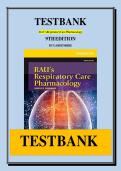
TEST BANK v6
RAU’s Respiratory Care Pharmacology
v6 v6 v6
9TH EDITION v6
BY GARDENHIRE
v6
TEST BANK v6
,Description
Test Bank for Rau’s Respiratory Care Pharmacology 9th Edition Gardenhire
v6 v6 v6 v6 v6 v6 v6 v6 v6
Test Bank for Rau’s Respiratory Care Pharmacology, 9th Edition, Gardenhire, ISBN-10:
v6 v6 v6 v6 v6 v6 v6 v6 v6 v6
0323299687, ISBN-13: 9780323299688
v6 v6 v6
Table of Contents v6 v6
Unit I: Basic Concepts and Principles in Pharmacology
v6 v6 v6 v6 v6 v6 v6
1. Introduction to Respiratory Care Pharmacology
v6 v6 v6 v6 v6
2. Principles of Drug Action
v6 v6 v6 v6
3. Administration of Aerosolized Agents
v6 v6 v6 v6
4. Calculating Drug Doses
v6 v6 v6
5. The Central and Peripheral Nervous Systems
v6 v6 v6 v6 v6 v6
Unit II: Drugs Used to Treat the Respiratory System
v6 v6 v6 v6 v6 v6 v6 v6
6. Adrenergic (Sympathomimetic) Bronchodilators
v6 v6 v6
7. Anticholinergic (Parasympatholytic) Bronchodilators
v6 v6 v6
8. Xanthines
v6
9. Mucus-Controlling Drug Therapy
v6 v6 v6
10. Surfactant Agents
v6 v6
11. Corticosteriods in Respiratory Care
v6 v6 v6 v6
12. Nonsteroidal Antiasthma Agents
v6 v6 v6
13. Aerosolized Antiinfective Agents
v6 v6 v6
14. Antimicrobial Agents
v6 v6
15. Cold and Cough Agents
v6 v6 v6 v6
16. Selected Agents of Pulmonary Value
v6 v6 v6 v6 v6
17. Neonatal and Pediatric Aerosolized Drug Therapy
v6 v6 v6 v6 v6 v6
Unit III: Critical Care, Cardiovascular, and Polysomnography Agents
v6 v6 v6 v6 v6 v6 v6
18. Skeletal Muscle Relaxants (Neuromuscular Blocking Agents)
v6 v6 v6 v6 v6 v6
19. Diuretic Agents
v6 v6
20. Drugs Affecting the Central Nervous System
v6 v6 v6 v6 v6 v6
21. Vasopressors, Inotropes, and Antiarrythmic Agents
v6 v6 v6 v6 v6
22. Drugs Affecting Circulation: Antihypertensives, Antianginals, Antithrombotics
v6 v6 v6 v6 v6 v6
23. Sleep and Sleep Pharmacology
v6 v6 v6 v6
,Chapter 01: Introduction to Respiratory Care Pharmacology Gardenhire:
v6 v6 v6 v6 v6 v6 v6
Rau’s Respiratory Care Pharmacology, 9th Edition
v6 v6 v6 v6 v6 v6
MULTIPLE CHOICE v6
1. What is the name of the receptor sites that are located in the peripheral vasculature, the heart, bronchial
v6 v6 v6 v6 v6 v6 v6 v6 v6 v6 v6 v6 v6 v6 v6 v6 v6
muscle, and bronchial blood vessels?
v6 v6 v6 v6 v6
a. Beta 2 receptors v6 c. Alpha receptors
v6 v6
b. Gamma receptors d. Beta 1 receptors
v6 v 6 v 6 v6 v6
ANS: C v 6
Alpha receptors are located in the peripheral vasculature, the heart, bronchial muscle, and bronchial
v6 v6 v6 v6 v6 v6 v6 v6 v6 v6 v6 v6 v6
blood vessels.
v6 v6
PTS: v 6 1
2. Which receptor site results in tachycardia, an increased potential for arrhythmias, and an increased
v6 v6 v6 v6 v6 v6 v6 v6 v6 v6 v6 v6 v6
cardiac output?
v6 v6
a. Beta 1 receptor v6 c. Alpha receptor
v6 v6
b. Beta 2 receptor v6 d. Delta receptor
v6 v 6 v6
ANS: A v 6
Stimulation of the beta-1 receptors results in tachycardia, an increased potential for arrhythmias, and an
v6 v6 v6 v6 v6 v6 v6 v6 v6 v6 v6 v6 v6 v6
increased cardiac output. In administering drugs to the pulmonary system, stimulation of the beta-1 sites
v6 v6 v6 v6 v6 v6 v6 v6 v6 v6 v6 v6 v6 v6 v6
is not desired. However, most respiratory pharmacologic agents have some beta-1 stimulatory effect.
v6 v6 v6 v6 v6 v6 v6 v6 v6 v6 v6 v6 v6
PTS: v 6 1
3. Stimulation of the beta 2 receptors causes v6 v6 v6 v6 v6 v6 v6
a. peripheral vasoconstriction and mild bronchoconstriction in the lungs. v6 v6 v6 v6 v6 v6 v6
b. tachycardia, an increased potential for arrhythmias, and an increased cardiac output. v6 v6 v6 v6 v6 v6 v6 v6 v6 v6
c. bronchodilation.
d. peripheral vasodilation, bradycardia, and decreased cardiac output. v6 v6 v6 v6 v6 v6
ANS: C v 6
Stimulation of the beta-2 receptors in the lungs causes bronchodilation.
v6 v6 v6 v6 v6 v6 v6 v6 v6
PTS: v 6 1
4. Acetylcholine stimulates v6 v 6
a. theVagus nerve. v6 v6
b. the adrenergic receptors. v6 v6
c. the sympathetic nervous system.
v6 v6 v6
d. the cholinergic receptors. v6 v6
ANS: D v 6
Acetylcholine stimulates the cholinergic receptors. v6 v6 v6 v6
PTS: v 6 1
5. What immunoglobulin antibody sensitizes the mast cell?
v6 v6 v6 v6 v6 v6
a. Leukotrienes c. Histamine
, b. IgE d. v 6 Prostaglandins
ANS: B v 6
The IgE (reagin) antibodies sensitize the mast cell. Repeated exposure to the antigen causes the
v6 v6 v6 v6 v6 v6 v6 v6 v6 v6 v6 v6 v6 v6
degranulation of the mast cell.
v6 v6 v6 v6 v6
PTS: v 6 1
6. Which of the following is caused by histamine release from the mast cells?
v6 v6 v6 v6 v6 v6 v6 v6 v6 v6 v6 v6
I. Bronchodilation
II. Increased bronchial gland secretion v6 v6 v6
III. Increased amount of mucus present in the airways v6 v6 v6 v6 v6 v6 v6
a. I and II only v6 c. III only
v6 v6 v6
b. II and III only v6 d. I, II, III
v6 v6 v 6 v 6 v6 v6
ANS: B v 6
Histamine is also a potent bronchoconstrictor. In addition to its bronchoconstrictive activity, histamine
v6 v6 v6 v6 v6 v6 v6 v6 v6 v6 v6 v6
II) increases bronchial gland secretion, causing III) an increase in the amount of mucus present in
v6 v6 v6 v6 v6 v6 v6 v6 v6 v6 v6 v6 v6 v6 v6
the airways. Histamine may also have an effect on vascular permeability similar to the effect of-
v6 v6 v6 v6 v6 v6 v6 v6 v6 v6 v6 v6 v6 v6 v6 v6
SRS-A.
v6
PTS: v 6 1
7. A sympathomimetic drug would cause
v6 v6 v6 v6 v6
a. bronchodilation. c. Histamine release. v6
b. bronchoconstriction. d. Vagus nerve stimulation.
v 6 v6 v6
ANS: A v 6
A sympathomimetic drug would cause bronchodilation. Sympathomimetic agents are the drugs most commonly
v6 v6 v6 v6 v6 v6 v6 v6 v6 v6 v6 v6
used to reverse bronchospasm.
v6 v6 v6 v6
PTS: v 6 1
8. Stimulation of the sympathetic nervous system causes v6 v6 v6 v6 v6 v6 v6
a. vascular permeability. c. bronchodilation. v6
b. decreased blood pressure. d. bronchoconstriction. v6 v6 v 6
ANS: C v 6
Sympathetic nervous system stimulation causes bronchodilation. v6 v6 v6 v6 v6
PTS: v 6 1
9. Which of the following would NOT cause a bronchospasm or bronchoconstriction?
v6 v6 v6 v6 v6 v6 v6 v6 v6 v6
a. Leukotrienes c. Histamine
b. Beta 1 receptors d. Prostaglandins
v6 v6 v 6
ANS: B v 6
Beta-1 receptors would not cause a bronchospasm or bronchoconstriction. Leukotrienes are one of
v6 v6 v6 v6 v6 v6 v6 v6 v6 v6 v6 v6
many chemical mediators released by the mast cells. Leukotrienes cause a direct, strong
v6 v6 v6 v6 v6 v6 v6 v6 v6 v6 v6 v6 v6
bronchoconstriction. Histamine is also a potent bronchoconstrictor. Prostaglandins cause a strong
v6 v6 v6 v6 v6 v6 v6 v6 v6 v6 v6
bronchospasm, especially in asthmatic patients.
v6 v6 v6 v6 v6
PTS: v 6 1
RAU’s Respiratory Care Pharmacology
v6 v6 v6
9TH EDITION v6
BY GARDENHIRE
v6
TEST BANK v6
,Description
Test Bank for Rau’s Respiratory Care Pharmacology 9th Edition Gardenhire
v6 v6 v6 v6 v6 v6 v6 v6 v6
Test Bank for Rau’s Respiratory Care Pharmacology, 9th Edition, Gardenhire, ISBN-10:
v6 v6 v6 v6 v6 v6 v6 v6 v6 v6
0323299687, ISBN-13: 9780323299688
v6 v6 v6
Table of Contents v6 v6
Unit I: Basic Concepts and Principles in Pharmacology
v6 v6 v6 v6 v6 v6 v6
1. Introduction to Respiratory Care Pharmacology
v6 v6 v6 v6 v6
2. Principles of Drug Action
v6 v6 v6 v6
3. Administration of Aerosolized Agents
v6 v6 v6 v6
4. Calculating Drug Doses
v6 v6 v6
5. The Central and Peripheral Nervous Systems
v6 v6 v6 v6 v6 v6
Unit II: Drugs Used to Treat the Respiratory System
v6 v6 v6 v6 v6 v6 v6 v6
6. Adrenergic (Sympathomimetic) Bronchodilators
v6 v6 v6
7. Anticholinergic (Parasympatholytic) Bronchodilators
v6 v6 v6
8. Xanthines
v6
9. Mucus-Controlling Drug Therapy
v6 v6 v6
10. Surfactant Agents
v6 v6
11. Corticosteriods in Respiratory Care
v6 v6 v6 v6
12. Nonsteroidal Antiasthma Agents
v6 v6 v6
13. Aerosolized Antiinfective Agents
v6 v6 v6
14. Antimicrobial Agents
v6 v6
15. Cold and Cough Agents
v6 v6 v6 v6
16. Selected Agents of Pulmonary Value
v6 v6 v6 v6 v6
17. Neonatal and Pediatric Aerosolized Drug Therapy
v6 v6 v6 v6 v6 v6
Unit III: Critical Care, Cardiovascular, and Polysomnography Agents
v6 v6 v6 v6 v6 v6 v6
18. Skeletal Muscle Relaxants (Neuromuscular Blocking Agents)
v6 v6 v6 v6 v6 v6
19. Diuretic Agents
v6 v6
20. Drugs Affecting the Central Nervous System
v6 v6 v6 v6 v6 v6
21. Vasopressors, Inotropes, and Antiarrythmic Agents
v6 v6 v6 v6 v6
22. Drugs Affecting Circulation: Antihypertensives, Antianginals, Antithrombotics
v6 v6 v6 v6 v6 v6
23. Sleep and Sleep Pharmacology
v6 v6 v6 v6
,Chapter 01: Introduction to Respiratory Care Pharmacology Gardenhire:
v6 v6 v6 v6 v6 v6 v6
Rau’s Respiratory Care Pharmacology, 9th Edition
v6 v6 v6 v6 v6 v6
MULTIPLE CHOICE v6
1. What is the name of the receptor sites that are located in the peripheral vasculature, the heart, bronchial
v6 v6 v6 v6 v6 v6 v6 v6 v6 v6 v6 v6 v6 v6 v6 v6 v6
muscle, and bronchial blood vessels?
v6 v6 v6 v6 v6
a. Beta 2 receptors v6 c. Alpha receptors
v6 v6
b. Gamma receptors d. Beta 1 receptors
v6 v 6 v 6 v6 v6
ANS: C v 6
Alpha receptors are located in the peripheral vasculature, the heart, bronchial muscle, and bronchial
v6 v6 v6 v6 v6 v6 v6 v6 v6 v6 v6 v6 v6
blood vessels.
v6 v6
PTS: v 6 1
2. Which receptor site results in tachycardia, an increased potential for arrhythmias, and an increased
v6 v6 v6 v6 v6 v6 v6 v6 v6 v6 v6 v6 v6
cardiac output?
v6 v6
a. Beta 1 receptor v6 c. Alpha receptor
v6 v6
b. Beta 2 receptor v6 d. Delta receptor
v6 v 6 v6
ANS: A v 6
Stimulation of the beta-1 receptors results in tachycardia, an increased potential for arrhythmias, and an
v6 v6 v6 v6 v6 v6 v6 v6 v6 v6 v6 v6 v6 v6
increased cardiac output. In administering drugs to the pulmonary system, stimulation of the beta-1 sites
v6 v6 v6 v6 v6 v6 v6 v6 v6 v6 v6 v6 v6 v6 v6
is not desired. However, most respiratory pharmacologic agents have some beta-1 stimulatory effect.
v6 v6 v6 v6 v6 v6 v6 v6 v6 v6 v6 v6 v6
PTS: v 6 1
3. Stimulation of the beta 2 receptors causes v6 v6 v6 v6 v6 v6 v6
a. peripheral vasoconstriction and mild bronchoconstriction in the lungs. v6 v6 v6 v6 v6 v6 v6
b. tachycardia, an increased potential for arrhythmias, and an increased cardiac output. v6 v6 v6 v6 v6 v6 v6 v6 v6 v6
c. bronchodilation.
d. peripheral vasodilation, bradycardia, and decreased cardiac output. v6 v6 v6 v6 v6 v6
ANS: C v 6
Stimulation of the beta-2 receptors in the lungs causes bronchodilation.
v6 v6 v6 v6 v6 v6 v6 v6 v6
PTS: v 6 1
4. Acetylcholine stimulates v6 v 6
a. theVagus nerve. v6 v6
b. the adrenergic receptors. v6 v6
c. the sympathetic nervous system.
v6 v6 v6
d. the cholinergic receptors. v6 v6
ANS: D v 6
Acetylcholine stimulates the cholinergic receptors. v6 v6 v6 v6
PTS: v 6 1
5. What immunoglobulin antibody sensitizes the mast cell?
v6 v6 v6 v6 v6 v6
a. Leukotrienes c. Histamine
, b. IgE d. v 6 Prostaglandins
ANS: B v 6
The IgE (reagin) antibodies sensitize the mast cell. Repeated exposure to the antigen causes the
v6 v6 v6 v6 v6 v6 v6 v6 v6 v6 v6 v6 v6 v6
degranulation of the mast cell.
v6 v6 v6 v6 v6
PTS: v 6 1
6. Which of the following is caused by histamine release from the mast cells?
v6 v6 v6 v6 v6 v6 v6 v6 v6 v6 v6 v6
I. Bronchodilation
II. Increased bronchial gland secretion v6 v6 v6
III. Increased amount of mucus present in the airways v6 v6 v6 v6 v6 v6 v6
a. I and II only v6 c. III only
v6 v6 v6
b. II and III only v6 d. I, II, III
v6 v6 v 6 v 6 v6 v6
ANS: B v 6
Histamine is also a potent bronchoconstrictor. In addition to its bronchoconstrictive activity, histamine
v6 v6 v6 v6 v6 v6 v6 v6 v6 v6 v6 v6
II) increases bronchial gland secretion, causing III) an increase in the amount of mucus present in
v6 v6 v6 v6 v6 v6 v6 v6 v6 v6 v6 v6 v6 v6 v6
the airways. Histamine may also have an effect on vascular permeability similar to the effect of-
v6 v6 v6 v6 v6 v6 v6 v6 v6 v6 v6 v6 v6 v6 v6 v6
SRS-A.
v6
PTS: v 6 1
7. A sympathomimetic drug would cause
v6 v6 v6 v6 v6
a. bronchodilation. c. Histamine release. v6
b. bronchoconstriction. d. Vagus nerve stimulation.
v 6 v6 v6
ANS: A v 6
A sympathomimetic drug would cause bronchodilation. Sympathomimetic agents are the drugs most commonly
v6 v6 v6 v6 v6 v6 v6 v6 v6 v6 v6 v6
used to reverse bronchospasm.
v6 v6 v6 v6
PTS: v 6 1
8. Stimulation of the sympathetic nervous system causes v6 v6 v6 v6 v6 v6 v6
a. vascular permeability. c. bronchodilation. v6
b. decreased blood pressure. d. bronchoconstriction. v6 v6 v 6
ANS: C v 6
Sympathetic nervous system stimulation causes bronchodilation. v6 v6 v6 v6 v6
PTS: v 6 1
9. Which of the following would NOT cause a bronchospasm or bronchoconstriction?
v6 v6 v6 v6 v6 v6 v6 v6 v6 v6
a. Leukotrienes c. Histamine
b. Beta 1 receptors d. Prostaglandins
v6 v6 v 6
ANS: B v 6
Beta-1 receptors would not cause a bronchospasm or bronchoconstriction. Leukotrienes are one of
v6 v6 v6 v6 v6 v6 v6 v6 v6 v6 v6 v6
many chemical mediators released by the mast cells. Leukotrienes cause a direct, strong
v6 v6 v6 v6 v6 v6 v6 v6 v6 v6 v6 v6 v6
bronchoconstriction. Histamine is also a potent bronchoconstrictor. Prostaglandins cause a strong
v6 v6 v6 v6 v6 v6 v6 v6 v6 v6 v6
bronchospasm, especially in asthmatic patients.
v6 v6 v6 v6 v6
PTS: v 6 1