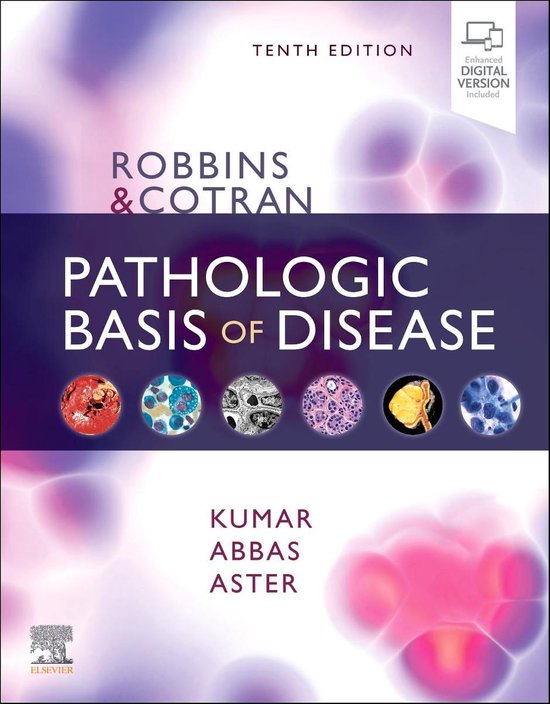
ROBBINS-INSPIRED PATHOLOGY EXAM
PREP
Advanced Clinical MCQs + Integrated Rationales + Higher-
Order Pathophysiology
Designed for learners seeking deeper clinical understanding beyond
memorization-heavy review materials
1.
A 34-year-old woman presents with progressive lower
extremity edema and frothy urine. Laboratory studies reveal
hypoalbuminemia, hyperlipidemia, and proteinuria exceeding
4 g/day. She later develops a deep vein thrombosis.
Which pathophysiologic alteration most directly explains this
patient’s increased thrombotic risk?
A. Increased hepatic synthesis of clotting factors
B. Urinary loss of antithrombin III
C. Platelet destruction due to immune complexes
D. Reduced fibrinogen production
E. Endothelial nitric oxide overproduction
Answer: B. Urinary loss of antithrombin III
,Clinical Clue
Nephrotic syndrome with heavy proteinuria + thrombosis
Mechanism
Loss of anticoagulant proteins (especially antithrombin III) in
urine → hypercoagulable state
Why Correct Answer Wins
Antithrombin III normally inhibits thrombin and factor Xa; its
loss directly increases clot formation risk.
Why Distractors Fail
A. Occurs but is not the primary driver
C. No platelet destruction mechanism here
D. Fibrinogen is actually increased
E. Would reduce clotting, not increase it
Exam Trap
Students often focus on hyperlipidemia rather than
coagulation protein loss.
Teaching Point
Nephrotic syndrome → protein loss = loss of anticoagulants →
thrombosis risk
2.
A patient with bacterial sepsis develops fever, hypotension, and
leukocytosis. Laboratory analysis reveals elevated levels of
tumor necrosis factor-alpha (TNF-α).
,Which effect of TNF-α most directly contributes to this patient’s
hypotension?
A. Increased erythropoiesis
B. Systemic vasodilation via nitric oxide induction
C. Decreased vascular permeability
D. Platelet aggregation inhibition
E. Reduced leukocyte adhesion
Answer: B. Systemic vasodilation via nitric oxide induction
Clinical Clue
Sepsis + TNF-α + hypotension
Mechanism
TNF-α stimulates nitric oxide synthase → vasodilation →
decreased systemic vascular resistance
Why Correct Answer Wins
NO-mediated vasodilation is the primary driver of septic shock
hypotension
Why Distractors Fail
A. Not relevant
C. TNF increases permeability
D. Not central mechanism
E. TNF increases adhesion
Exam Trap
Confusing capillary leak with the primary cause of hypotension
, Teaching Point
Septic shock = TNF → NO → vasodilation → hypotension
3.
A 58-year-old smoker presents with hemoptysis and weight
loss. Imaging reveals a central lung mass, and labs show
hypercalcemia.
Which mechanism most directly explains this metabolic
abnormality?
A. Osteolytic metastases
B. Increased vitamin D activation
C. Parathyroid hormone–related peptide secretion
D. Calcitonin overproduction
E. Renal calcium retention
Answer: C. Parathyroid hormone–related peptide secretion
Clinical Clue
Central lung tumor + hypercalcemia
Mechanism
Squamous cell carcinoma → secretes PTHrP → increases bone
resorption
Why Correct Answer Wins
PTHrP mimics PTH → raises serum calcium without true
parathyroid disease
PREP
Advanced Clinical MCQs + Integrated Rationales + Higher-
Order Pathophysiology
Designed for learners seeking deeper clinical understanding beyond
memorization-heavy review materials
1.
A 34-year-old woman presents with progressive lower
extremity edema and frothy urine. Laboratory studies reveal
hypoalbuminemia, hyperlipidemia, and proteinuria exceeding
4 g/day. She later develops a deep vein thrombosis.
Which pathophysiologic alteration most directly explains this
patient’s increased thrombotic risk?
A. Increased hepatic synthesis of clotting factors
B. Urinary loss of antithrombin III
C. Platelet destruction due to immune complexes
D. Reduced fibrinogen production
E. Endothelial nitric oxide overproduction
Answer: B. Urinary loss of antithrombin III
,Clinical Clue
Nephrotic syndrome with heavy proteinuria + thrombosis
Mechanism
Loss of anticoagulant proteins (especially antithrombin III) in
urine → hypercoagulable state
Why Correct Answer Wins
Antithrombin III normally inhibits thrombin and factor Xa; its
loss directly increases clot formation risk.
Why Distractors Fail
A. Occurs but is not the primary driver
C. No platelet destruction mechanism here
D. Fibrinogen is actually increased
E. Would reduce clotting, not increase it
Exam Trap
Students often focus on hyperlipidemia rather than
coagulation protein loss.
Teaching Point
Nephrotic syndrome → protein loss = loss of anticoagulants →
thrombosis risk
2.
A patient with bacterial sepsis develops fever, hypotension, and
leukocytosis. Laboratory analysis reveals elevated levels of
tumor necrosis factor-alpha (TNF-α).
,Which effect of TNF-α most directly contributes to this patient’s
hypotension?
A. Increased erythropoiesis
B. Systemic vasodilation via nitric oxide induction
C. Decreased vascular permeability
D. Platelet aggregation inhibition
E. Reduced leukocyte adhesion
Answer: B. Systemic vasodilation via nitric oxide induction
Clinical Clue
Sepsis + TNF-α + hypotension
Mechanism
TNF-α stimulates nitric oxide synthase → vasodilation →
decreased systemic vascular resistance
Why Correct Answer Wins
NO-mediated vasodilation is the primary driver of septic shock
hypotension
Why Distractors Fail
A. Not relevant
C. TNF increases permeability
D. Not central mechanism
E. TNF increases adhesion
Exam Trap
Confusing capillary leak with the primary cause of hypotension
, Teaching Point
Septic shock = TNF → NO → vasodilation → hypotension
3.
A 58-year-old smoker presents with hemoptysis and weight
loss. Imaging reveals a central lung mass, and labs show
hypercalcemia.
Which mechanism most directly explains this metabolic
abnormality?
A. Osteolytic metastases
B. Increased vitamin D activation
C. Parathyroid hormone–related peptide secretion
D. Calcitonin overproduction
E. Renal calcium retention
Answer: C. Parathyroid hormone–related peptide secretion
Clinical Clue
Central lung tumor + hypercalcemia
Mechanism
Squamous cell carcinoma → secretes PTHrP → increases bone
resorption
Why Correct Answer Wins
PTHrP mimics PTH → raises serum calcium without true
parathyroid disease