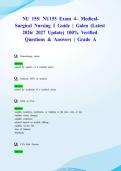
NUl 155/l NU155l Examl 4–l Medical-
Surgicall Nursingl Il Guidel |l Galenl (Latestl
2026/l 2027l Update)l 100%l Verifiedl
Questionsl &l Answersl |l Gradel A
Q:l Hemorrhagicl stroke
Answer:
causedl byl rupturel ofl al cerebrall artery
Q:l Ischemicl (85%l ofl strokes)
Answer:
causedl byl occlusionl ofl al cerebrall artery
Q:l S/SXl ofl CVA
Answer:
-suddenl weakness,l numbness,l orl tinglingl inl thel face,l arm,l orl leg
-suddenl visionl changesl
-suddenl confusion
-slurredl speechl orl troublel talkingl
-sudden,l severel HA
-lossl ofl balance
-blackouts
Q:l CVAl Riskl Factors
Answer:
,Cigarettel smoking,l usel ofl cocaine,l alcoholl abuse,l heartl disease,l diabetes,l hypertension,l
hyperlipidemia,l sedentaryl lifestyle,l obesity,l TIAs,l usel ofl orall contraceptivesl orl hormonel
replacementl therapy,l age,l heredity,l priorl stroke,l racel (AA),l genderl (M)
Q:l CVAl Interventions
Answer:
Maintainl openl airway,l antihypertensives,l templ control
Q:l CVAl Assessmentsl priorl tol adminl PO
Answer:
-ABCl (stabilizel airway,l breathing,l andl circulation)
-performl assessmentl usingl NIHSSl (nationall institutesl ofl healthl strokel scale)
Q:l CVAl complications
Answer:
-Extensionl ofl hemorrhagel orl rebleedl (Watchl forl suddenl LOCl change)
-Seizures
-Hydrocephalusl (resorptionl ofl CSF)l
-cerebrall aneurysm
Q:l Preventionl ofl CVAl complications
Answer:
-maintainl adequatel airway
-evall dysphagial byl speechl therapy
-establishl baselinel VS
-neuromuscularl fucntionl andl neurol status
-preservel jointl andl musclel functionl
-preventl compl thatl mayl interferel withl rehab
,Q:l seizure
Answer:
burstl ofl uncontrolledl electricall activityl betweenl brainl cellsl causingl stiffness,l twitching,l
orl limpness
-mayl bel al symptoml ofl underlyingl illness
Q:l epilepsy
Answer:
characterizedl byl twol orl morel spontaneousl seizuresl inl al 24l hourl period
Q:l Seizurel interventions
Answer:
-removel dangerousl objects
-gentlyl guidel tol floorl andl loosenl clothing
-turnl onl sidel tol preventl choking
-dol notl insertl anythingl betweenl teeth
-dol notl bel alarmedl ifl seeml tol stopl breathingl momentarily
-ifl breathingl actuallyl stops,l usel rescuel breathingl techniques
Q:l Seizurel postl nursingl care
Answer:
-ensurel pt.l airway
-checkl vs
-allowl pt.l tol restl
-lengthl ofl timel regardingl awarnessl
S/SX:
presencel ofl lethargy,l confusion,l HA,l speechl impairment,l musclel soreness
Q:l Lumbarl Puncture
, Answer:
uwedl tol determinel whetherl CSFl pressurel isl elevated;l blockagel tol thel flowl ofl CSF;l tol
obtainl fluidl forl chemicall analysisl andl culture
Q:l Prel lumbarl puncturel nursingl care
Answer:
-Signedl consent
-assistl ptl intol positionl withl backl bowed,l headl flexedl onl chest,l kneesl drawnl upl tol abd.
-l Ptl mayl bel sittingl orl lying,l assistl inl maintainingl positionl duringl procedure
-l providel emotionall support.l -Personnell mustl wearl maskl mustl bel wornl duringl
procedure.
Q:l Postl lumbarl puncturel nursingl care
Answer:
-Appropriatelyl labell tubesl withl patientl datal andl transportl ptl tol labl immediately.
-Keepl ptl flatl onl bedl tol reducel HAl forl 1l hour,l encouragel fluidl intake,l observel thel sitel
forl drainagel andl inflammation.
Q:l Decorativel posturingl (FLEXOR)
Answer:
-l Extensionl ofl thel legsl andl internall rotationl andl adductionl ofl thel armsl withl elbowsl
bentl upward,l occursl withl damagel ofl tol thel cortex.
Q:l Decerebratel (Extensor)
Answer:
Armsl arel stifflyl extendedl andl heldl closel tol thel body;l wristsl arel flexedl upward.l Thisl
meansl therel isl damagel tol thel midbrainl orl brainstem.
Q:l Bacteriall Meningitis
Surgicall Nursingl Il Guidel |l Galenl (Latestl
2026/l 2027l Update)l 100%l Verifiedl
Questionsl &l Answersl |l Gradel A
Q:l Hemorrhagicl stroke
Answer:
causedl byl rupturel ofl al cerebrall artery
Q:l Ischemicl (85%l ofl strokes)
Answer:
causedl byl occlusionl ofl al cerebrall artery
Q:l S/SXl ofl CVA
Answer:
-suddenl weakness,l numbness,l orl tinglingl inl thel face,l arm,l orl leg
-suddenl visionl changesl
-suddenl confusion
-slurredl speechl orl troublel talkingl
-sudden,l severel HA
-lossl ofl balance
-blackouts
Q:l CVAl Riskl Factors
Answer:
,Cigarettel smoking,l usel ofl cocaine,l alcoholl abuse,l heartl disease,l diabetes,l hypertension,l
hyperlipidemia,l sedentaryl lifestyle,l obesity,l TIAs,l usel ofl orall contraceptivesl orl hormonel
replacementl therapy,l age,l heredity,l priorl stroke,l racel (AA),l genderl (M)
Q:l CVAl Interventions
Answer:
Maintainl openl airway,l antihypertensives,l templ control
Q:l CVAl Assessmentsl priorl tol adminl PO
Answer:
-ABCl (stabilizel airway,l breathing,l andl circulation)
-performl assessmentl usingl NIHSSl (nationall institutesl ofl healthl strokel scale)
Q:l CVAl complications
Answer:
-Extensionl ofl hemorrhagel orl rebleedl (Watchl forl suddenl LOCl change)
-Seizures
-Hydrocephalusl (resorptionl ofl CSF)l
-cerebrall aneurysm
Q:l Preventionl ofl CVAl complications
Answer:
-maintainl adequatel airway
-evall dysphagial byl speechl therapy
-establishl baselinel VS
-neuromuscularl fucntionl andl neurol status
-preservel jointl andl musclel functionl
-preventl compl thatl mayl interferel withl rehab
,Q:l seizure
Answer:
burstl ofl uncontrolledl electricall activityl betweenl brainl cellsl causingl stiffness,l twitching,l
orl limpness
-mayl bel al symptoml ofl underlyingl illness
Q:l epilepsy
Answer:
characterizedl byl twol orl morel spontaneousl seizuresl inl al 24l hourl period
Q:l Seizurel interventions
Answer:
-removel dangerousl objects
-gentlyl guidel tol floorl andl loosenl clothing
-turnl onl sidel tol preventl choking
-dol notl insertl anythingl betweenl teeth
-dol notl bel alarmedl ifl seeml tol stopl breathingl momentarily
-ifl breathingl actuallyl stops,l usel rescuel breathingl techniques
Q:l Seizurel postl nursingl care
Answer:
-ensurel pt.l airway
-checkl vs
-allowl pt.l tol restl
-lengthl ofl timel regardingl awarnessl
S/SX:
presencel ofl lethargy,l confusion,l HA,l speechl impairment,l musclel soreness
Q:l Lumbarl Puncture
, Answer:
uwedl tol determinel whetherl CSFl pressurel isl elevated;l blockagel tol thel flowl ofl CSF;l tol
obtainl fluidl forl chemicall analysisl andl culture
Q:l Prel lumbarl puncturel nursingl care
Answer:
-Signedl consent
-assistl ptl intol positionl withl backl bowed,l headl flexedl onl chest,l kneesl drawnl upl tol abd.
-l Ptl mayl bel sittingl orl lying,l assistl inl maintainingl positionl duringl procedure
-l providel emotionall support.l -Personnell mustl wearl maskl mustl bel wornl duringl
procedure.
Q:l Postl lumbarl puncturel nursingl care
Answer:
-Appropriatelyl labell tubesl withl patientl datal andl transportl ptl tol labl immediately.
-Keepl ptl flatl onl bedl tol reducel HAl forl 1l hour,l encouragel fluidl intake,l observel thel sitel
forl drainagel andl inflammation.
Q:l Decorativel posturingl (FLEXOR)
Answer:
-l Extensionl ofl thel legsl andl internall rotationl andl adductionl ofl thel armsl withl elbowsl
bentl upward,l occursl withl damagel ofl tol thel cortex.
Q:l Decerebratel (Extensor)
Answer:
Armsl arel stifflyl extendedl andl heldl closel tol thel body;l wristsl arel flexedl upward.l Thisl
meansl therel isl damagel tol thel midbrainl orl brainstem.
Q:l Bacteriall Meningitis