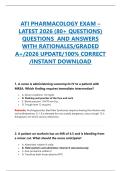
ATI PHARMACOLOGY EXAM –
LATEST 2026 (80+ QUESTIONS)
QUESTIONS AND ANSWERS
WITH RATIONALES/GRADED
A+/2026 UPDATE/100% CORRECT
/INSTANT DOWNLOAD
1. A nurse is administering vancomycin IV to a patient with
MRSA. Which finding requires immediate intervention?
• A. Serum creatinine 1.8 mg/dL
• B. Flushing and pruritus of the face and neck
• C. Blood pressure 110/70 mm Hg
• D. Trough level 12 mcg/mL
Rationale: Flushing/pruritus (Red Man Syndrome) requires slowing the infusion rate
and antihistamines. Cr 1.8 is elevated but not acutely dangerous; vanco trough 12 is
therapeutic (10–20 for serious infections).
2. A patient on warfarin has an INR of 4.5 and is bleeding from
a minor cut. What should the nurse anticipate?
• A. Administer vitamin K orally
• B. Hold warfarin and administer vitamin K subcutaneously
• C. Give protamine sulfate IV
• D. Transfuse fresh frozen plasma (FFP)
, Rationale: INR >4.5 with bleeding → hold warfarin + vitamin K (SQ or slow IV).
Protamine for heparin. FFP if life-threatening bleeding or INR >10.
3. SATA: Which medications require renal dose adjustment in
older adults? (Select all that apply)
• A. Metformin
• B. Digoxin
• C. Albuterol
• D. Levofloxacin
• E. Acetaminophen
Rationale: Metformin (lactic acidosis risk), digoxin (narrow TI), levofloxacin
(CNS/renal toxicity) all need CrCl adjustment. Albuterol hepatic, acetaminophen
hepatic.
4. A nurse is teaching a patient starting sertraline for PTSD.
Which statement indicates understanding?
• A. “I will avoid St. John’s wort and grapefruit juice.”
• B. “I can stop the medication once I feel better.”
• C. “This will work immediately to control my anxiety.”
• D. “I should take it in the morning to prevent insomnia.”
Rationale: St. John’s wort + SSRI = serotonin syndrome risk; grapefruit increases
levels. Sertraline takes 4–6 weeks; often given AM due to activating effects.
5. A patient receives furosemide 40 mg IV. Which assessment is
most important?
• A. Urine output
• B. Liver function tests
• C. Serum potassium level
LATEST 2026 (80+ QUESTIONS)
QUESTIONS AND ANSWERS
WITH RATIONALES/GRADED
A+/2026 UPDATE/100% CORRECT
/INSTANT DOWNLOAD
1. A nurse is administering vancomycin IV to a patient with
MRSA. Which finding requires immediate intervention?
• A. Serum creatinine 1.8 mg/dL
• B. Flushing and pruritus of the face and neck
• C. Blood pressure 110/70 mm Hg
• D. Trough level 12 mcg/mL
Rationale: Flushing/pruritus (Red Man Syndrome) requires slowing the infusion rate
and antihistamines. Cr 1.8 is elevated but not acutely dangerous; vanco trough 12 is
therapeutic (10–20 for serious infections).
2. A patient on warfarin has an INR of 4.5 and is bleeding from
a minor cut. What should the nurse anticipate?
• A. Administer vitamin K orally
• B. Hold warfarin and administer vitamin K subcutaneously
• C. Give protamine sulfate IV
• D. Transfuse fresh frozen plasma (FFP)
, Rationale: INR >4.5 with bleeding → hold warfarin + vitamin K (SQ or slow IV).
Protamine for heparin. FFP if life-threatening bleeding or INR >10.
3. SATA: Which medications require renal dose adjustment in
older adults? (Select all that apply)
• A. Metformin
• B. Digoxin
• C. Albuterol
• D. Levofloxacin
• E. Acetaminophen
Rationale: Metformin (lactic acidosis risk), digoxin (narrow TI), levofloxacin
(CNS/renal toxicity) all need CrCl adjustment. Albuterol hepatic, acetaminophen
hepatic.
4. A nurse is teaching a patient starting sertraline for PTSD.
Which statement indicates understanding?
• A. “I will avoid St. John’s wort and grapefruit juice.”
• B. “I can stop the medication once I feel better.”
• C. “This will work immediately to control my anxiety.”
• D. “I should take it in the morning to prevent insomnia.”
Rationale: St. John’s wort + SSRI = serotonin syndrome risk; grapefruit increases
levels. Sertraline takes 4–6 weeks; often given AM due to activating effects.
5. A patient receives furosemide 40 mg IV. Which assessment is
most important?
• A. Urine output
• B. Liver function tests
• C. Serum potassium level