
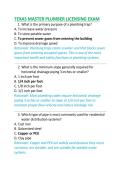
TEXAS MASTER PLUMBER LICENSING EXAM
1. What is the primary purpose of a plumbing trap?
A. To increase water pressure
B. To store potable water
C. To prevent sewer gases from entering the building
D. To improve drainage speed
Rationale: Plumbing traps retain a water seal that blocks sewer
gases from entering occupied spaces. This is one of the most
important health and safety functions in plumbing systems.
2. What is the minimum slope generally required for
horizontal drainage piping 3 inches or smaller?
A. 1 inch per foot
B. 1/4 inch per foot
C. 1/8 inch per foot
D. 1/2 inch per foot
Rationale: Most plumbing codes require horizontal drainage
piping 3 inches or smaller to slope at 1/4 inch per foot to
maintain proper flow velocity and reduce blockage risk.
3. Which type of pipe is most commonly used for residential
water distribution systems?
A. Cast iron
B. Galvanized steel
C. Copper or PEX
D. Clay pipe
Rationale: Copper and PEX are widely used because they resist
corrosion, are durable, and are suitable for potable water
systems.
, 4. What is the purpose of vent piping in a plumbing system?
A. To increase water pressure
B. To remove solids from drains
C. To equalize air pressure and protect trap seals
D. To store wastewater
Rationale: Vent piping allows air into the drainage system,
preventing siphonage and maintaining trap seals necessary to
block sewer gases.
5. Which fixture is required to have a trap?
A. Water heater
B. Cleanout
C. Hose bibb
D. Lavatory sink
Rationale: Fixtures that discharge wastewater into the drainage
system require traps to prevent sewer gas intrusion. A lavatory
sink is a common example.
6. What is the maximum allowable distance between a trap
and vent for a 1 1/2-inch trap arm under many plumbing
codes?
A. 2 feet
B. 3 feet
C. 6 feet
D. 12 feet
Rationale: Plumbing codes limit trap arm distances to prevent
trap siphonage. For a 1 1/2-inch trap arm, 6 feet is a common
maximum.
, 7. What does DWV stand for?
A. Drain Waste Valve
B. Domestic Water Vent
C. Drain Water Vacuum
D. Drain, Waste, and Vent
Rationale: DWV refers to the drainage, waste, and vent systems
that remove wastewater and provide ventilation within
plumbing systems.
8. Which material is commonly used for underground
building sewers?
A. Brass
B. PVC
C. Copper tubing
D. Black steel
Rationale: PVC is durable, corrosion-resistant, lightweight, and
economical, making it common for underground sewer
applications.
9. What device protects potable water from backflow
contamination?
A. Pressure regulator
B. Vacuum pump
C. Backflow preventer
D. Water hammer arrestor
Rationale: Backflow preventers stop contaminated water from
flowing backward into the potable water supply.
, 10. What is water hammer?
A. A type of corrosion
B. Frozen water in pipes
C. A pressure surge caused by sudden valve closure
D. Low water pressure in fixtures
Rationale: Water hammer occurs when flowing water suddenly
stops, creating shock waves that can damage piping and
fixtures.
11. Which valve is commonly installed on water heaters
for safety?
A. Gate valve
B. Globe valve
C. Ball valve
D. Temperature and pressure relief valve
Rationale: T&P relief valves prevent excessive pressure and
temperature buildup that could cause water heater explosions.
12. What is the purpose of a cleanout?
A. To vent the drainage system
B. To measure water flow
C. To provide access for cleaning drains
D. To filter wastewater
Rationale: Cleanouts allow plumbers to inspect and remove
obstructions from drainage piping.
13. Which plumbing fixture generally has the highest
drainage fixture unit value in a residence?
1. What is the primary purpose of a plumbing trap?
A. To increase water pressure
B. To store potable water
C. To prevent sewer gases from entering the building
D. To improve drainage speed
Rationale: Plumbing traps retain a water seal that blocks sewer
gases from entering occupied spaces. This is one of the most
important health and safety functions in plumbing systems.
2. What is the minimum slope generally required for
horizontal drainage piping 3 inches or smaller?
A. 1 inch per foot
B. 1/4 inch per foot
C. 1/8 inch per foot
D. 1/2 inch per foot
Rationale: Most plumbing codes require horizontal drainage
piping 3 inches or smaller to slope at 1/4 inch per foot to
maintain proper flow velocity and reduce blockage risk.
3. Which type of pipe is most commonly used for residential
water distribution systems?
A. Cast iron
B. Galvanized steel
C. Copper or PEX
D. Clay pipe
Rationale: Copper and PEX are widely used because they resist
corrosion, are durable, and are suitable for potable water
systems.
, 4. What is the purpose of vent piping in a plumbing system?
A. To increase water pressure
B. To remove solids from drains
C. To equalize air pressure and protect trap seals
D. To store wastewater
Rationale: Vent piping allows air into the drainage system,
preventing siphonage and maintaining trap seals necessary to
block sewer gases.
5. Which fixture is required to have a trap?
A. Water heater
B. Cleanout
C. Hose bibb
D. Lavatory sink
Rationale: Fixtures that discharge wastewater into the drainage
system require traps to prevent sewer gas intrusion. A lavatory
sink is a common example.
6. What is the maximum allowable distance between a trap
and vent for a 1 1/2-inch trap arm under many plumbing
codes?
A. 2 feet
B. 3 feet
C. 6 feet
D. 12 feet
Rationale: Plumbing codes limit trap arm distances to prevent
trap siphonage. For a 1 1/2-inch trap arm, 6 feet is a common
maximum.
, 7. What does DWV stand for?
A. Drain Waste Valve
B. Domestic Water Vent
C. Drain Water Vacuum
D. Drain, Waste, and Vent
Rationale: DWV refers to the drainage, waste, and vent systems
that remove wastewater and provide ventilation within
plumbing systems.
8. Which material is commonly used for underground
building sewers?
A. Brass
B. PVC
C. Copper tubing
D. Black steel
Rationale: PVC is durable, corrosion-resistant, lightweight, and
economical, making it common for underground sewer
applications.
9. What device protects potable water from backflow
contamination?
A. Pressure regulator
B. Vacuum pump
C. Backflow preventer
D. Water hammer arrestor
Rationale: Backflow preventers stop contaminated water from
flowing backward into the potable water supply.
, 10. What is water hammer?
A. A type of corrosion
B. Frozen water in pipes
C. A pressure surge caused by sudden valve closure
D. Low water pressure in fixtures
Rationale: Water hammer occurs when flowing water suddenly
stops, creating shock waves that can damage piping and
fixtures.
11. Which valve is commonly installed on water heaters
for safety?
A. Gate valve
B. Globe valve
C. Ball valve
D. Temperature and pressure relief valve
Rationale: T&P relief valves prevent excessive pressure and
temperature buildup that could cause water heater explosions.
12. What is the purpose of a cleanout?
A. To vent the drainage system
B. To measure water flow
C. To provide access for cleaning drains
D. To filter wastewater
Rationale: Cleanouts allow plumbers to inspect and remove
obstructions from drainage piping.
13. Which plumbing fixture generally has the highest
drainage fixture unit value in a residence?


