
A-Level Warfare Revision:
(Paper 3)
Useful Resources:
JSTOR
Oxford Academic
Acamedia (free sign-in and access)
Wellington: The Iron Duke | National Army Museum (National Army Museum (Use for Crimea/Second Boer and WWI also))
Trafalgar Day: Vice-Admiral Lord Horatio Nelson | National Museum of the Royal Navy (National Museum of the Royal Navy)
The Impact of the Revolutionary and Napoleonic Wars, 1793-1815, on the Long-Run Growth of the British Economy on JSTOR
The Crimean War - The National Archives
The Crimean War: A pivotal conflict in world history
(16) The Second Anglo-Boer War: An Overview
Popular Imperialism and the Provincial Press: Manchester Evening and Weekly Papers, 1895-1902
Modernist Journals | The Boer War
WW1: Chronology and Battles | War Collections (University of Oxford)
First World War - Stories, Photographs, Film & Documents | IWM (Imperial War Museum)
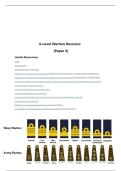
Navy Ranks:
Army Ranks:
, Wars with France (1793-1815):
• For information on Nelson/Napoleon/Wellington refer to separate document(s).
• Army:
➢ Pay and Conditions were awful, earnt less than agricultural workers, £40 signing on
bounty offered as encouragement.
➢ 1793-1815, an average of 20,000 soldiers died per year.
➢ Harsh and brutal (e.g. cat-o-nine tails), CP encouraged by Wellington.
➢ Heavy dependence on militia, 1/5 of British land forces designed for home defence only.
➢ Increased reliance on foreign recruitment (e.g. Hanoverians following Napoleons 1803
occupation of Hannover).
➢ Army made up en masse from desperate backgrounds, or those coerced into enlistment.
➢ Britian’s army was small and socially disreputable, suitable for minor colonial uprisings,
as opposed the might of Frances mass conscripted army.
➢ Wellington’s description of his men as ‘The scum of the Earth’ was somewhat accurate,
in wartime, criminals were given the option of joining the forces or going to prison,
alongside this, many impoverished or unpaid found the poor rations of the army very
appealing.
• Navy:
➢ Scurvy was eradicated on British ships in the 1790’s.
➢ The Royal Navy was the largest point of expenditure of the British state.
➢ In wartime, the Navy could reach up to 100,000 men.
➢ Press gangs were used to force people (impressment) to join the Navy. Between 50% and
75% had been pressed to join the service.
➢ Naval and Admiralty Board created to organise and centralise administration within huge
overlapping bureaucracies.
➢ 1793: British ships and Royal Dockyards at Portsmouth, Chatham and Plymouth had
fallen into disrepair.
➢ Oak timber shortage for ships = reliance on imports from Baltics, susceptible to attack.
➢ Morale and discipline much the same as in the army (e.g. no wage increase since 1625).
➢ 1792=125 ships of the line, 133 frigates → 1815=200 ships of the line, 600 other vessels.
➢ Since 1745, every Royal Navy vessel obliged to perform daily gunnery training.
➢ Copper bottomed ships remained expensive.
• 1793 Britain did not use conscription and relied on an army of 40,000, regular soldier=volunteers.
• Officers comprised of the landed gentry classes, purchasable commissions, Duke of York
reforms = 2 years before purchasing captaincy and serve 6 years before major.
• 1808-1814 – Peninsular War (See Wellington)
• Battle of Waterloo (See Napoleon and Wellington)
• Navy well prepared in 1793 as the ‘senior service’, ships of the line had over 70 guns and
hundreds of men, frigates had less.
• Open Blockade – far away, frigates patrol. Close Blockade – main fleet physical surround port.
• 1794 Glorious First of June – Lord Howe attacked a 117 strong French merchant grain convoy
from the US. Tactical victory using ‘raking’ convoy still got to France, boosted morale.
• Spithead Mutiny (1797) – Petition to Admiralty over pay, food and harsh officers, mutiny rose
again after only granted higher wages, dealt with between petty officers and Admiral Lord Howe.
• Nore Mutiny (12th May 1797) – Nore mutineers and North Sea fleet demanded far reaching
influence including veto over officers. Dealt with harshly, 29 executed.
• Key naval Battles (See Nelson), including Trafalgar, Nile etc.
(Paper 3)
Useful Resources:
JSTOR
Oxford Academic
Acamedia (free sign-in and access)
Wellington: The Iron Duke | National Army Museum (National Army Museum (Use for Crimea/Second Boer and WWI also))
Trafalgar Day: Vice-Admiral Lord Horatio Nelson | National Museum of the Royal Navy (National Museum of the Royal Navy)
The Impact of the Revolutionary and Napoleonic Wars, 1793-1815, on the Long-Run Growth of the British Economy on JSTOR
The Crimean War - The National Archives
The Crimean War: A pivotal conflict in world history
(16) The Second Anglo-Boer War: An Overview
Popular Imperialism and the Provincial Press: Manchester Evening and Weekly Papers, 1895-1902
Modernist Journals | The Boer War
WW1: Chronology and Battles | War Collections (University of Oxford)
First World War - Stories, Photographs, Film & Documents | IWM (Imperial War Museum)
Navy Ranks:
Army Ranks:
, Wars with France (1793-1815):
• For information on Nelson/Napoleon/Wellington refer to separate document(s).
• Army:
➢ Pay and Conditions were awful, earnt less than agricultural workers, £40 signing on
bounty offered as encouragement.
➢ 1793-1815, an average of 20,000 soldiers died per year.
➢ Harsh and brutal (e.g. cat-o-nine tails), CP encouraged by Wellington.
➢ Heavy dependence on militia, 1/5 of British land forces designed for home defence only.
➢ Increased reliance on foreign recruitment (e.g. Hanoverians following Napoleons 1803
occupation of Hannover).
➢ Army made up en masse from desperate backgrounds, or those coerced into enlistment.
➢ Britian’s army was small and socially disreputable, suitable for minor colonial uprisings,
as opposed the might of Frances mass conscripted army.
➢ Wellington’s description of his men as ‘The scum of the Earth’ was somewhat accurate,
in wartime, criminals were given the option of joining the forces or going to prison,
alongside this, many impoverished or unpaid found the poor rations of the army very
appealing.
• Navy:
➢ Scurvy was eradicated on British ships in the 1790’s.
➢ The Royal Navy was the largest point of expenditure of the British state.
➢ In wartime, the Navy could reach up to 100,000 men.
➢ Press gangs were used to force people (impressment) to join the Navy. Between 50% and
75% had been pressed to join the service.
➢ Naval and Admiralty Board created to organise and centralise administration within huge
overlapping bureaucracies.
➢ 1793: British ships and Royal Dockyards at Portsmouth, Chatham and Plymouth had
fallen into disrepair.
➢ Oak timber shortage for ships = reliance on imports from Baltics, susceptible to attack.
➢ Morale and discipline much the same as in the army (e.g. no wage increase since 1625).
➢ 1792=125 ships of the line, 133 frigates → 1815=200 ships of the line, 600 other vessels.
➢ Since 1745, every Royal Navy vessel obliged to perform daily gunnery training.
➢ Copper bottomed ships remained expensive.
• 1793 Britain did not use conscription and relied on an army of 40,000, regular soldier=volunteers.
• Officers comprised of the landed gentry classes, purchasable commissions, Duke of York
reforms = 2 years before purchasing captaincy and serve 6 years before major.
• 1808-1814 – Peninsular War (See Wellington)
• Battle of Waterloo (See Napoleon and Wellington)
• Navy well prepared in 1793 as the ‘senior service’, ships of the line had over 70 guns and
hundreds of men, frigates had less.
• Open Blockade – far away, frigates patrol. Close Blockade – main fleet physical surround port.
• 1794 Glorious First of June – Lord Howe attacked a 117 strong French merchant grain convoy
from the US. Tactical victory using ‘raking’ convoy still got to France, boosted morale.
• Spithead Mutiny (1797) – Petition to Admiralty over pay, food and harsh officers, mutiny rose
again after only granted higher wages, dealt with between petty officers and Admiral Lord Howe.
• Nore Mutiny (12th May 1797) – Nore mutineers and North Sea fleet demanded far reaching
influence including veto over officers. Dealt with harshly, 29 executed.
• Key naval Battles (See Nelson), including Trafalgar, Nile etc.


