

Chapter 10 Class 1st year
Chapter#10 Class 1st Trigonometric Identities
Contacts: Definitions →Theory → Exercise
Distance formula: 2) we know that
𝑙𝑒𝑡 𝑃(𝑥1 , 𝑦1 ) 𝑎𝑛𝑑 𝑄(𝑥2 , 𝑦2 ) 𝑏𝑒 𝑡𝑤𝑜 𝑝𝑜𝑖𝑛𝑡𝑠. If
𝑑 𝑑𝑒𝑛𝑜𝑡𝑒𝑠 the distance between them then cos(𝛼 − 𝛽) = 𝑐𝑜𝑠𝛼𝑐𝑜𝑠𝛽 + 𝑠𝑖𝑛𝛼𝑠𝑖𝑛𝛽
𝜋
)𝟐
𝒅 = |𝑷𝑸| = √(𝒚𝟐 − 𝒚𝟏 + (𝒙𝟐 − 𝒙𝟏 )𝟐 𝑝𝑢𝑡 𝛽 = − 𝑤𝑒 𝑔𝑒𝑡
2
Fundamental law of trigonometry: 𝜋 𝜋 𝜋
𝑙𝑒𝑡 𝛼 𝑎𝑛𝑑 𝛽 be any two angles (real numbers) then cos (𝛼 − (− )) = cos 𝛼𝑐𝑜𝑠 (− ) + sin 𝛼 𝑠𝑖𝑛 (− )
2 2 2
𝒄𝒐𝒔(𝜶 − 𝜷) = 𝒄𝒐𝒔𝜶𝒄𝒐𝒔𝜷 + 𝒔𝒊𝒏𝜶𝒔𝒊𝒏𝜷 𝜋 𝜋 𝜋
Which is called the fundamental law of trigonometry. cos (𝛼 + ) = cos 𝛼𝑐𝑜𝑠 − sin 𝛼 𝑠𝑖𝑛
2 2 2
Proof:
= 𝑐𝑜𝑠𝛼(0) − 𝑠𝑖𝑛𝛼(1)
𝜋
⇒ cos (𝛼 + ) = −𝑠𝑖𝑛𝛼
2
𝜋 𝜋
(∵ cos( − ) = cos = 0)
2 2
𝝅 𝝅
∵ 𝒔𝒊𝒏 (− ) = −𝒔𝒊𝒏 𝟐 = −𝟏
𝟐
pk
3) we know that
𝜋
cos ( − 𝛽) = 𝑠𝑖𝑛𝛽
2
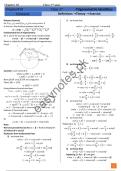
Consider a unit circle at O. 𝜋
Put 𝛽 = 2 + 𝛼 𝑤𝑒 𝑔𝑒𝑡
s.
where ∠𝐴𝑂𝐷 = 𝛼, ∠𝐵𝑂𝐷 = 𝛽
∠𝐴𝑂𝐵 = ∠𝐶𝑂𝐷 = 𝛼 − 𝛽 𝜋 𝜋 𝛼
⇒ cos ( − ( + 𝛼)) = sin ( + 𝛼)
Now ∆𝐴𝑂𝐵 𝑎𝑛𝑑 ∆𝐶𝑂𝐵 are congruent. 2 2 2
te
𝜋 𝜋 𝜋
Then |𝐴𝐵| = |𝐶𝐷| ⇒ cos ( − − 𝛼) = sin ( + 𝛼)
2 2 2
⇒ |𝐴𝐵|2 = |𝐶𝐷|2 𝜋
no
Using distance formula we have ⇒ cos(−𝛼) = sin ( + 𝛼)
2
(𝑐𝑜𝑠𝛼 − 𝑐𝑜𝑠𝛽)2 + (𝑠𝑖𝑛𝛼 − 𝑠𝑖𝑛𝛽)2 𝜋
̅̅̅̅̅̅̅ 2
̅̅̅̅̅̅̅ 2 ⇒ 𝑐𝑜𝑠𝛼 = sin ( + 𝛼)
= (𝑐𝑜𝑠𝛼 − 𝛽 − 1) + (𝑠𝑖𝑛𝛼 − 𝛽 − 0) 2
cos 2 𝛼 + 𝑐𝑜𝑠 2 𝛽 − 2𝑐𝑜𝑠𝛼𝑐𝑜𝑠𝛽 + 𝑠𝑖𝑛2 𝛼 + 𝑠𝑖𝑛2 𝛽 − 2𝑠𝑖𝑛𝛼𝑠𝑖𝑛𝛽
𝜋
sy
⇒ sin ( + 𝛼) = 𝑐𝑜𝑠𝛼
cos2 ̅̅̅̅̅̅̅
𝛼 − 𝛽 + 1 − 2 cos ̅̅̅̅̅̅̅ ̅̅̅̅̅̅̅
𝛼 − 𝛽 + sin2 𝛼 −𝛽 2
𝑐𝑜𝑠 2 𝛼 + 𝑠𝑖𝑛2 𝛼 + 𝑐𝑜𝑠 2 𝛽 − 2(𝑐𝑜𝑠𝛼𝑐𝑜𝑠𝛽 + 𝑠𝑖𝑛𝛼𝑠𝑖𝑛𝛽) 4) we know that
= 𝒄𝒐𝒔𝟐 ̅̅̅̅̅̅
𝛼 − 𝛽 + sin2 (̅̅̅̅̅̅
𝛼 − 𝛽) + 1 − 2𝑐𝑜𝑠(𝛼 − 𝛽) cos(𝛼 − 𝛽) = 𝑐𝑜𝑠𝛼𝑐𝑜𝑠𝛽 + 𝑠𝑖𝑛𝛼𝑠𝑖𝑛𝛽
ea
⇒ 2 − 2(𝑐𝑜𝑠𝛼𝑐𝑜𝑠𝛽 + 𝑠𝑖𝑛𝛼𝑠𝑖𝑛𝛽) = 2 − 2𝑐𝑜𝑠(𝛼 − 𝛽) 𝑟𝑒𝑝𝑙𝑎𝑐𝑖𝑛𝑔 𝛽 𝑏𝑦 − 𝛽 𝑤𝑒 𝑔𝑒𝑡
Subtract 2 from both sides cos[𝛼 − (−𝛽)] = 𝑐𝑜𝑠𝛼𝑐𝑜𝑠(−𝛽) + 𝑠𝑖𝑛𝛼𝑠𝑖𝑛(−𝛽)
⇒ −2(𝑐𝑜𝑠𝛼𝑐𝑜𝑠𝛽 + 𝑠𝑖𝑛𝛼𝑠𝑖𝑛𝛽) = −2𝑐𝑜𝑠(𝛼 − 𝛽) ⇒ cos(𝛼 + 𝛽) = 𝑐𝑜𝑠𝛼𝑐𝑜𝑠𝛽 − 𝑠𝑖𝑛𝛼𝑠𝑖𝑛𝛽
⇒ (𝑐𝑜𝑠𝛼𝑐𝑜𝑠𝛽 + 𝑠𝑖𝑛𝛼𝑠𝑖𝑛𝛽) = 𝑐𝑜𝑠(𝛼 − 𝛽) ÷ −2 (∵ cos(−𝛽) = 𝑐𝑜𝑠𝛽, sin(−𝛽) = −𝑠𝑖𝑛𝛽
Or 5) we know that
cos(𝛼 + 𝛽) = 𝑐𝑜𝑠𝛼𝑐𝑜𝑠𝛽 − 𝑠𝑖𝑛𝛼𝑠𝑖𝑛𝛽
𝑐𝑜𝑠(𝛼 − 𝛽) = (𝑐𝑜𝑠𝛼𝑐𝑜𝑠𝛽 + 𝑠𝑖𝑛𝛼𝑠𝑖𝑛𝛽) 𝜋
Note: Replacing 𝛼 𝑏𝑦 2 + 𝛼
𝜋 𝜋 𝜋
We have proved this law for 𝜶 > 𝜷 > 𝟎, 𝒊𝒕 𝒊𝒔 𝒕𝒓𝒖𝒆 𝒇𝒐𝒓 cos ( + 𝛼 + 𝛽) = 𝑐𝑜𝑠 + 𝛼𝑐𝑜𝑠𝛽 − 𝑠𝑖𝑛 + 𝛼𝑠𝑖𝑛𝛽
𝒂𝒍l valves of 𝜶 𝒂𝒏𝒅 𝜷 2 2 2
𝜋
Deduction from fundamental law: 𝑐𝑜𝑠 (( + 𝛼) + 𝛽 ) = −𝑠𝑖𝑛𝛼𝑐𝑜𝑠𝛽 − 𝑐𝑜𝑠𝛼𝑠𝑖𝑛𝛽
2
1) we know that
cos(𝛼 − 𝛽) = 𝑐𝑜𝑠𝛼𝑐𝑜𝑠𝛽 + 𝑠𝑖𝑛𝛼𝑠𝑖𝑛𝛽 −𝑠𝑖𝑛(𝛼 + 𝛽) = −(𝑠𝑖𝑛𝛼𝑐𝑜𝑠𝛽 + 𝑐𝑜𝑠𝛼𝑠𝑖𝑛𝛽)
𝜋 𝑠𝑖𝑛(𝛼 + 𝛽) = 𝑠𝑖𝑛𝛼𝑐𝑜𝑠𝛽 + 𝑐𝑜𝑠𝛼𝑠𝑖𝑛𝛽
𝑝𝑢𝑡 𝛼 = 𝑤𝑒 𝑔𝑒𝑡 𝜋 𝜋
2 (∵ 𝑠𝑖𝑛 ( + 𝛼) = −𝑐𝑜𝑠𝛼, 𝑐𝑜𝑠 ( + 𝛼) = −𝑠𝑖𝑛𝛼
𝜋 𝜋 𝜋 2 2
cos ( − 𝛽) = cos 𝑐𝑜𝑠𝛽 + sin 𝑠𝑖𝑛𝛽 6) we know that
2 2 2
= (0)𝑐𝑜𝑠𝛽 + (1)𝑠𝑖𝑛𝛽 𝑠𝑖𝑛(𝛼 + 𝛽) = 𝑠𝑖𝑛𝛼𝑐𝑜𝑠𝛽 + 𝑐𝑜𝑠𝛼𝑠𝑖𝑛𝛽
𝜋 Replacing 𝜷 𝒃𝒚(−𝜷) 𝒘𝒆 𝒈𝒆𝒕
⇒ cos ( − 𝛽) = 𝑠𝑖𝑛𝛽
2 𝑠𝑖𝑛(𝛼 + (−𝜷)) = 𝑠𝑖𝑛𝛼𝑐𝑜𝑠(−𝜷) + 𝑐𝑜𝑠𝛼𝑠𝑖𝑛(−𝜷)
𝜋 𝜋
(∵ cos = 0 sin = 1) 𝑠𝑖𝑛(𝛼 − 𝛽) = 𝑠𝑖𝑛𝛼𝑐𝑜𝑠𝛽 − 𝑐𝑜𝑠𝛼𝑠𝑖𝑛𝛽
2 2
1
,Chapter 10 Class 1st year
∵ 𝒄𝒐𝒔(−𝜷) = 𝒄𝒐𝒔𝜷, 𝒔𝒊𝒏(−𝜷) = −𝒔𝒊𝒏𝜷 3𝜋
sin ( − 𝜃) = −𝑐𝑜𝑠𝜃
7) we know that 2
cos(𝛼 − 𝛽) = 𝑐𝑜𝑠𝛼𝑐𝑜𝑠𝛽 + 𝑠𝑖𝑛𝛼𝑠𝑖𝑛𝛽 3𝜋
sin ( + 𝜃) = −𝑐𝑜𝑠𝜃
𝒍𝒆𝒕 𝜶 = 𝟐𝝅 𝒂𝒏𝒅 𝜷 = 𝜽 2
cos(2𝜋 − 𝜃) = 𝑐𝑜𝑠2𝜋𝑐𝑜𝑠𝜃 + 𝑠𝑖𝑛2𝜋𝑠𝑖𝑛𝜃
cos(2𝜋 − 𝜃) = (1)𝑐𝑜𝑠𝜃 + (0)𝑠𝑖𝑛𝜃
𝐜𝐨𝐬 → 𝐬𝐢𝐧
𝜋 𝜋
⇒ cos(2𝜋 − 𝜃) = 𝑐𝑜𝑠𝜃 ∵ 𝑐𝑜𝑠2𝜋 = 1 𝑎𝑛𝑑 𝑠𝑖𝑛2𝜋 = 0 cos ( − 𝜃) = 𝑠𝑖𝑛𝜃 , cos ( + 𝜃) = −𝑠𝑖𝑛𝜃
2 2
8) we know that 3𝜋
𝑠𝑖𝑛(𝛼 − 𝛽) = 𝑠𝑖𝑛𝛼𝑐𝑜𝑠𝛽 − 𝑐𝑜𝑠𝛼𝑠𝑖𝑛𝛽 cos ( − 𝜃) = −𝑠𝑖𝑛𝜃
2
𝑙𝑒𝑡 𝛼 = 2𝜋 𝑎𝑛𝑑 𝛽 = 𝜃 3𝜋
cos ( + 𝜃) = 𝑠𝑖𝑛𝜃
𝑠𝑖𝑛(2𝜋 − 𝜃) = 𝑠𝑖𝑛2𝜋𝑐𝑜𝑠𝜃 − 𝑐𝑜𝑠2𝜋𝑠𝑖𝑛𝜃 2
𝑠𝑖𝑛(2𝜋 − 𝜃) = (0)𝑐𝑜𝑠𝜃 − (1)𝑠𝑖𝑛𝜃
𝑠𝑖𝑛(2𝜋 − 𝜃) = −𝑠𝑖𝑛𝜃
𝒔𝒊𝒏(𝜶+𝜷)
9) ∵ 𝒕𝒂𝒏(𝜶 + 𝜷) = 𝒄𝒐𝒔(𝜶+𝜷)
𝒕𝒂𝒏 → 𝒄𝒐𝒕
𝑠𝑖𝑛𝛼𝑐𝑜𝑠𝛽 − 𝑐𝑜𝑠𝛼𝑠𝑖𝑛𝛽
=
𝑐𝑜𝑠𝛼𝑐𝑜𝑠𝛽 + 𝑠𝑖𝑛𝛼𝑠𝑖𝑛𝛽
𝑡𝑎𝑛 (𝜋2 − 𝜃) = 𝑐𝑜𝑡𝜃 , 𝜋
tan ( + 𝜃) = −𝑐𝑜𝑡𝜃
2
During up and down by 𝒄𝒐𝒔𝜶𝒄𝒐𝒔𝜷 3𝜋
𝑡𝑎𝑛 ( − 𝜃) = 𝑐𝑜𝑡𝜃
𝑠𝑖𝑛𝛼𝑐𝑜𝑠𝛽 𝑐𝑜𝑠𝛼𝑠𝑖𝑛𝛽 2
+ 3𝜋
𝑐𝑜𝑠𝛼𝑐𝑜𝑠𝛽 𝑐𝑜𝑠𝛼𝑐𝑜𝑠𝛽 𝑡𝑎𝑛 ( + 𝜃) = −𝑐𝑜𝑡𝜃
= 2
𝑐𝑜𝑠𝛼𝑐𝑜𝑠𝛽 𝑠𝑖𝑛𝛼𝑠𝑖𝑛𝛽
pk
+ 𝜋
𝑐𝑜𝑠𝛼𝑐𝑜𝑠𝛽 𝑐𝑜𝑠𝛼𝑐𝑜𝑠𝛽 2) if 𝜃𝑖𝑠 𝑎𝑑𝑑 or subtracted from an even multiple of 2 ,
Thus, the trigonometric ratio shall remain the same.
𝒕𝒂𝒏𝜶 + 𝒕𝒂𝒏𝜷 3) so far as the sign of result is concerned, it is
= s.
𝟏 − 𝒕𝒂𝒏𝜶𝒕𝒂𝒏𝜷 determined by the quadrant in which the terminal arm of
the angle lies.
𝒔𝒊𝒏(𝜶−𝜷)
te
10) ∵ 𝒕𝒂𝒏(𝜶 − 𝜷) = 𝒄𝒐𝒔(𝜶−𝜷)
=
𝑠𝑖𝑛𝛼𝑐𝑜𝑠𝛽 − 𝑐𝑜𝑠𝛼𝑠𝑖𝑛𝛽
𝒔𝒊𝒏 → 𝒔𝒊𝒏
no
𝑐𝑜𝑠𝛼𝑐𝑜𝑠𝛽 + 𝑠𝑖𝑛𝛼𝑠𝑖𝑛𝛽
During up and down by 𝒄𝒐𝒔𝜶𝒄𝒐𝒔𝜷 sin(𝜋 − 𝜃) = 𝑠𝑖𝑛𝜃, sin(𝜋 + 𝜃) = −𝑠𝑖𝑛𝜃
𝑠𝑖𝑛𝛼𝑐𝑜𝑠𝛽 𝑐𝑜𝑠𝛼𝑠𝑖𝑛𝛽 𝑠𝑖𝑛(2𝜋 − 𝜃) = −𝑠𝑖𝑛𝜃, 𝑠𝑖𝑛(2𝜋 + 𝜃) = 𝑠𝑖𝑛𝜃
−
𝑐𝑜𝑠𝛼𝑐𝑜𝑠𝛽 𝑐𝑜𝑠𝛼𝑐𝑜𝑠𝛽
=
sy
𝑐𝑜𝑠𝛼𝑐𝑜𝑠𝛽 𝑠𝑖𝑛𝛼𝑠𝑖𝑛𝛽
Thus,
+
𝑐𝑜𝑠𝛼𝑐𝑜𝑠𝛽 𝑐𝑜𝑠𝛼𝑐𝑜𝑠𝛽 𝒄𝒐𝒔 → 𝒄𝒐𝒔
cos(𝜋 − 𝜃) = −cos𝜃, cos(𝜋 + 𝜃) = −cos𝜃
ea
𝒕𝒂𝒏𝜶 − 𝒕𝒂𝒏𝜷
= 𝑐𝑜𝑠(2𝜋 − 𝜃) = 𝑐𝑜𝑠𝜃, 𝑐𝑜𝑠(2𝜋 + 𝜃) = 𝑐𝑜𝑠𝜃
𝟏 + 𝒕𝒂𝒏𝜶𝒕𝒂𝒏𝜷
Trigonometric Ratio of allied Angle:
Allied angles:
𝒕𝒂𝒏 → 𝒕𝒂𝒏
The angle associated with basic angle of measure 𝜃 𝑡𝑜 a
right angle or multiple are called allied angles. 𝒕𝒂𝒏(𝝅 − 𝜽) = −𝒕𝒂𝒏𝜽, 𝒕𝒂𝒏(𝝅 + 𝜽) = 𝒕𝒂𝒏𝜽
Examples: 𝒕𝒂𝒏(𝟐𝝅 − 𝜽) = −𝒕𝒂𝒏𝜽, 𝒕𝒂𝒏(𝟐𝝅 + 𝜽) = 𝒕𝒂𝒏𝜽
900 ± 𝜃, 1800 ± 𝜃, 2700 ± 𝜃, 3600 ± 𝜃 𝑒𝑡𝑐.
Remember some basic results of allied angles:
1) If 𝜽 𝒊𝒔 𝒂𝒅𝒅 𝒕𝒐 𝒐𝒓 𝒔𝒖𝒃𝒕𝒓𝒂𝒄𝒕𝒆𝒅 from odd multiple of
right angle, trigonometric ratio change into co-ratio
and versa. i.e
𝒔𝒊𝒏 ⇌ 𝒄𝒐𝒔, 𝒕𝒂𝒏 ⇋ 𝒄𝒐𝒕 , 𝒔𝒆𝒄 ⇋ 𝒄𝒐𝒔𝒆𝒄
𝒔𝒊𝒏 → 𝒄𝒐𝒔
𝜋 𝜋
sin ( − 𝜃) = 𝑐𝑜𝑠𝜃 , sin ( + 𝜃) = 𝑐𝑜𝑠𝜃
2 2
2
, Chapter 10 Class 1st year
Question # 2
Exercise 10.1 Express each of the following as a trigonometric
Question # 1
function of an angle of positive degree measure
Without using the tables, find the value of : of less than 𝟒𝟓° .
(i). 𝑺𝒊𝒏(−𝟕𝟖𝟎°) (i). 𝑺𝒊𝒏𝟏𝟗𝟔°
Solution. Solution:
𝑆𝑖𝑛(−780°) = −𝑆𝑖𝑛(780°) 𝑆𝑖𝑛(196°) = 𝑆𝑖𝑛(180° + 16°)
𝑆𝑖𝑛(−780°) = −𝑆𝑖𝑛(8(90°) + 60°) 𝑆𝑖𝑛(196°) = 𝑆𝑖𝑛180° 𝐶𝑜𝑠16° + 𝐶𝑜𝑠180°𝑆𝑖𝑛16°
𝑆𝑖𝑛(−780°) = −𝑆𝑖𝑛(60°) 𝑆𝑖𝑛(196°) = (0) 𝐶𝑜𝑠16° + (−1)𝑆𝑖𝑛16°
√3 𝑆𝑖𝑛(196°) = −𝑆𝑖𝑛16°.
𝑆𝑖𝑛(−780°) = − Answer.
2
Answer. (ii). 𝑪𝒐𝒔𝟏𝟒𝟕°
(ii). 𝑪𝒐𝒕(−𝟖𝟖𝟓°) Solution.
Solution. 𝐶𝑜𝑠(147°) = 𝐶𝑜𝑠(180° − 33°)
𝐶𝑜𝑡(−885°) = −𝐶𝑜𝑡(885°) 𝐶𝑜𝑠(147°) = 𝐶𝑜𝑠180° 𝐶𝑜𝑠33° + 𝑆𝑖𝑛180°𝑆𝑖𝑛33°
𝐶𝑜𝑡(−885°) = −𝐶𝑜𝑡(9(90°) + 45°) 𝐶𝑜𝑠(147°) = (−1) 𝐶𝑜𝑠33° + (0)𝑆𝑖𝑛33°
𝐶𝑜𝑡(−885°) = −tan(45°) 𝐶𝑜𝑠(147°) = −𝐶𝑜𝑠33°.
𝐶𝑜𝑡(−885°) = −1 Answer.
Answer. (iii). 𝑺𝒊𝒏𝟑𝟏𝟗°
(iii). 𝑪𝒔𝒄(𝟐𝟎𝟒𝟎°)
pk
Solution.
Solution.
𝑆𝑖𝑛(319°) = 𝑆𝑖𝑛(360° − 41°)
𝐶𝑠𝑐(2040°) = 𝐶𝑠𝑐(22(90)° + 60°)
𝑆𝑖𝑛(319°) = 𝑆𝑖𝑛360° 𝐶𝑜𝑠41° − 𝐶𝑜𝑠360°𝑆𝑖𝑛41°
𝐶𝑠𝑐(2040°) = −𝐶𝑠𝑐(60°)
𝑆𝑖𝑛(319°) = (0)𝐶𝑜𝑠41° − (1)𝑆𝑖𝑛41°
𝐶𝑜𝑡(−885°) = − .
2
√3
s.
𝑆𝑖𝑛(319°) = −𝑆𝑖𝑛41°.
Answer.
te
Answer.
(iv). 𝑪𝒐𝒔𝟐𝟓𝟒°
(iv). 𝑺𝒆𝒄(−𝟗𝟔𝟎°)
Solution. Solution.
no
𝑆𝑒𝑐(960°) = 𝑆𝑒𝑐(10(90)° + 60°) 𝐶𝑜𝑠(254°) = 𝐶𝑜𝑠(270° − 16°)
𝑆𝑒𝑐(960°) = −𝑆𝑒𝑐(60°) 𝐶𝑜𝑠(254°) = 𝐶𝑜𝑠270° 𝐶𝑜𝑠16° + 𝑆𝑖𝑛270°𝑆𝑖𝑛16°
𝑆𝑒𝑐(−960°) = −2. 𝐶𝑜𝑠(254°) = (0)𝐶𝑜𝑠16° + (−1)𝑆𝑖𝑛16°
𝐶𝑜𝑠(254°) = −𝑆𝑖𝑛16°.
sy
Answer.
(v). 𝐭𝐚𝐧(𝟏𝟏𝟏𝟎°) Answer.
Solution. (v). 𝒕𝒂𝒏𝟐𝟗𝟒°
ea
𝑡𝑎𝑛(1110°) = 𝑡𝑎𝑛(12(90)° + 30°) Solution.
𝑡𝑎𝑛(1110°) = 𝑡𝑎𝑛(30°) 𝑆𝑖𝑛294°
𝑡𝑎𝑛294° =
1 𝐶𝑜𝑠294°
𝑡𝑎𝑛(1110°) = . 𝑆𝑖𝑛(270° + 24°)
√3 𝑡𝑎𝑛294° =
Answer. 𝐶𝑜𝑠(270° + 24°)
𝑆𝑖𝑛270° 𝐶𝑜𝑠24° + 𝐶𝑜𝑠270°𝑆𝑖𝑛24°
(vi). 𝑺𝒊𝒏(−𝟑𝟎𝟎°) 𝑡𝑎𝑛294° =
Solution. 𝐶𝑜𝑠270° 𝐶𝑜𝑠24° − 𝑆𝑖𝑛270°𝑆𝑖𝑛24°
(−1) 𝐶𝑜𝑠24° + (0)𝑆𝑖𝑛24°
∵ 𝑠𝑖𝑛(−𝜃) = −𝑠𝑖𝑛𝜃 𝑡𝑎𝑛294° =
(0) 𝐶𝑜𝑠24° − (−1)𝑆𝑖𝑛24°
= −𝑠𝑖𝑛3000
𝐶𝑜𝑠24°
= −𝑠𝑖𝑛(3600 − 600 ) 𝑡𝑎𝑛294° = −
𝜋 𝑆𝑖𝑛24°
= −𝑠𝑖𝑛 (4 − 600 ) 𝑡𝑎𝑛294° = −𝐶𝑜𝑡24°.
2
Answer.
√3
= −(−𝑠𝑖𝑛600 ) = 𝑠𝑖𝑛600 = (vi). 𝑪𝒐𝒔(𝟕𝟐𝟖°)
2
4𝜋 Solution.
∵ 𝑠𝑖𝑛 ( − 𝜃) = −𝑠𝑖𝑛𝜃 𝐶𝑜𝑠(728°) = 𝐶𝑜𝑠(720° + 8°)
2
𝐶𝑜𝑠(728°) = 𝐶𝑜𝑠720° 𝐶𝑜𝑠8° − 𝑆𝑖𝑛720°𝑆𝑖𝑛8°
𝐶𝑜𝑠(728°) = (1)𝐶𝑜𝑠8° + (0)𝑆𝑖𝑛8°
𝐶𝑜𝑠(728°) = 𝐶𝑜𝑠8°.
Answer.
(vii). 𝑺𝒊𝒏(−𝟔𝟐𝟓°)
3
Chapter#10 Class 1st Trigonometric Identities
Contacts: Definitions →Theory → Exercise
Distance formula: 2) we know that
𝑙𝑒𝑡 𝑃(𝑥1 , 𝑦1 ) 𝑎𝑛𝑑 𝑄(𝑥2 , 𝑦2 ) 𝑏𝑒 𝑡𝑤𝑜 𝑝𝑜𝑖𝑛𝑡𝑠. If
𝑑 𝑑𝑒𝑛𝑜𝑡𝑒𝑠 the distance between them then cos(𝛼 − 𝛽) = 𝑐𝑜𝑠𝛼𝑐𝑜𝑠𝛽 + 𝑠𝑖𝑛𝛼𝑠𝑖𝑛𝛽
𝜋
)𝟐
𝒅 = |𝑷𝑸| = √(𝒚𝟐 − 𝒚𝟏 + (𝒙𝟐 − 𝒙𝟏 )𝟐 𝑝𝑢𝑡 𝛽 = − 𝑤𝑒 𝑔𝑒𝑡
2
Fundamental law of trigonometry: 𝜋 𝜋 𝜋
𝑙𝑒𝑡 𝛼 𝑎𝑛𝑑 𝛽 be any two angles (real numbers) then cos (𝛼 − (− )) = cos 𝛼𝑐𝑜𝑠 (− ) + sin 𝛼 𝑠𝑖𝑛 (− )
2 2 2
𝒄𝒐𝒔(𝜶 − 𝜷) = 𝒄𝒐𝒔𝜶𝒄𝒐𝒔𝜷 + 𝒔𝒊𝒏𝜶𝒔𝒊𝒏𝜷 𝜋 𝜋 𝜋
Which is called the fundamental law of trigonometry. cos (𝛼 + ) = cos 𝛼𝑐𝑜𝑠 − sin 𝛼 𝑠𝑖𝑛
2 2 2
Proof:
= 𝑐𝑜𝑠𝛼(0) − 𝑠𝑖𝑛𝛼(1)
𝜋
⇒ cos (𝛼 + ) = −𝑠𝑖𝑛𝛼
2
𝜋 𝜋
(∵ cos( − ) = cos = 0)
2 2
𝝅 𝝅
∵ 𝒔𝒊𝒏 (− ) = −𝒔𝒊𝒏 𝟐 = −𝟏
𝟐
pk
3) we know that
𝜋
cos ( − 𝛽) = 𝑠𝑖𝑛𝛽
2
Consider a unit circle at O. 𝜋
Put 𝛽 = 2 + 𝛼 𝑤𝑒 𝑔𝑒𝑡
s.
where ∠𝐴𝑂𝐷 = 𝛼, ∠𝐵𝑂𝐷 = 𝛽
∠𝐴𝑂𝐵 = ∠𝐶𝑂𝐷 = 𝛼 − 𝛽 𝜋 𝜋 𝛼
⇒ cos ( − ( + 𝛼)) = sin ( + 𝛼)
Now ∆𝐴𝑂𝐵 𝑎𝑛𝑑 ∆𝐶𝑂𝐵 are congruent. 2 2 2
te
𝜋 𝜋 𝜋
Then |𝐴𝐵| = |𝐶𝐷| ⇒ cos ( − − 𝛼) = sin ( + 𝛼)
2 2 2
⇒ |𝐴𝐵|2 = |𝐶𝐷|2 𝜋
no
Using distance formula we have ⇒ cos(−𝛼) = sin ( + 𝛼)
2
(𝑐𝑜𝑠𝛼 − 𝑐𝑜𝑠𝛽)2 + (𝑠𝑖𝑛𝛼 − 𝑠𝑖𝑛𝛽)2 𝜋
̅̅̅̅̅̅̅ 2
̅̅̅̅̅̅̅ 2 ⇒ 𝑐𝑜𝑠𝛼 = sin ( + 𝛼)
= (𝑐𝑜𝑠𝛼 − 𝛽 − 1) + (𝑠𝑖𝑛𝛼 − 𝛽 − 0) 2
cos 2 𝛼 + 𝑐𝑜𝑠 2 𝛽 − 2𝑐𝑜𝑠𝛼𝑐𝑜𝑠𝛽 + 𝑠𝑖𝑛2 𝛼 + 𝑠𝑖𝑛2 𝛽 − 2𝑠𝑖𝑛𝛼𝑠𝑖𝑛𝛽
𝜋
sy
⇒ sin ( + 𝛼) = 𝑐𝑜𝑠𝛼
cos2 ̅̅̅̅̅̅̅
𝛼 − 𝛽 + 1 − 2 cos ̅̅̅̅̅̅̅ ̅̅̅̅̅̅̅
𝛼 − 𝛽 + sin2 𝛼 −𝛽 2
𝑐𝑜𝑠 2 𝛼 + 𝑠𝑖𝑛2 𝛼 + 𝑐𝑜𝑠 2 𝛽 − 2(𝑐𝑜𝑠𝛼𝑐𝑜𝑠𝛽 + 𝑠𝑖𝑛𝛼𝑠𝑖𝑛𝛽) 4) we know that
= 𝒄𝒐𝒔𝟐 ̅̅̅̅̅̅
𝛼 − 𝛽 + sin2 (̅̅̅̅̅̅
𝛼 − 𝛽) + 1 − 2𝑐𝑜𝑠(𝛼 − 𝛽) cos(𝛼 − 𝛽) = 𝑐𝑜𝑠𝛼𝑐𝑜𝑠𝛽 + 𝑠𝑖𝑛𝛼𝑠𝑖𝑛𝛽
ea
⇒ 2 − 2(𝑐𝑜𝑠𝛼𝑐𝑜𝑠𝛽 + 𝑠𝑖𝑛𝛼𝑠𝑖𝑛𝛽) = 2 − 2𝑐𝑜𝑠(𝛼 − 𝛽) 𝑟𝑒𝑝𝑙𝑎𝑐𝑖𝑛𝑔 𝛽 𝑏𝑦 − 𝛽 𝑤𝑒 𝑔𝑒𝑡
Subtract 2 from both sides cos[𝛼 − (−𝛽)] = 𝑐𝑜𝑠𝛼𝑐𝑜𝑠(−𝛽) + 𝑠𝑖𝑛𝛼𝑠𝑖𝑛(−𝛽)
⇒ −2(𝑐𝑜𝑠𝛼𝑐𝑜𝑠𝛽 + 𝑠𝑖𝑛𝛼𝑠𝑖𝑛𝛽) = −2𝑐𝑜𝑠(𝛼 − 𝛽) ⇒ cos(𝛼 + 𝛽) = 𝑐𝑜𝑠𝛼𝑐𝑜𝑠𝛽 − 𝑠𝑖𝑛𝛼𝑠𝑖𝑛𝛽
⇒ (𝑐𝑜𝑠𝛼𝑐𝑜𝑠𝛽 + 𝑠𝑖𝑛𝛼𝑠𝑖𝑛𝛽) = 𝑐𝑜𝑠(𝛼 − 𝛽) ÷ −2 (∵ cos(−𝛽) = 𝑐𝑜𝑠𝛽, sin(−𝛽) = −𝑠𝑖𝑛𝛽
Or 5) we know that
cos(𝛼 + 𝛽) = 𝑐𝑜𝑠𝛼𝑐𝑜𝑠𝛽 − 𝑠𝑖𝑛𝛼𝑠𝑖𝑛𝛽
𝑐𝑜𝑠(𝛼 − 𝛽) = (𝑐𝑜𝑠𝛼𝑐𝑜𝑠𝛽 + 𝑠𝑖𝑛𝛼𝑠𝑖𝑛𝛽) 𝜋
Note: Replacing 𝛼 𝑏𝑦 2 + 𝛼
𝜋 𝜋 𝜋
We have proved this law for 𝜶 > 𝜷 > 𝟎, 𝒊𝒕 𝒊𝒔 𝒕𝒓𝒖𝒆 𝒇𝒐𝒓 cos ( + 𝛼 + 𝛽) = 𝑐𝑜𝑠 + 𝛼𝑐𝑜𝑠𝛽 − 𝑠𝑖𝑛 + 𝛼𝑠𝑖𝑛𝛽
𝒂𝒍l valves of 𝜶 𝒂𝒏𝒅 𝜷 2 2 2
𝜋
Deduction from fundamental law: 𝑐𝑜𝑠 (( + 𝛼) + 𝛽 ) = −𝑠𝑖𝑛𝛼𝑐𝑜𝑠𝛽 − 𝑐𝑜𝑠𝛼𝑠𝑖𝑛𝛽
2
1) we know that
cos(𝛼 − 𝛽) = 𝑐𝑜𝑠𝛼𝑐𝑜𝑠𝛽 + 𝑠𝑖𝑛𝛼𝑠𝑖𝑛𝛽 −𝑠𝑖𝑛(𝛼 + 𝛽) = −(𝑠𝑖𝑛𝛼𝑐𝑜𝑠𝛽 + 𝑐𝑜𝑠𝛼𝑠𝑖𝑛𝛽)
𝜋 𝑠𝑖𝑛(𝛼 + 𝛽) = 𝑠𝑖𝑛𝛼𝑐𝑜𝑠𝛽 + 𝑐𝑜𝑠𝛼𝑠𝑖𝑛𝛽
𝑝𝑢𝑡 𝛼 = 𝑤𝑒 𝑔𝑒𝑡 𝜋 𝜋
2 (∵ 𝑠𝑖𝑛 ( + 𝛼) = −𝑐𝑜𝑠𝛼, 𝑐𝑜𝑠 ( + 𝛼) = −𝑠𝑖𝑛𝛼
𝜋 𝜋 𝜋 2 2
cos ( − 𝛽) = cos 𝑐𝑜𝑠𝛽 + sin 𝑠𝑖𝑛𝛽 6) we know that
2 2 2
= (0)𝑐𝑜𝑠𝛽 + (1)𝑠𝑖𝑛𝛽 𝑠𝑖𝑛(𝛼 + 𝛽) = 𝑠𝑖𝑛𝛼𝑐𝑜𝑠𝛽 + 𝑐𝑜𝑠𝛼𝑠𝑖𝑛𝛽
𝜋 Replacing 𝜷 𝒃𝒚(−𝜷) 𝒘𝒆 𝒈𝒆𝒕
⇒ cos ( − 𝛽) = 𝑠𝑖𝑛𝛽
2 𝑠𝑖𝑛(𝛼 + (−𝜷)) = 𝑠𝑖𝑛𝛼𝑐𝑜𝑠(−𝜷) + 𝑐𝑜𝑠𝛼𝑠𝑖𝑛(−𝜷)
𝜋 𝜋
(∵ cos = 0 sin = 1) 𝑠𝑖𝑛(𝛼 − 𝛽) = 𝑠𝑖𝑛𝛼𝑐𝑜𝑠𝛽 − 𝑐𝑜𝑠𝛼𝑠𝑖𝑛𝛽
2 2
1
,Chapter 10 Class 1st year
∵ 𝒄𝒐𝒔(−𝜷) = 𝒄𝒐𝒔𝜷, 𝒔𝒊𝒏(−𝜷) = −𝒔𝒊𝒏𝜷 3𝜋
sin ( − 𝜃) = −𝑐𝑜𝑠𝜃
7) we know that 2
cos(𝛼 − 𝛽) = 𝑐𝑜𝑠𝛼𝑐𝑜𝑠𝛽 + 𝑠𝑖𝑛𝛼𝑠𝑖𝑛𝛽 3𝜋
sin ( + 𝜃) = −𝑐𝑜𝑠𝜃
𝒍𝒆𝒕 𝜶 = 𝟐𝝅 𝒂𝒏𝒅 𝜷 = 𝜽 2
cos(2𝜋 − 𝜃) = 𝑐𝑜𝑠2𝜋𝑐𝑜𝑠𝜃 + 𝑠𝑖𝑛2𝜋𝑠𝑖𝑛𝜃
cos(2𝜋 − 𝜃) = (1)𝑐𝑜𝑠𝜃 + (0)𝑠𝑖𝑛𝜃
𝐜𝐨𝐬 → 𝐬𝐢𝐧
𝜋 𝜋
⇒ cos(2𝜋 − 𝜃) = 𝑐𝑜𝑠𝜃 ∵ 𝑐𝑜𝑠2𝜋 = 1 𝑎𝑛𝑑 𝑠𝑖𝑛2𝜋 = 0 cos ( − 𝜃) = 𝑠𝑖𝑛𝜃 , cos ( + 𝜃) = −𝑠𝑖𝑛𝜃
2 2
8) we know that 3𝜋
𝑠𝑖𝑛(𝛼 − 𝛽) = 𝑠𝑖𝑛𝛼𝑐𝑜𝑠𝛽 − 𝑐𝑜𝑠𝛼𝑠𝑖𝑛𝛽 cos ( − 𝜃) = −𝑠𝑖𝑛𝜃
2
𝑙𝑒𝑡 𝛼 = 2𝜋 𝑎𝑛𝑑 𝛽 = 𝜃 3𝜋
cos ( + 𝜃) = 𝑠𝑖𝑛𝜃
𝑠𝑖𝑛(2𝜋 − 𝜃) = 𝑠𝑖𝑛2𝜋𝑐𝑜𝑠𝜃 − 𝑐𝑜𝑠2𝜋𝑠𝑖𝑛𝜃 2
𝑠𝑖𝑛(2𝜋 − 𝜃) = (0)𝑐𝑜𝑠𝜃 − (1)𝑠𝑖𝑛𝜃
𝑠𝑖𝑛(2𝜋 − 𝜃) = −𝑠𝑖𝑛𝜃
𝒔𝒊𝒏(𝜶+𝜷)
9) ∵ 𝒕𝒂𝒏(𝜶 + 𝜷) = 𝒄𝒐𝒔(𝜶+𝜷)
𝒕𝒂𝒏 → 𝒄𝒐𝒕
𝑠𝑖𝑛𝛼𝑐𝑜𝑠𝛽 − 𝑐𝑜𝑠𝛼𝑠𝑖𝑛𝛽
=
𝑐𝑜𝑠𝛼𝑐𝑜𝑠𝛽 + 𝑠𝑖𝑛𝛼𝑠𝑖𝑛𝛽
𝑡𝑎𝑛 (𝜋2 − 𝜃) = 𝑐𝑜𝑡𝜃 , 𝜋
tan ( + 𝜃) = −𝑐𝑜𝑡𝜃
2
During up and down by 𝒄𝒐𝒔𝜶𝒄𝒐𝒔𝜷 3𝜋
𝑡𝑎𝑛 ( − 𝜃) = 𝑐𝑜𝑡𝜃
𝑠𝑖𝑛𝛼𝑐𝑜𝑠𝛽 𝑐𝑜𝑠𝛼𝑠𝑖𝑛𝛽 2
+ 3𝜋
𝑐𝑜𝑠𝛼𝑐𝑜𝑠𝛽 𝑐𝑜𝑠𝛼𝑐𝑜𝑠𝛽 𝑡𝑎𝑛 ( + 𝜃) = −𝑐𝑜𝑡𝜃
= 2
𝑐𝑜𝑠𝛼𝑐𝑜𝑠𝛽 𝑠𝑖𝑛𝛼𝑠𝑖𝑛𝛽
pk
+ 𝜋
𝑐𝑜𝑠𝛼𝑐𝑜𝑠𝛽 𝑐𝑜𝑠𝛼𝑐𝑜𝑠𝛽 2) if 𝜃𝑖𝑠 𝑎𝑑𝑑 or subtracted from an even multiple of 2 ,
Thus, the trigonometric ratio shall remain the same.
𝒕𝒂𝒏𝜶 + 𝒕𝒂𝒏𝜷 3) so far as the sign of result is concerned, it is
= s.
𝟏 − 𝒕𝒂𝒏𝜶𝒕𝒂𝒏𝜷 determined by the quadrant in which the terminal arm of
the angle lies.
𝒔𝒊𝒏(𝜶−𝜷)
te
10) ∵ 𝒕𝒂𝒏(𝜶 − 𝜷) = 𝒄𝒐𝒔(𝜶−𝜷)
=
𝑠𝑖𝑛𝛼𝑐𝑜𝑠𝛽 − 𝑐𝑜𝑠𝛼𝑠𝑖𝑛𝛽
𝒔𝒊𝒏 → 𝒔𝒊𝒏
no
𝑐𝑜𝑠𝛼𝑐𝑜𝑠𝛽 + 𝑠𝑖𝑛𝛼𝑠𝑖𝑛𝛽
During up and down by 𝒄𝒐𝒔𝜶𝒄𝒐𝒔𝜷 sin(𝜋 − 𝜃) = 𝑠𝑖𝑛𝜃, sin(𝜋 + 𝜃) = −𝑠𝑖𝑛𝜃
𝑠𝑖𝑛𝛼𝑐𝑜𝑠𝛽 𝑐𝑜𝑠𝛼𝑠𝑖𝑛𝛽 𝑠𝑖𝑛(2𝜋 − 𝜃) = −𝑠𝑖𝑛𝜃, 𝑠𝑖𝑛(2𝜋 + 𝜃) = 𝑠𝑖𝑛𝜃
−
𝑐𝑜𝑠𝛼𝑐𝑜𝑠𝛽 𝑐𝑜𝑠𝛼𝑐𝑜𝑠𝛽
=
sy
𝑐𝑜𝑠𝛼𝑐𝑜𝑠𝛽 𝑠𝑖𝑛𝛼𝑠𝑖𝑛𝛽
Thus,
+
𝑐𝑜𝑠𝛼𝑐𝑜𝑠𝛽 𝑐𝑜𝑠𝛼𝑐𝑜𝑠𝛽 𝒄𝒐𝒔 → 𝒄𝒐𝒔
cos(𝜋 − 𝜃) = −cos𝜃, cos(𝜋 + 𝜃) = −cos𝜃
ea
𝒕𝒂𝒏𝜶 − 𝒕𝒂𝒏𝜷
= 𝑐𝑜𝑠(2𝜋 − 𝜃) = 𝑐𝑜𝑠𝜃, 𝑐𝑜𝑠(2𝜋 + 𝜃) = 𝑐𝑜𝑠𝜃
𝟏 + 𝒕𝒂𝒏𝜶𝒕𝒂𝒏𝜷
Trigonometric Ratio of allied Angle:
Allied angles:
𝒕𝒂𝒏 → 𝒕𝒂𝒏
The angle associated with basic angle of measure 𝜃 𝑡𝑜 a
right angle or multiple are called allied angles. 𝒕𝒂𝒏(𝝅 − 𝜽) = −𝒕𝒂𝒏𝜽, 𝒕𝒂𝒏(𝝅 + 𝜽) = 𝒕𝒂𝒏𝜽
Examples: 𝒕𝒂𝒏(𝟐𝝅 − 𝜽) = −𝒕𝒂𝒏𝜽, 𝒕𝒂𝒏(𝟐𝝅 + 𝜽) = 𝒕𝒂𝒏𝜽
900 ± 𝜃, 1800 ± 𝜃, 2700 ± 𝜃, 3600 ± 𝜃 𝑒𝑡𝑐.
Remember some basic results of allied angles:
1) If 𝜽 𝒊𝒔 𝒂𝒅𝒅 𝒕𝒐 𝒐𝒓 𝒔𝒖𝒃𝒕𝒓𝒂𝒄𝒕𝒆𝒅 from odd multiple of
right angle, trigonometric ratio change into co-ratio
and versa. i.e
𝒔𝒊𝒏 ⇌ 𝒄𝒐𝒔, 𝒕𝒂𝒏 ⇋ 𝒄𝒐𝒕 , 𝒔𝒆𝒄 ⇋ 𝒄𝒐𝒔𝒆𝒄
𝒔𝒊𝒏 → 𝒄𝒐𝒔
𝜋 𝜋
sin ( − 𝜃) = 𝑐𝑜𝑠𝜃 , sin ( + 𝜃) = 𝑐𝑜𝑠𝜃
2 2
2
, Chapter 10 Class 1st year
Question # 2
Exercise 10.1 Express each of the following as a trigonometric
Question # 1
function of an angle of positive degree measure
Without using the tables, find the value of : of less than 𝟒𝟓° .
(i). 𝑺𝒊𝒏(−𝟕𝟖𝟎°) (i). 𝑺𝒊𝒏𝟏𝟗𝟔°
Solution. Solution:
𝑆𝑖𝑛(−780°) = −𝑆𝑖𝑛(780°) 𝑆𝑖𝑛(196°) = 𝑆𝑖𝑛(180° + 16°)
𝑆𝑖𝑛(−780°) = −𝑆𝑖𝑛(8(90°) + 60°) 𝑆𝑖𝑛(196°) = 𝑆𝑖𝑛180° 𝐶𝑜𝑠16° + 𝐶𝑜𝑠180°𝑆𝑖𝑛16°
𝑆𝑖𝑛(−780°) = −𝑆𝑖𝑛(60°) 𝑆𝑖𝑛(196°) = (0) 𝐶𝑜𝑠16° + (−1)𝑆𝑖𝑛16°
√3 𝑆𝑖𝑛(196°) = −𝑆𝑖𝑛16°.
𝑆𝑖𝑛(−780°) = − Answer.
2
Answer. (ii). 𝑪𝒐𝒔𝟏𝟒𝟕°
(ii). 𝑪𝒐𝒕(−𝟖𝟖𝟓°) Solution.
Solution. 𝐶𝑜𝑠(147°) = 𝐶𝑜𝑠(180° − 33°)
𝐶𝑜𝑡(−885°) = −𝐶𝑜𝑡(885°) 𝐶𝑜𝑠(147°) = 𝐶𝑜𝑠180° 𝐶𝑜𝑠33° + 𝑆𝑖𝑛180°𝑆𝑖𝑛33°
𝐶𝑜𝑡(−885°) = −𝐶𝑜𝑡(9(90°) + 45°) 𝐶𝑜𝑠(147°) = (−1) 𝐶𝑜𝑠33° + (0)𝑆𝑖𝑛33°
𝐶𝑜𝑡(−885°) = −tan(45°) 𝐶𝑜𝑠(147°) = −𝐶𝑜𝑠33°.
𝐶𝑜𝑡(−885°) = −1 Answer.
Answer. (iii). 𝑺𝒊𝒏𝟑𝟏𝟗°
(iii). 𝑪𝒔𝒄(𝟐𝟎𝟒𝟎°)
pk
Solution.
Solution.
𝑆𝑖𝑛(319°) = 𝑆𝑖𝑛(360° − 41°)
𝐶𝑠𝑐(2040°) = 𝐶𝑠𝑐(22(90)° + 60°)
𝑆𝑖𝑛(319°) = 𝑆𝑖𝑛360° 𝐶𝑜𝑠41° − 𝐶𝑜𝑠360°𝑆𝑖𝑛41°
𝐶𝑠𝑐(2040°) = −𝐶𝑠𝑐(60°)
𝑆𝑖𝑛(319°) = (0)𝐶𝑜𝑠41° − (1)𝑆𝑖𝑛41°
𝐶𝑜𝑡(−885°) = − .
2
√3
s.
𝑆𝑖𝑛(319°) = −𝑆𝑖𝑛41°.
Answer.
te
Answer.
(iv). 𝑪𝒐𝒔𝟐𝟓𝟒°
(iv). 𝑺𝒆𝒄(−𝟗𝟔𝟎°)
Solution. Solution.
no
𝑆𝑒𝑐(960°) = 𝑆𝑒𝑐(10(90)° + 60°) 𝐶𝑜𝑠(254°) = 𝐶𝑜𝑠(270° − 16°)
𝑆𝑒𝑐(960°) = −𝑆𝑒𝑐(60°) 𝐶𝑜𝑠(254°) = 𝐶𝑜𝑠270° 𝐶𝑜𝑠16° + 𝑆𝑖𝑛270°𝑆𝑖𝑛16°
𝑆𝑒𝑐(−960°) = −2. 𝐶𝑜𝑠(254°) = (0)𝐶𝑜𝑠16° + (−1)𝑆𝑖𝑛16°
𝐶𝑜𝑠(254°) = −𝑆𝑖𝑛16°.
sy
Answer.
(v). 𝐭𝐚𝐧(𝟏𝟏𝟏𝟎°) Answer.
Solution. (v). 𝒕𝒂𝒏𝟐𝟗𝟒°
ea
𝑡𝑎𝑛(1110°) = 𝑡𝑎𝑛(12(90)° + 30°) Solution.
𝑡𝑎𝑛(1110°) = 𝑡𝑎𝑛(30°) 𝑆𝑖𝑛294°
𝑡𝑎𝑛294° =
1 𝐶𝑜𝑠294°
𝑡𝑎𝑛(1110°) = . 𝑆𝑖𝑛(270° + 24°)
√3 𝑡𝑎𝑛294° =
Answer. 𝐶𝑜𝑠(270° + 24°)
𝑆𝑖𝑛270° 𝐶𝑜𝑠24° + 𝐶𝑜𝑠270°𝑆𝑖𝑛24°
(vi). 𝑺𝒊𝒏(−𝟑𝟎𝟎°) 𝑡𝑎𝑛294° =
Solution. 𝐶𝑜𝑠270° 𝐶𝑜𝑠24° − 𝑆𝑖𝑛270°𝑆𝑖𝑛24°
(−1) 𝐶𝑜𝑠24° + (0)𝑆𝑖𝑛24°
∵ 𝑠𝑖𝑛(−𝜃) = −𝑠𝑖𝑛𝜃 𝑡𝑎𝑛294° =
(0) 𝐶𝑜𝑠24° − (−1)𝑆𝑖𝑛24°
= −𝑠𝑖𝑛3000
𝐶𝑜𝑠24°
= −𝑠𝑖𝑛(3600 − 600 ) 𝑡𝑎𝑛294° = −
𝜋 𝑆𝑖𝑛24°
= −𝑠𝑖𝑛 (4 − 600 ) 𝑡𝑎𝑛294° = −𝐶𝑜𝑡24°.
2
Answer.
√3
= −(−𝑠𝑖𝑛600 ) = 𝑠𝑖𝑛600 = (vi). 𝑪𝒐𝒔(𝟕𝟐𝟖°)
2
4𝜋 Solution.
∵ 𝑠𝑖𝑛 ( − 𝜃) = −𝑠𝑖𝑛𝜃 𝐶𝑜𝑠(728°) = 𝐶𝑜𝑠(720° + 8°)
2
𝐶𝑜𝑠(728°) = 𝐶𝑜𝑠720° 𝐶𝑜𝑠8° − 𝑆𝑖𝑛720°𝑆𝑖𝑛8°
𝐶𝑜𝑠(728°) = (1)𝐶𝑜𝑠8° + (0)𝑆𝑖𝑛8°
𝐶𝑜𝑠(728°) = 𝐶𝑜𝑠8°.
Answer.
(vii). 𝑺𝒊𝒏(−𝟔𝟐𝟓°)
3


