

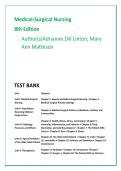
Medical-Surgical Nursing
8th Edition
• Author(s)Adrianne Dill Linton; Mary
Ann Matteson
TEST BANK
Unit Chapters
Unit I: Medical-Surgical Chapter 1: Aspects of Medical-Surgical Nursing • Chapter 2:
Nursing Medical-Surgical Practice Settings
Unit II: Populations
Chapter 3: Medical-Surgical Patients: Individuals, Families, and
Receiving Medical-
Communities
Surgical Care
Chapter 4: Health, Illness, Stress, and Coping • Chapter 5:
Unit III: Pathology Immunity, Inflammation, and Infection • Chapter 6: Fluid,
Processes and Effects Electrolyte, and Acid-Base Balance • Chapter 7: The Patient With
Cancer • Chapter 8: Pain • Chapter 9: Shock
Chapter 10: The Older Adult Patient • Chapter 11: Falls • Chapter
Unit IV: Special Problems
12: Immobility • Chapter 13: Delirium and Dementia • Chapter 14:
of the Older Adult Patient
Incontinence
Unit V: Therapeutics Chapter 15: Nutrition • Chapter 16: Intravenous Therapy •
Chapter 17: Surgery • Chapter 18: The Patient With an Ostomy •
,Unit Chapters
Chapter 19: Palliative and Hospice Care • Chapter 20:
Complementary and Alternative Therapies and Integrative Health
Care
Chapter 21: Neurologic System Introduction • Chapter 22:
Unit VI: Neurological
Neurologic Disorders • Chapter 23: Cerebrovascular Accident •
System
Chapter 24: Spinal Cord Injury
Chapter 25: Respiratory System Introduction • Chapter 26: Upper
Unit VII: Respiratory Respiratory Disorders • Chapter 27: Acute Lower Respiratory
System Tract Disorders • Chapter 28: Chronic Lower Respiratory Tract
Disorders
Unit VIII: Hematologic Chapter 29: Hematologic System Introduction • Chapter 30:
and Immunologic Hematologic Disorders • Chapter 31: Immunologic System
Systems Introduction • Chapter 32: Immunologic Disorders
Chapter 33: Cardiovascular System Introduction • Chapter 34:
Unit IX: Cardiovascular
Hypertension • Chapter 35: Cardiac Disorders • Chapter 36:
System
Vascular Disorders
Chapter 37: Digestive System Introduction • Chapter 38: Upper
Digestive Tract Disorders • Chapter 39: Lower Digestive Tract
Unit X: Digestive System
Disorders • Chapter 40: Liver, Gallbladder, and Pancreatic
Disorders
Chapter 41: Urologic System Introduction • Chapter 42: Urologic
Unit XI: Urologic System
Disorders
Chapter 43: Musculoskeletal System Introduction • Chapter 44:
Unit XII: Musculoskeletal
Connective Tissue Disorders • Chapter 45: Fractures • Chapter 46:
System
Amputations
Chapter 47: Endocrine System Introduction • Chapter 48: Pituitary
Unit XIII: Endocrine
and Adrenal Disorders • Chapter 49: Thyroid and Parathyroid
System
Disorders • Chapter 50: Diabetes and Hypoglycemia
Unit XIV: Reproductive Chapter 51: Female Reproductive System Introduction • Chapter
Systems 52: Female Reproductive Disorders • Chapter 53: Male
Reproductive System Introduction • Chapter 54: Male
,Unit Chapters
Reproductive Disorders • Chapter 55: Sexually Transmitted
Infections
Unit XV: Integumentary Chapter 56: Integumentary System Introduction • Chapter 57:
Systems Skin Disorders
Chapter 58: Special Senses: Vision and Hearing Introduction •
Unit XVI: Special Senses:
Chapter 59: Eye and Vision Disorders • Chapter 60: Ear and
Vision and Hearing
Hearing Disorders
Unit XVII: Medical-
Chapter 61: Psychobiologic Disorders • Chapter 62: Substance-
Surgical Patients with
Related and Addictive Disorders
Psychiatric Disorders
Unit XVIII: Nursing in
Chapter 63: First Aid, Emergency Care, and Disaster Management
Disasters and First Aid
Question 1
A newly licensed nurse is caring for four clients on a medical-
surgical unit. Which action demonstrates appropriate clinical
judgment?
A. Administering pain medication to a client reporting severe
pain before assessing respiratory status
B. Assessing a client with sudden shortness of breath before
completing routine documentation
C. Delegating assessment of a postoperative client to an
unlicensed assistive personnel (UAP)
D. Completing discharge paperwork before evaluating a client’s
abnormal vital signs
, Correct Answer: B
Rationale:
The nurse should prioritize assessment of a client with sudden
shortness of breath because this finding may indicate clinical
deterioration and requires immediate evaluation. Appropriate
clinical judgment includes prioritizing unstable clients and
recognizing urgent physiologic changes.
Option A is incorrect because assessment should precede
medication administration. Option C is incorrect because
assessment is within the registered nurse’s scope of practice
and should not be delegated to UAP personnel. Option D is
incorrect because abnormal vital signs require immediate
nursing evaluation before routine tasks.
Source:
Medical-Surgical Nursing, 8th Edition — Unit I: Aspects of
Medical-Surgical Nursing
Question 2
A nurse manager observes a nurse discussing a client’s
diagnosis in a crowded elevator. Which action by the nurse
manager is most appropriate?
A. Ignore the situation because the conversation was brief
B. Report the nurse immediately to the state board of nursing
C. Remind the nurse to protect client confidentiality in public
areas
D. Ask the client whether the discussion caused concern
8th Edition
• Author(s)Adrianne Dill Linton; Mary
Ann Matteson
TEST BANK
Unit Chapters
Unit I: Medical-Surgical Chapter 1: Aspects of Medical-Surgical Nursing • Chapter 2:
Nursing Medical-Surgical Practice Settings
Unit II: Populations
Chapter 3: Medical-Surgical Patients: Individuals, Families, and
Receiving Medical-
Communities
Surgical Care
Chapter 4: Health, Illness, Stress, and Coping • Chapter 5:
Unit III: Pathology Immunity, Inflammation, and Infection • Chapter 6: Fluid,
Processes and Effects Electrolyte, and Acid-Base Balance • Chapter 7: The Patient With
Cancer • Chapter 8: Pain • Chapter 9: Shock
Chapter 10: The Older Adult Patient • Chapter 11: Falls • Chapter
Unit IV: Special Problems
12: Immobility • Chapter 13: Delirium and Dementia • Chapter 14:
of the Older Adult Patient
Incontinence
Unit V: Therapeutics Chapter 15: Nutrition • Chapter 16: Intravenous Therapy •
Chapter 17: Surgery • Chapter 18: The Patient With an Ostomy •
,Unit Chapters
Chapter 19: Palliative and Hospice Care • Chapter 20:
Complementary and Alternative Therapies and Integrative Health
Care
Chapter 21: Neurologic System Introduction • Chapter 22:
Unit VI: Neurological
Neurologic Disorders • Chapter 23: Cerebrovascular Accident •
System
Chapter 24: Spinal Cord Injury
Chapter 25: Respiratory System Introduction • Chapter 26: Upper
Unit VII: Respiratory Respiratory Disorders • Chapter 27: Acute Lower Respiratory
System Tract Disorders • Chapter 28: Chronic Lower Respiratory Tract
Disorders
Unit VIII: Hematologic Chapter 29: Hematologic System Introduction • Chapter 30:
and Immunologic Hematologic Disorders • Chapter 31: Immunologic System
Systems Introduction • Chapter 32: Immunologic Disorders
Chapter 33: Cardiovascular System Introduction • Chapter 34:
Unit IX: Cardiovascular
Hypertension • Chapter 35: Cardiac Disorders • Chapter 36:
System
Vascular Disorders
Chapter 37: Digestive System Introduction • Chapter 38: Upper
Digestive Tract Disorders • Chapter 39: Lower Digestive Tract
Unit X: Digestive System
Disorders • Chapter 40: Liver, Gallbladder, and Pancreatic
Disorders
Chapter 41: Urologic System Introduction • Chapter 42: Urologic
Unit XI: Urologic System
Disorders
Chapter 43: Musculoskeletal System Introduction • Chapter 44:
Unit XII: Musculoskeletal
Connective Tissue Disorders • Chapter 45: Fractures • Chapter 46:
System
Amputations
Chapter 47: Endocrine System Introduction • Chapter 48: Pituitary
Unit XIII: Endocrine
and Adrenal Disorders • Chapter 49: Thyroid and Parathyroid
System
Disorders • Chapter 50: Diabetes and Hypoglycemia
Unit XIV: Reproductive Chapter 51: Female Reproductive System Introduction • Chapter
Systems 52: Female Reproductive Disorders • Chapter 53: Male
Reproductive System Introduction • Chapter 54: Male
,Unit Chapters
Reproductive Disorders • Chapter 55: Sexually Transmitted
Infections
Unit XV: Integumentary Chapter 56: Integumentary System Introduction • Chapter 57:
Systems Skin Disorders
Chapter 58: Special Senses: Vision and Hearing Introduction •
Unit XVI: Special Senses:
Chapter 59: Eye and Vision Disorders • Chapter 60: Ear and
Vision and Hearing
Hearing Disorders
Unit XVII: Medical-
Chapter 61: Psychobiologic Disorders • Chapter 62: Substance-
Surgical Patients with
Related and Addictive Disorders
Psychiatric Disorders
Unit XVIII: Nursing in
Chapter 63: First Aid, Emergency Care, and Disaster Management
Disasters and First Aid
Question 1
A newly licensed nurse is caring for four clients on a medical-
surgical unit. Which action demonstrates appropriate clinical
judgment?
A. Administering pain medication to a client reporting severe
pain before assessing respiratory status
B. Assessing a client with sudden shortness of breath before
completing routine documentation
C. Delegating assessment of a postoperative client to an
unlicensed assistive personnel (UAP)
D. Completing discharge paperwork before evaluating a client’s
abnormal vital signs
, Correct Answer: B
Rationale:
The nurse should prioritize assessment of a client with sudden
shortness of breath because this finding may indicate clinical
deterioration and requires immediate evaluation. Appropriate
clinical judgment includes prioritizing unstable clients and
recognizing urgent physiologic changes.
Option A is incorrect because assessment should precede
medication administration. Option C is incorrect because
assessment is within the registered nurse’s scope of practice
and should not be delegated to UAP personnel. Option D is
incorrect because abnormal vital signs require immediate
nursing evaluation before routine tasks.
Source:
Medical-Surgical Nursing, 8th Edition — Unit I: Aspects of
Medical-Surgical Nursing
Question 2
A nurse manager observes a nurse discussing a client’s
diagnosis in a crowded elevator. Which action by the nurse
manager is most appropriate?
A. Ignore the situation because the conversation was brief
B. Report the nurse immediately to the state board of nursing
C. Remind the nurse to protect client confidentiality in public
areas
D. Ask the client whether the discussion caused concern


